1:39in productionCh. 1 · What the dish is and where it came from/ 1:39 · ceiling 15 min
Dishes · Food history
Halo-halo
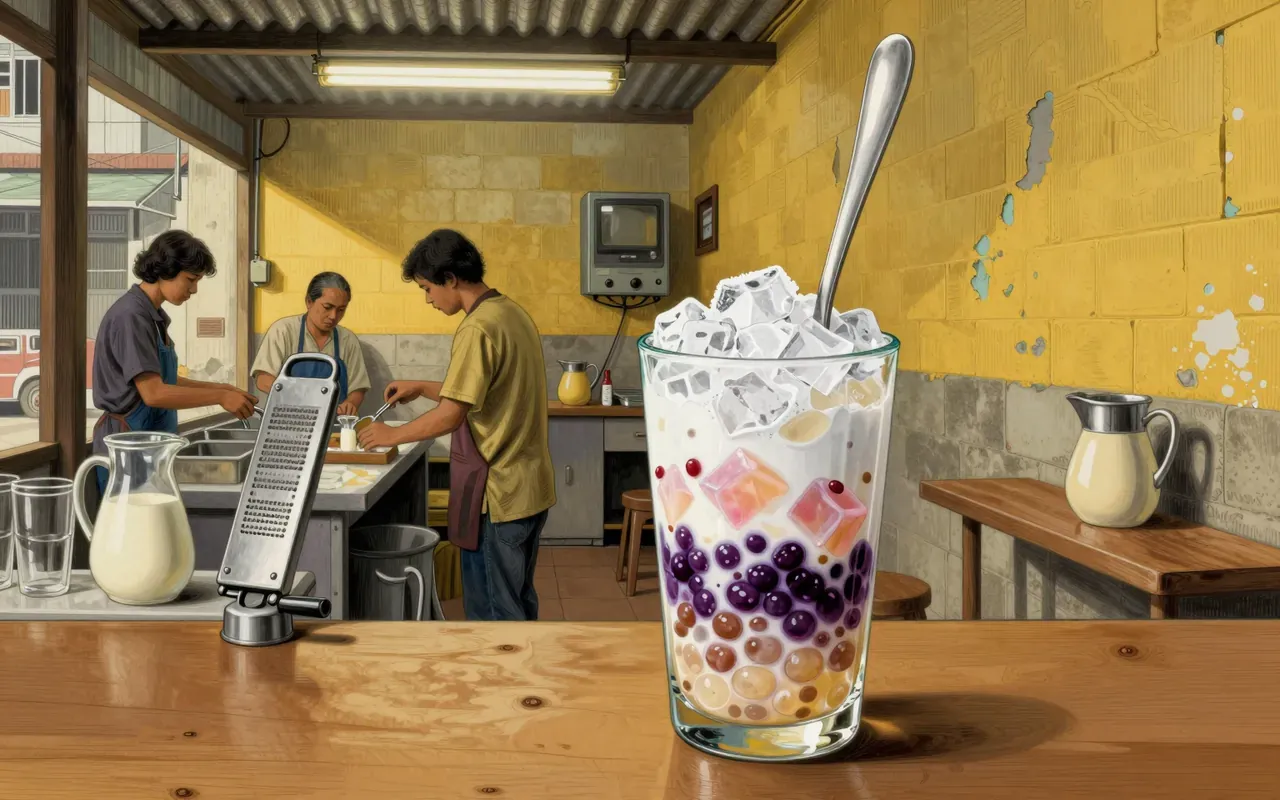
A layered Filipino cold dessert served in a tall glass with crushed ice, milk, and diverse sweet components including ube jam, beans, jellies, root crops, flan, and sometimes ice cream.
Halo-halo is a popular cold dessert in the Philippines. Its origin is traced to pre-war Japanese Filipinos and the Japanese kakigōri class of desserts. Some authors specifically attribute it to 1920s–1930s Japanese migrants in Quinta Market, Quiapo, Manila, near the Insular Ice Plant. An early version was monggo con hielo: boiled mung beans in syrup over crushed ice with milk and sugar.
Halo-halo is a popular cold dessert in the Philippines.
0:25
How it works, in terms someone would actually use
It is prepared in a tall clear glass and served with a long spoon.
0:43
What it gets right
It gets right a vivid textural and visual contrast: soft yams, chewy sago and gulaman, creamy flan and ube halaya, cold ice cream, and crunchy pinipig—all bound by evaporated or coconut milk.
0:59
What it does not
It does not require ice cream: a scoop of ube or fruit-based ice cream is common but optional.
1:06
What it changed
It changed ingredient placement relative to its Japanese ancestor: components go mainly under the ice, not on top.
1:13
Who it is for, and who it is not
It is for people who enjoy cold, sweet, multi-component desserts with varied textures and visible layers.
1:27
Is it worth your time
It is worth your time if you want a distinctive, visually rich, cold Filipino dessert served in a tall glass with a long spoon—and are open to its sweet, layered format.
Worth your time?
Selectively. Start with the brief, then cook the parts we point at.
What works
It gets right a vivid textural and visual contrast: soft yams, chewy sago and gulaman, creamy flan and ube halaya, cold ice cream, and crunchy pinipig—all bound by evaporated or coconut milk. The layered presentation invites mixing before eating.
What does not
It does not require ice cream: a scoop of ube or fruit-based ice cream is common but optional.
Cook it if
Skip it if
The written brief1 min read
What the dish is and where it came from
Halo-halo is a popular cold dessert in the Philippines. Its origin is traced to pre-war Japanese Filipinos and the Japanese kakigōri class of desserts. Some authors specifically attribute it to 1920s–1930s Japanese migrants in Quinta Market, Quiapo, Manila, near the Insular Ice Plant. An early version was monggo con hielo: boiled mung beans in syrup over crushed ice with milk and sugar.
How it works, in terms someone would actually use
It is prepared in a tall clear glass and served with a long spoon. Ingredients are placed in a specific order: fruit, beans, and other sweets at the bottom; then shaved ice; then topped with leche flan, ube halaya, ice cream, or any combination.
What it gets right
It gets right a vivid textural and visual contrast: soft yams, chewy sago and gulaman, creamy flan and ube halaya, cold ice cream, and crunchy pinipig—all bound by evaporated or coconut milk. The layered presentation invites mixing before eating.
What it does not
It does not require ice cream: a scoop of ube or fruit-based ice cream is common but optional.
What it changed
It changed ingredient placement relative to its Japanese ancestor: components go mainly under the ice, not on top.
Who it is for, and who it is not
It is for people who enjoy cold, sweet, multi-component desserts with varied textures and visible layers. It is not for those avoiding dairy, added sugars, or mixed textures like beans, jellies, and root crops.
Is it worth your time
It is worth your time if you want a distinctive, visually rich, cold Filipino dessert served in a tall glass with a long spoon—and are open to its sweet, layered format.
A dense, crumbly or fudge-like confection made from sesame paste and sugar—or toasted flour and syrup—rooted in Persian and early Arab culinary traditions.