foodbriefs
1:23in productionCh. 1 · What the dish is and where it came from/ 1:23 · ceiling 15 min
Dishes · Technique

Sambal

A category of chili-based sauces or pastes from maritime Southeast Asia.

Sambal is a category of chilli-based sauces or pastes originating in maritime Southeast Asia, particularly within the cuisines of Indonesia, Malaysia, Timor-Leste, Brunei, Singapore, southern Thailand and southern Philippines. Its exact emergence remains uncertain.

Chapters & takeaways7
  1. 0:00
    What the dish is and where it came from

    Sambal is a category of chilli-based sauces or pastes originating in maritime Southeast Asia, particularly within the cuisines of Indonesia, Malaysia, Timor-Leste, Brunei, Singapore, southern Thailand and southern Philippines.

  2. 0:14
    How it works, in terms someone would actually use

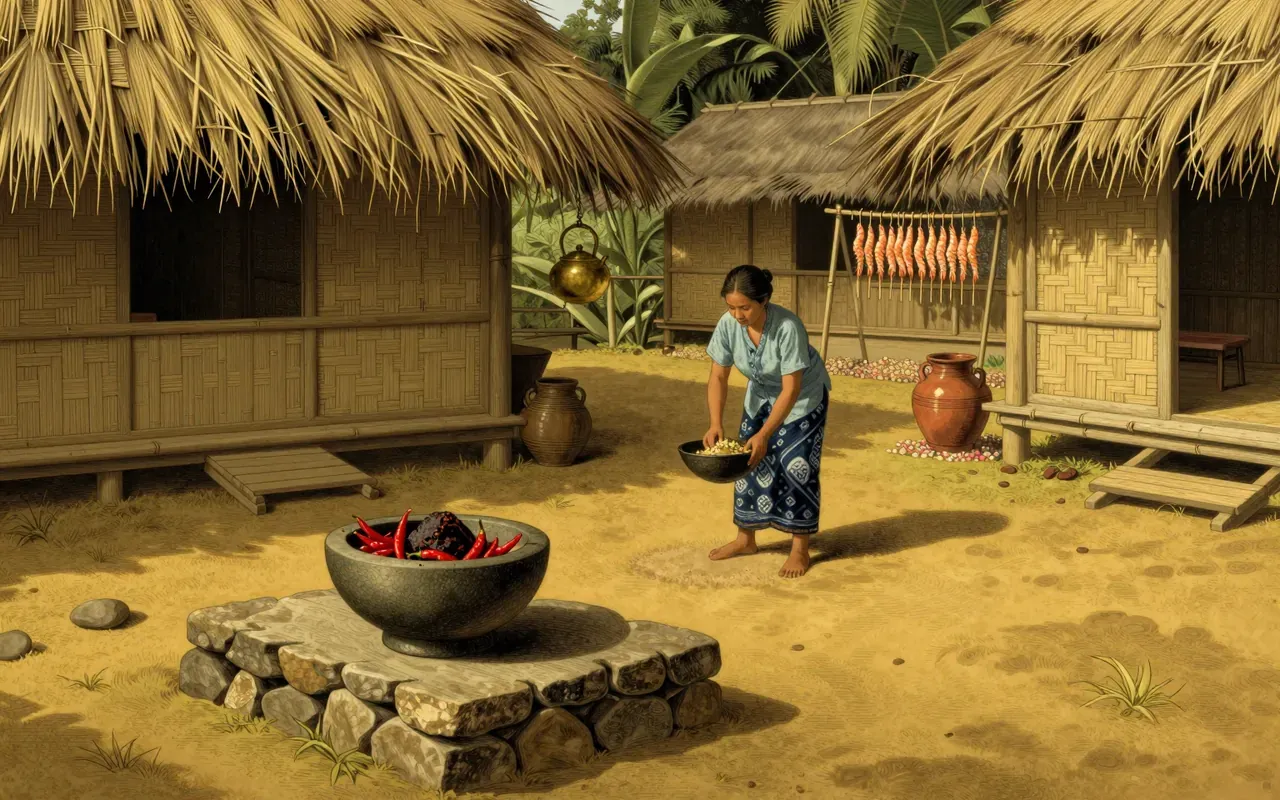
    Traditionally, sambal is prepared by grinding or pounding fresh or dried chillies with aromatics such as shallots, garlic, galangal and ginger, often combined with shrimp paste and seasoned with salt, sugar and acidic ingredients like lime juice or tamarind.

  3. 0:30
    What it gets right

    It gets right a layered balance: heat from chillies, umami from shrimp paste, brightness from lime or tamarind, and depth from aromatics like galangal and garlic.

  4. 0:40
    What it does not

    It does not omit shrimp paste or acidic elements if following traditional preparation — making it less suitable for those avoiding seafood or acid.

  5. 0:50
    What it changed

    By the 18th century, chilli-based sambals were recorded across the Indonesian archipelago and the Malay Peninsula, with each community developing variations shaped by local ingredients and culinary traditions.

  6. 1:01
    Who it is for, and who it is not

    It is for people who enjoy chilli-based condiments or flavouring bases across Indonesia, Malaysia, Timor-Leste, Brunei, Singapore, southern Thailand and southern Philippines.

  7. 1:15
    Is it worth your time

    Yes — it is worth your time if you want a condiment, a flavouring base or a standalone side dish.
Worth your time?

Selectively. Start with the brief, then cook the parts we point at.

What works
  • It gets right a layered balance: heat from chillies, umami from shrimp paste, brightness from lime or tamarind, and depth from aromatics like galangal and garlic.
What does not
  • It does not omit shrimp paste or acidic elements if following traditional preparation — making it less suitable for those avoiding seafood or acid.
Cook it if
    Skip it if
      The written brief1 min read

      What the dish is and where it came from

      Sambal is a category of chilli-based sauces or pastes originating in maritime Southeast Asia, particularly within the cuisines of Indonesia, Malaysia, Timor-Leste, Brunei, Singapore, southern Thailand and southern Philippines. Its exact emergence remains uncertain.

      How it works, in terms someone would actually use

      Traditionally, sambal is prepared by grinding or pounding fresh or dried chillies with aromatics such as shallots, garlic, galangal and ginger, often combined with shrimp paste and seasoned with salt, sugar and acidic ingredients like lime juice or tamarind.

      What it gets right

      It gets right a layered balance: heat from chillies, umami from shrimp paste, brightness from lime or tamarind, and depth from aromatics like galangal and garlic.

      What it does not

      It does not omit shrimp paste or acidic elements if following traditional preparation — making it less suitable for those avoiding seafood or acid.

      What it changed

      By the 18th century, chilli-based sambals were recorded across the Indonesian archipelago and the Malay Peninsula, with each community developing variations shaped by local ingredients and culinary traditions.

      Who it is for, and who it is not

      It is for people who enjoy chilli-based condiments or flavouring bases across Indonesia, Malaysia, Timor-Leste, Brunei, Singapore, southern Thailand and southern Philippines. It is not for those avoiding chillies, shrimp paste, or acidic seasonings.

      Is it worth your time

      Yes — it is worth your time if you want a condiment, a flavouring base or a standalone side dish.
      Same course · Dishes4 of 327
      Up next in Food

      Sambar (dish)

      · 1:03

      A lentil-based vegetable stew from South India, made with pigeon peas and tamarind broth.

      1:03