1:19in productionCh. 1 · What the dish is and where it came from/ 1:19 · ceiling 15 min
Dishes
Laksa
A spicy Southeast Asian noodle dish featuring rice noodles in coconut curry or sour broth, with regional variations rooted in Peranakan Chinese communities.
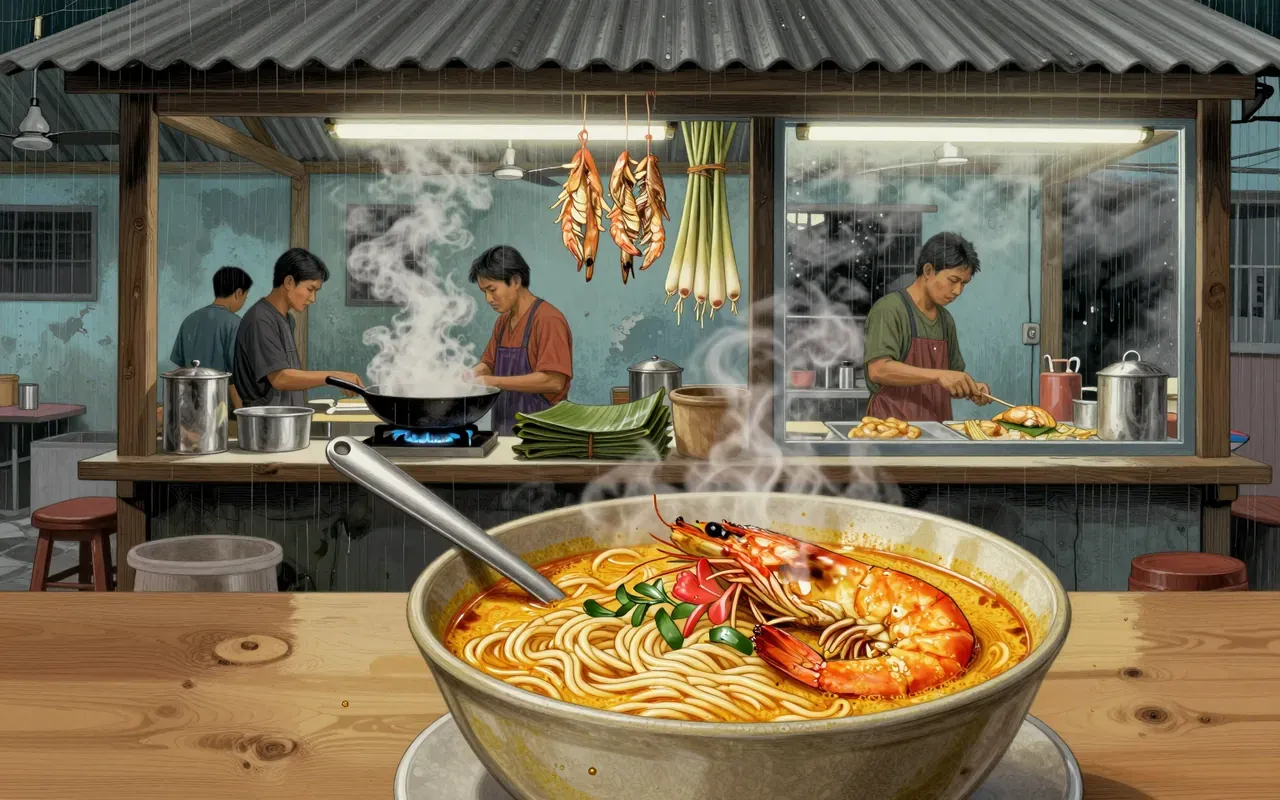
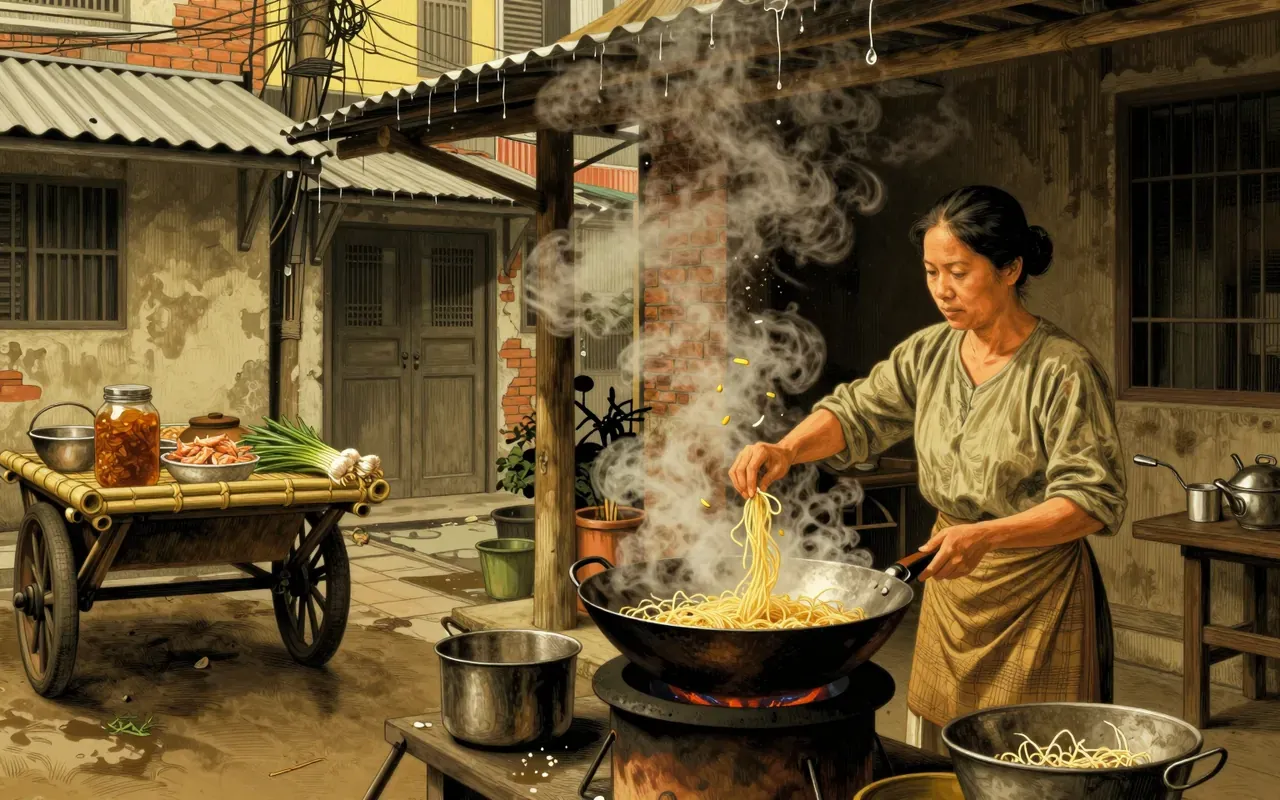
Laksa is a spicy noodle dish popular in Southeast Asia. It is of Peranakan Chinese origin. The earliest variant in Malaysia is believed to have been introduced by Peranakan Chinese in Malacca. In Singapore, it is believed to have been created through interaction between Peranakan Chinese and local Singaporean Malays.
Laksa is a spicy noodle dish popular in Southeast Asia.
0:20
How it works, in terms someone would actually use
It uses thick rice noodles topped with chicken, prawns, or fish.
0:32
What it gets right
It gets right a balance of spice, richness, and acidity.
0:43
What it does not
It does not offer a vegetarian or broth-only option by default—the meat or seafood topping and coconut or sour broth are standard components.
0:52
What it changed
It changed in cultural role: among the traditional Sundanese Baduy community in Banten, laksa is part of the ngalaksa harvest ceremony.
1:00
Who it is for, and who it is not
It is for people who enjoy spicy, brothy noodle dishes with protein and coconut or sour notes.
1:11
Is it worth your time
It is worth your time if you seek a regional Southeast Asian dish with bold, varied broths and substantial noodle-and-protein structure.
Worth your time?
Selectively. Start with the brief, then cook the parts we point at.
What works
It gets right a balance of spice, richness, and acidity. The combination of noodles, protein toppings, and either coconut curry or sour broth delivers layered flavor and texture.
What does not
It does not offer a vegetarian or broth-only option by default—the meat or seafood topping and coconut or sour broth are standard components.
Cook it if
Skip it if
The written brief1 min read
What the dish is and where it came from
Laksa is a spicy noodle dish popular in Southeast Asia. It is of Peranakan Chinese origin. The earliest variant in Malaysia is believed to have been introduced by Peranakan Chinese in Malacca. In Singapore, it is believed to have been created through interaction between Peranakan Chinese and local Singaporean Malays.
How it works, in terms someone would actually use
It uses thick rice noodles topped with chicken, prawns, or fish. Most versions are prepared with a rich and spicy coconut curry soup—or a broth seasoned with tamarind or asam gelugur.
What it gets right
It gets right a balance of spice, richness, and acidity. The combination of noodles, protein toppings, and either coconut curry or sour broth delivers layered flavor and texture.
What it does not
It does not offer a vegetarian or broth-only option by default—the meat or seafood topping and coconut or sour broth are standard components.
What it changed
It changed in cultural role: among the traditional Sundanese Baduy community in Banten, laksa is part of the ngalaksa harvest ceremony.
Who it is for, and who it is not
It is for people who enjoy spicy, brothy noodle dishes with protein and coconut or sour notes. It is not for those avoiding coconut, shellfish, or poultry.
Is it worth your time
It is worth your time if you seek a regional Southeast Asian dish with bold, varied broths and substantial noodle-and-protein structure.