foodbriefs
9:12in productionCh. 1 · Where it grows/ 9:12 · ceiling 15 min
Dishes · Street food

Fried plantain

Fried plantain isn’t one dish—it’s a dozen arguments about ripeness, heat and region, all fried in the same oil.

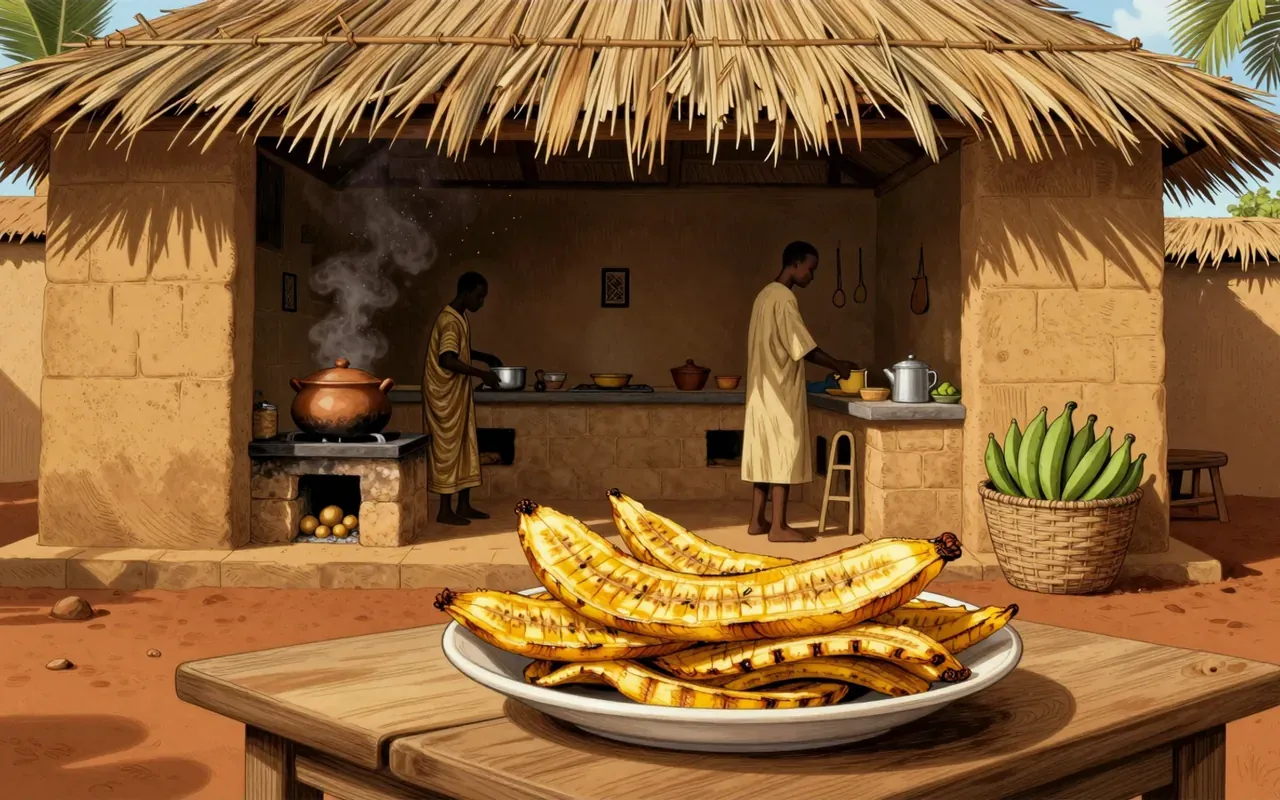
Fried plantain is a geographically widespread dish rooted in multiple regional cuisines — notably West Africa (Côte d'Ivoire, Ghana, Nigeria), the Caribbean, and Latin America — with distinct local names, preparations, and cultural roles.

Chapters & takeaways4
  1. 1:14
    Where it grows

    It grows where plantains grow—no single origin, no single authority.

  2. 2:32
    Three names, three logics

    Alloco, kelewele and ipekere are distinct names for distinct practices—not variations on a theme.

  3. 4:10
    How it cooks

    Cut, spice and oil temperature decide whether it crackles, caramelises or collapses.

  4. 5:21
    Why ripeness matters

    Ripeness is non-negotiable. Underripe plantain won’t caramelize. Overripe falls apart.

Worth your time?

Yes. Cook the whole thing.

4.5/ 5
What works
  • uses ripeness as a lever
  • treats the plantain as ingredient—not symbol
  • lets technique define function
What does not
  • unify
  • pretend to be healthy
  • offer subtlety
Cook it if
  • people who eat with their hands
  • people who value crispness over tenderness
  • people who expect food to announce itself
Skip it if
  • those seeking uniformity
  • those seeking low-fat options
The written brief1 min read

What the dish is and where it came from

A family of snacks made by frying ripe plantain, rooted in West Africa (Côte d’Ivoire, Ghana, Nigeria), the Caribbean and Latin America. Alloco comes from the Baoulé people in eastern Côte d’Ivoire. Kelewele originates in Ghana. Ipekere is from Yoruba cuisine in Nigeria.

How it works, in terms someone would actually use

Thin slices or cubes of ripe plantain hit hot oil. Sugar caramelises at the edges. Ginger, cayenne or onions add heat and contrast. The step that decides success is oil temperature: too low, and the plantain soaks up grease; too high, and it burns before the inside softens.

What it gets right

It uses ripeness as a lever: sugar content dictates caramelisation, texture and sweetness. It treats the plantain as ingredient—not symbol—and lets technique define function.

What it does not

It does not unify. There is no single fried plantain. Alloco is not kelewele. Ipekere is not patacones. Each variant answers a different local need, with different cuts, spices and roles.

What it changed

It turned a starchy fruit into a portable, savoury-sweet vehicle for spice, acidity and crunch across continents where plantains grow.

Who it is for, and who it is not

People who eat with their hands, value crispness over tenderness, and expect food to announce itself—by scent, colour, sound or bite. Not for those seeking subtlety, uniformity or low-fat options.

Is it worth your time

Yes—if you want a fast, textural snack with clear regional logic and no pretence of health or novelty.
Same course · Dishes4 of 504
Up next in Food

Lobster roll

· 9:56

Lobster roll is not luxury—it’s logistics: lobster, split into two camps by temperature and fat, served on a bun that holds it all together.

9:56