What the thing is
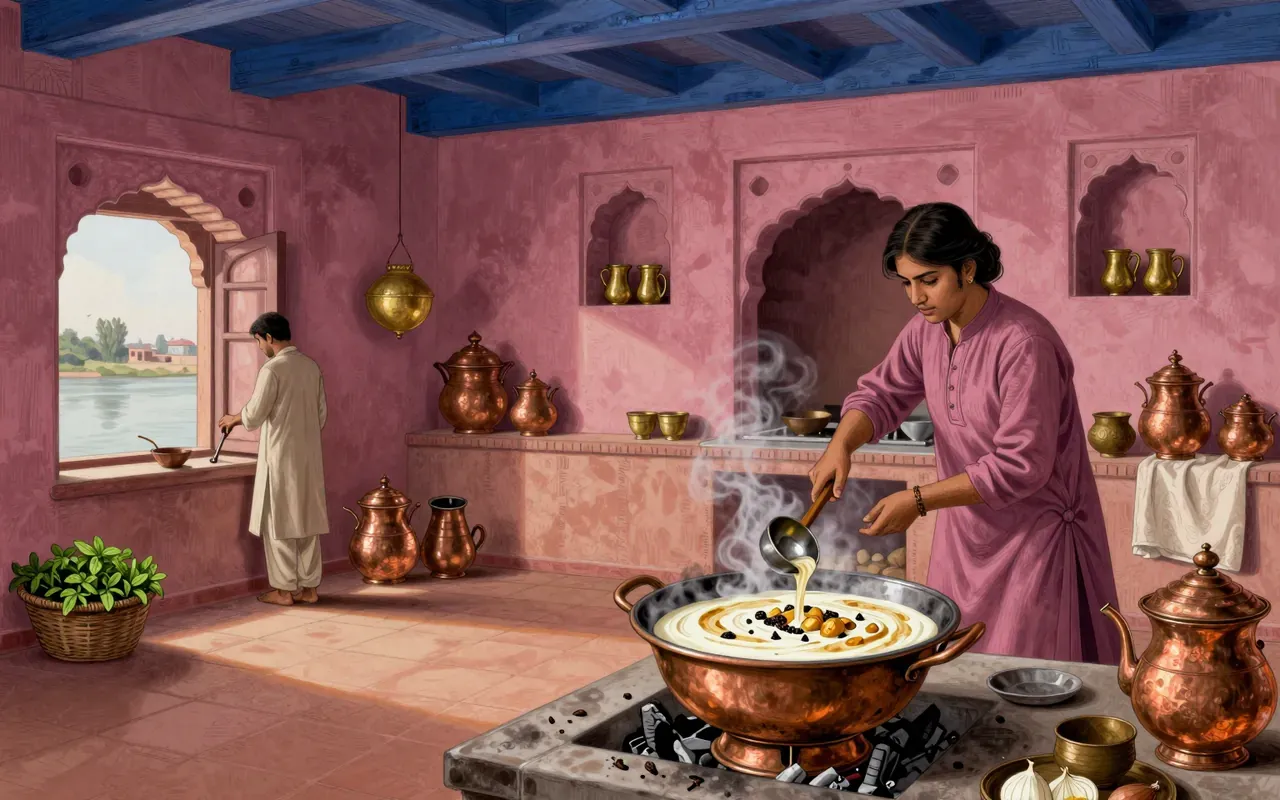
Korma is a braised curry dish. It uses yoghurt, stock or water, and spices to build a thick, aromatic gravy around meat or vegetables.
Where it came from
It originated in the Indian subcontinent under Mughlai influence. It was prepared in Mughal court kitchens and first documented in cookery books from the reign of Shah Alam (r. 1643–1712).
What it gets right
It prioritises fragrance over heat. It uses yoghurt and slow braising to tenderise without aggression. It adapts Persian stews into something distinctively Mughlai.
What it gets wrong
It is often reduced to a mild, creamy British curry—erasing its courtly origins, its almonds and garlic, and its role in pilau in Hyderabad in 1832.
Why it matters now
It reveals how colonial translation flattens technique: ‘korma’ names a method—braising—but now signifies a flavour profile it was never meant to monopolise.
Is it worth your time
Yes—if you care how a cooking technique became a cultural shorthand, and why its quiet aromatics displaced bolder flavours in imperial kitchens.