A cowboy’s scrap cut became a restaurant cliché — and erased its own history.
Fajitas are a Tex-Mex dish rooted in 1930s South and West Texas ranch culture, built from skirt steak scraps given to vaqueros and cooked over open flame. The term 'fajita' did not appear in print until 1971. Its modern form — adaptable protein, charred vegetables, tortillas, and condiment bar — reflects both ingenuity and erasure: it displaced regional specificity (like 'tacos de arrachera') while becoming a default for 'Mexican-inspired' dining in the US.
Fajitas are strips of grilled skirt steak (or chicken, shrimp, vegetables) cooked with sautéed onions and bell peppers, served on flour or corn tortillas with condiments like guacamole, salsa, sour cream, and refried beans.
Where it came from
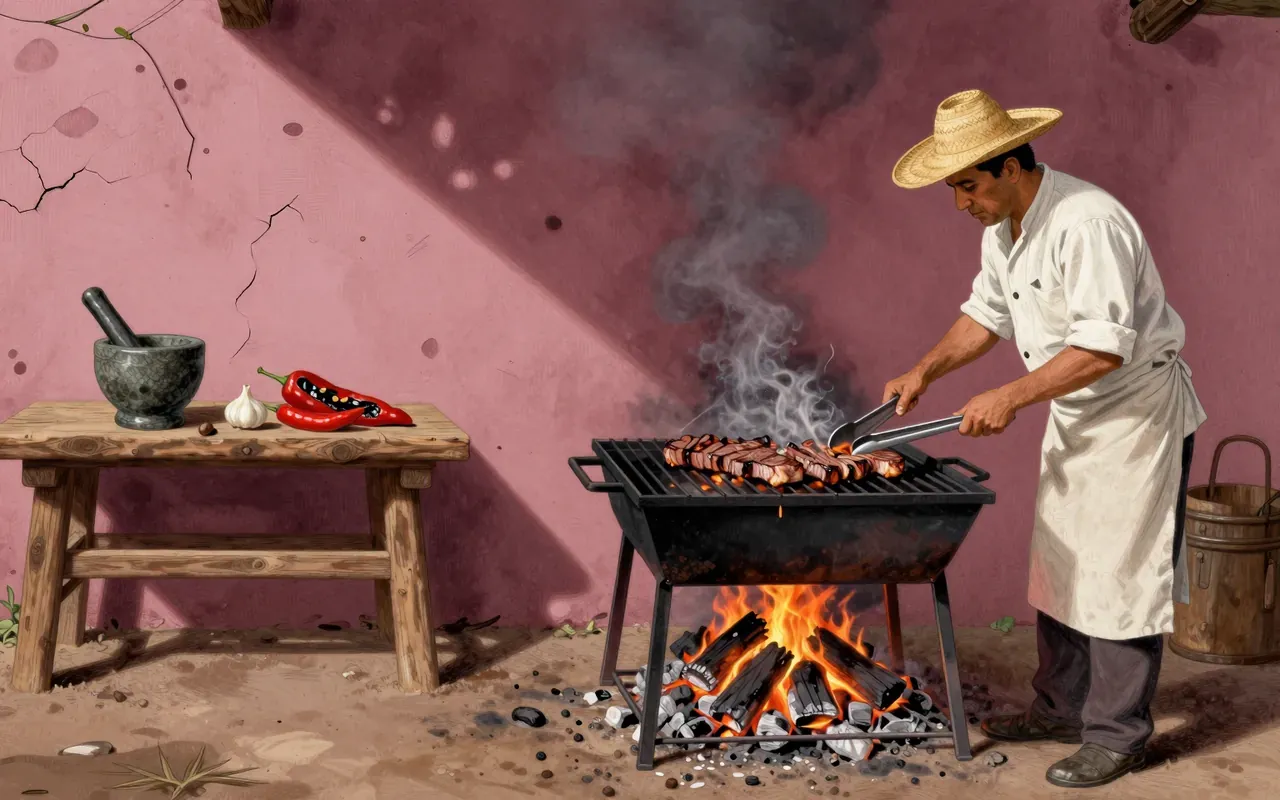
Fajitas began in the 1930s in South and West Texas ranch lands, where vaqueros received skirt steak scraps during cattle roundups and cooked them over campfires or grills — using a cut and nickname that later defined the dish.
What it gets right
It turns waste into ritual. Skirt steak scraps, once given to vaqueros in 1930s Texas ranches, became the anchor of a flexible, communal format: grilled meat, charred vegetables, warm tortillas, and build-your-own condiments.
What it gets wrong
It obscures its origin by presenting itself as Mexican rather than Tex-Mex. The northern Mexican variant is called ‘tacos de arrachera’ — not fajita — and the term itself emerged only in 1971, decades after the dish took root in South and West Texas.
Why it matters now
It reveals how regional improvisation becomes standardised cuisine: the fajita’s rise mirrors the expansion of Tex-Mex into mainstream US food culture — and the erasure of its working-class, Tejano roots in the process.
Is it worth your time
Yes — if you care how a scrap cut for cowboys became a global restaurant template.