1:08in productionCh. 1 · What the dish is and where it came from/ 1:08 · ceiling 15 min
Dishes
Kushikatsu
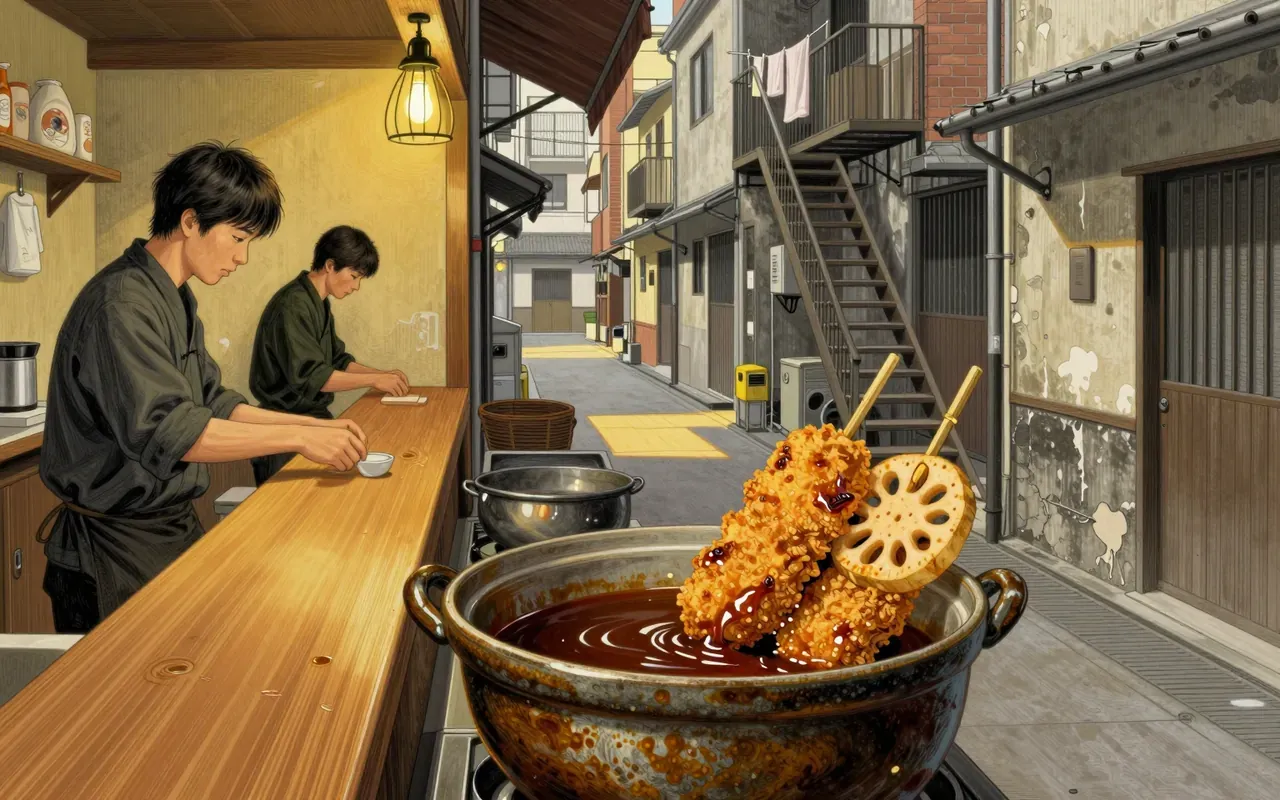
Deep-fried skewered ingredients—meat, seafood, or vegetables—served with shared dipping sauce in Osaka’s Shinsekai district.
Kushikatsu originated in food bars in Osaka’s Shinsekai neighborhood. A small bar operating since 1929, run by a woman, is credited as the pioneer. It gained popularity among blue-collar workers.
Kushikatsu originated in food bars in Osaka’s Shinsekai neighborhood.
0:12
How it works, in terms someone would actually use
Ingredients are skewered on bamboo sticks, coated in seasoned flour, egg wash, and panko, then deep-fried in vegetable oil.
0:28
What it gets right
It offers variety: chicken, pork, seafood, or seasonal vegetables on one stick.
0:36
What it does not
The shared sauce pot means you cannot double-dip.
0:44
What it changed
It introduced a specific sauce etiquette: using cabbage as a utensil to avoid contaminating the communal pot.
0:51
Who it is for, and who it is not
It suits people who enjoy varied, handheld fried foods in a casual group setting.
1:02
Is it worth your time
Yes—if you want accessible, varied, fried street food rooted in Osaka’s Shinsekai food-bar culture.
Worth your time?
Selectively. Start with the brief, then cook the parts we point at.
What works
It offers variety: chicken, pork, seafood, or seasonal vegetables on one stick. The shared-sauce ritual creates a distinctive, interactive dining rhythm.
What does not
The shared sauce pot means you cannot double-dip. This limits flexibility for those who prefer to adjust seasoning bite-by-bite.
Cook it if
Skip it if
The written brief1 min read
What the dish is and where it came from
Kushikatsu originated in food bars in Osaka’s Shinsekai neighborhood. A small bar operating since 1929, run by a woman, is credited as the pioneer. It gained popularity among blue-collar workers.
How it works, in terms someone would actually use
Ingredients are skewered on bamboo sticks, coated in seasoned flour, egg wash, and panko, then deep-fried in vegetable oil. At restaurants, diners dip each piece once into a shared communal sauce pot—never twice—and use cabbage to transfer sauce onto the skewer.
What it gets right
It offers variety: chicken, pork, seafood, or seasonal vegetables on one stick. The shared-sauce ritual creates a distinctive, interactive dining rhythm.
What it does not
The shared sauce pot means you cannot double-dip. This limits flexibility for those who prefer to adjust seasoning bite-by-bite.
What it changed
It introduced a specific sauce etiquette: using cabbage as a utensil to avoid contaminating the communal pot.
Who it is for, and who it is not
It suits people who enjoy varied, handheld fried foods in a casual group setting. It is less suited for those avoiding shared serving vessels or preferring unskewered preparations.
Is it worth your time
Yes—if you want accessible, varied, fried street food rooted in Osaka’s Shinsekai food-bar culture.
A spherical sweet from the Indian subcontinent, made with ingredients like chickpea flour, rice vermicelli, or coconut, bound by sugar syrup or jaggery.