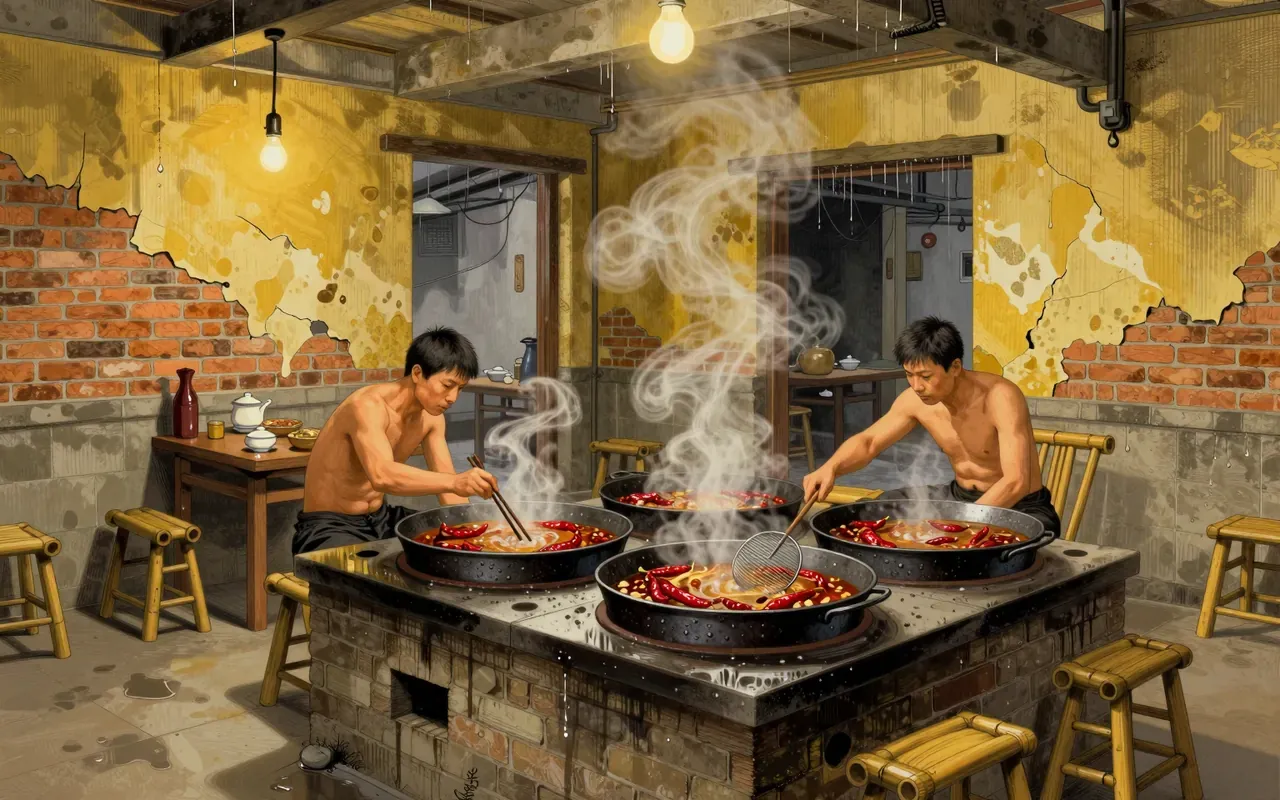
Chongqing hot pot originated in the 1920s in Jiangbei District, Chongqing.
0:08
How it works, in terms someone would actually use
Diners place raw ingredients into a boiling broth.
0:16
What it gets right
Its appeal lies in the interplay of spicy and numbing flavors from Sichuan peppercorn and dried chilis, amplified by beef tallow.
0:24
What it does not
It is not mild or neutral: the mala profile dominates, making it less suited for those avoiding spice or numbing sensations.
0:32
What it changed
In 1934, a Chongqing restaurant elevated it from street fare to a high-grade dish—its first documented restaurant service.
0:39
Who it is for, and who it is not
It was made for laborers who needed affordable, portion-controlled meals.
0:48
Is it worth your time
It is worth your time if you enjoy interactive, communal dining centered on bold, layered heat and texture.
Worth your time?
Selectively. Start with the brief, then cook the parts we point at.
What works
Its appeal lies in the interplay of spicy and numbing flavors from Sichuan peppercorn and dried chilis, amplified by beef tallow.
What does not
It is not mild or neutral: the mala profile dominates, making it less suited for those avoiding spice or numbing sensations.
Cook it if
Skip it if
The written brief1 min read
What the dish is and where it came from
Chongqing hot pot originated in the 1920s in Jiangbei District, Chongqing. It began as street food for wharf laborers.
How it works, in terms someone would actually use
Diners place raw ingredients into a boiling broth. When cooked, they remove pieces and dip them in sesame oil before eating.
What it gets right
Its appeal lies in the interplay of spicy and numbing flavors from Sichuan peppercorn and dried chilis, amplified by beef tallow.
What it does not
It is not mild or neutral: the mala profile dominates, making it less suited for those avoiding spice or numbing sensations.
What it changed
In 1934, a Chongqing restaurant elevated it from street fare to a high-grade dish—its first documented restaurant service.
Who it is for, and who it is not
It was made for laborers who needed affordable, portion-controlled meals. It is not designed for solo diners or those seeking mild, minimalist cooking.
Is it worth your time
It is worth your time if you enjoy interactive, communal dining centered on bold, layered heat and texture.