foodbriefs
9:00in productionCh. 1 · Origin/ 9:00 · ceiling 15 min
Dishes

Chilaquiles

Chilaquiles are not a breakfast — they’re a salvage operation with salsa.

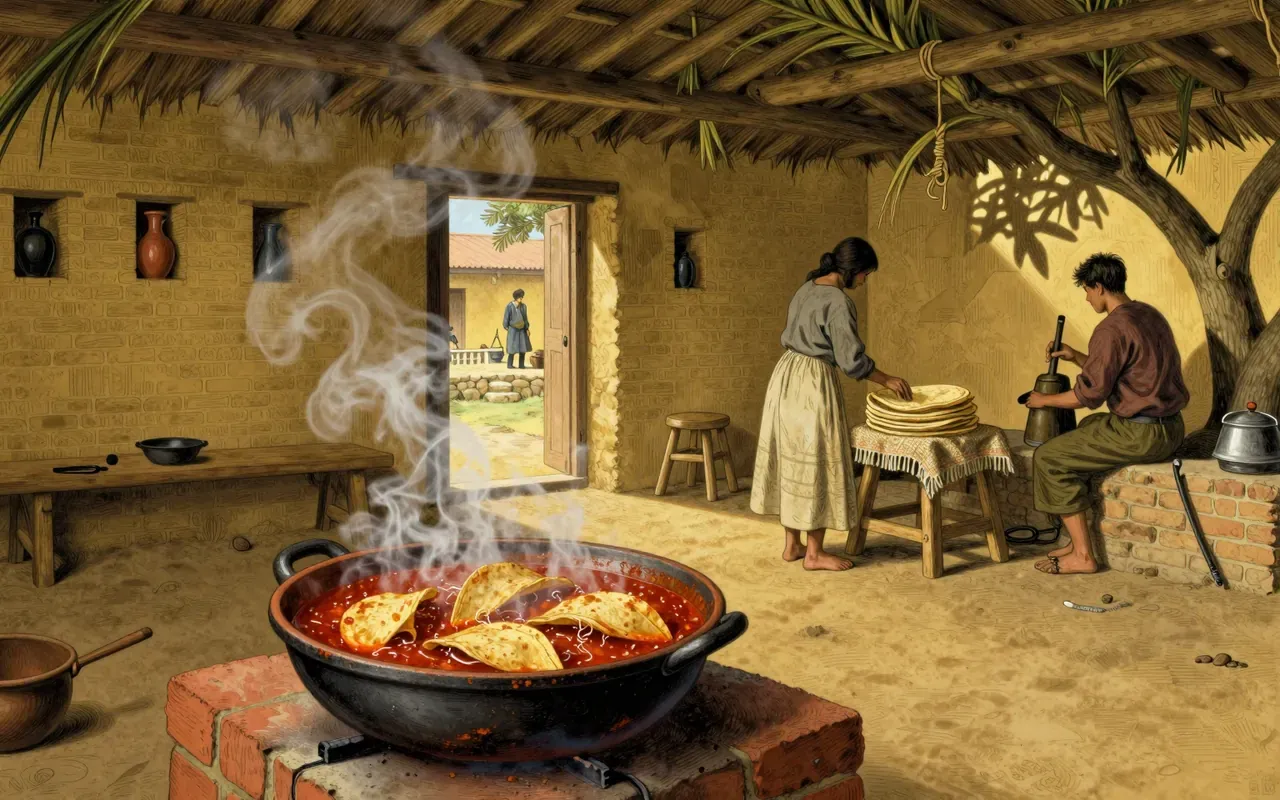
Chilaquiles are a traditional Mexican dish built on leftover tortillas and green or red salsa. Simmering softens the tortillas — but regional versions reject that step (central Mexico) or extend it (Guadalajara). U.S. print appearances date to 1898. It works because it treats texture as a variable, not a fixed state.

Chapters & takeaways4
  1. 1:04
    Origin

    Chilaquiles are a traditional Mexican dish — not invented abroad, not imported, not adapted from elsewhere.

  2. 2:26
    Method

    Leftover tortillas are simmered in salsa until they begin to soften — that softening is the technical threshold.

  3. 3:42
    Regional Split

    Central Mexico keeps chips crisp by adding salsa last; Guadalajara simmers them into polenta-like thickness.

  4. 5:19
    First Print

    Chilaquiles appeared in print in California in 1898 — making them one of the earliest documented Mexican dishes in U.S. publishing.

Worth your time?

Yes. Cook the whole thing.

4.5/ 5
What works
  • turns stale tortillas into a cohesive, saucy dish
  • uses simmering as both technique and timer
What does not
  • require fresh tortillas
  • demand a single authentic form
  • rely on cheese, eggs or cream as standard
Cook it if
  • cooks who value speed, thrift and texture control
Skip it if
  • those who need rigid recipes, precise temperatures or ingredient exclusivity
The written brief1 min read

What the dish is and where it came from

Chilaquiles are a traditional Mexican dish originating from Mexico, built on leftover tortillas and green or red salsa.

How it works, in terms someone would actually use

Crisp tortilla triangles are simmered in green or red salsa until they begin to soften — unless in central Mexico, where salsa is added at the last moment to preserve crunch. In Guadalajara, they simmer longer in cazuelas until thick and polenta-like.

What it gets right

It turns stale tortillas into a cohesive, saucy dish using simmering as both technique and timer — the moment the tortilla begins to soften is the moment it becomes chilaquiles.

What it does not

It does not require fresh tortillas. It does not demand a single authentic form. It does not rely on cheese, eggs or cream as standard — those are regional additions, not fundamentals.

What it changed

U.S. adaptations since 1898 have incorporated local ingredients while keeping the core method of softening tortillas in sauce.

Who it is for, and who it is not

It is for cooks who value speed, thrift and texture control. It is not for those who need rigid recipes, precise temperatures or ingredient exclusivity.

Is it worth your time

Yes, if you want a flexible, resourceful dish that adapts to pantry staples and regional preferences — but only if you treat the simmering step as decisive, not optional.

Same course · Dishes4 of 485
Up next in Food

Chili con carne

· 9:37

Chili con carne is not Texan. It is a Mexican ranchero dish born from dried beef and native chilies — long before beans, tomatoes, or ground meat entered the pot.

9:37