1:18in productionCh. 1 · What the dish is and where it came from/ 1:18 · ceiling 15 min
Drinks · Ingredients
Matcha
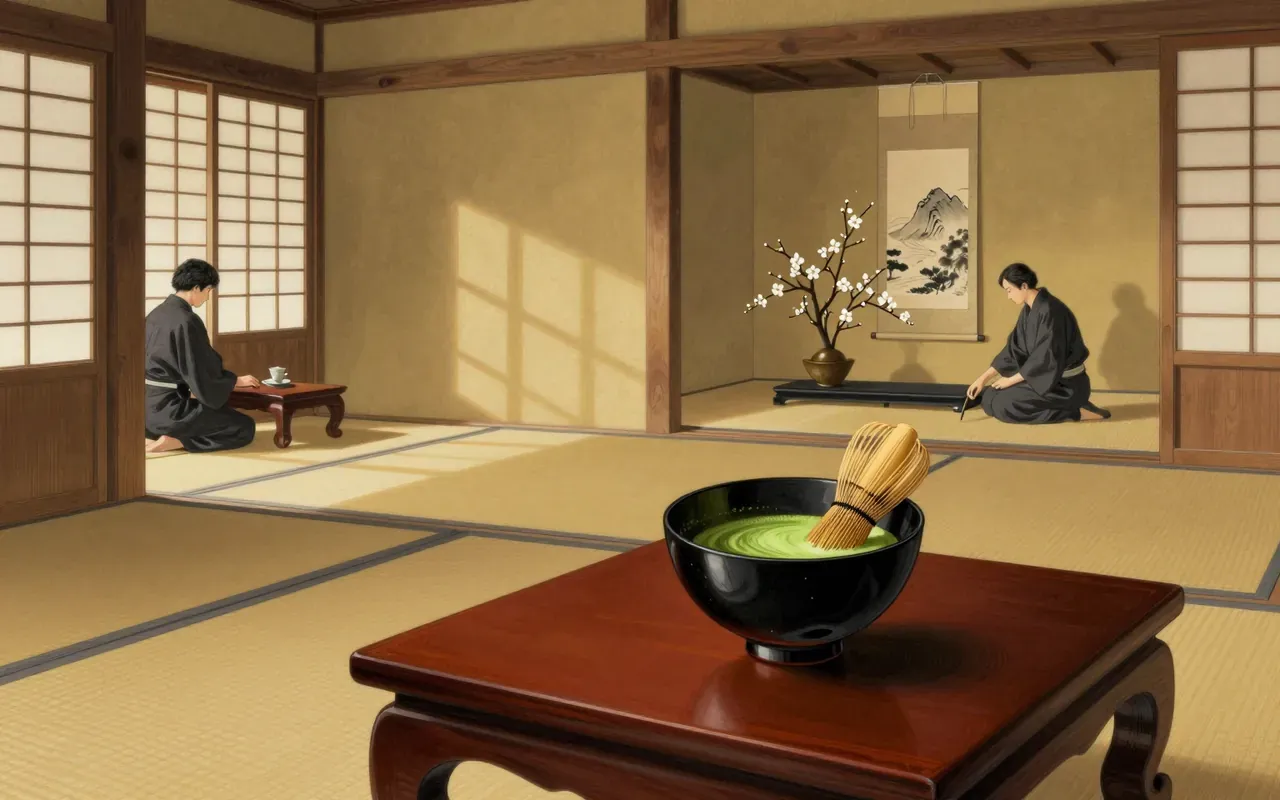
Matcha is a fine green tea powder made from shade-grown, steamed, unrolled Camellia sinensis leaves, traditionally prepared in hot water.
Matcha is a finely ground powder of green tea made from shade-grown Camellia sinensis var. sinensis leaves. It originated through cultural exchanges between China and Japan in the premodern period, developing from earlier powdered tea practices transmitted by Zen Buddhist monks. Japanese tea farmers developed shading techniques during the Muromachi period in the sixteenth century to produce tencha, the leaf form used for grinding into matcha.
Matcha is a finely ground powder of green tea made from shade-grown Camellia sinensis var.
0:26
How it works, in terms someone would actually use
The finely ground tea is suspended in hot water for drinking.
0:30
What it gets right
Shade growing gives matcha its characteristic bright green color and strong umami flavor—qualities directly tied to its visual and taste appeal.
0:38
What it does not
Inexpensive green tea made from non-shade-grown leaves, called hunmatsucha, is sometimes sold as 'matcha' but does not meet the definition requiring shade-grown leaves.
0:47
What it changed
Japanese tea farmers developed shading techniques in the Muromachi period to produce tencha, distinguishing matcha from earlier powdered teas by this cultivation method.
0:56
Who it is for, and who it is not
Matcha is for people seeking a tea product defined by shade-grown, steamed, unrolled, finely ground Camellia sinensis var.
1:08
Is it worth your time
It is worth your time if you want a tea defined by specific cultivation and processing criteria—including shade-growing for 2–3 weeks—and consumed suspended in hot water.
Worth your time?
Selectively. Start with the brief, then cook the parts we point at.
What works
Shade growing gives matcha its characteristic bright green color and strong umami flavor—qualities directly tied to its visual and taste appeal.
What does not
Inexpensive green tea made from non-shade-grown leaves, called hunmatsucha, is sometimes sold as 'matcha' but does not meet the definition requiring shade-grown leaves.
Cook it if
Skip it if
The written brief1 min read
What the dish is and where it came from
Matcha is a finely ground powder of green tea made from shade-grown Camellia sinensis var. sinensis leaves. It originated through cultural exchanges between China and Japan in the premodern period, developing from earlier powdered tea practices transmitted by Zen Buddhist monks. Japanese tea farmers developed shading techniques during the Muromachi period in the sixteenth century to produce tencha, the leaf form used for grinding into matcha.
How it works, in terms someone would actually use
The finely ground tea is suspended in hot water for drinking.
What it gets right
Shade growing gives matcha its characteristic bright green color and strong umami flavor—qualities directly tied to its visual and taste appeal.
What it does not
Inexpensive green tea made from non-shade-grown leaves, called hunmatsucha, is sometimes sold as ‘matcha’ but does not meet the definition requiring shade-grown leaves.
What it changed
Japanese tea farmers developed shading techniques in the Muromachi period to produce tencha, distinguishing matcha from earlier powdered teas by this cultivation method.
Who it is for, and who it is not
Matcha is for people seeking a tea product defined by shade-grown, steamed, unrolled, finely ground Camellia sinensis var. sinensis. It is not for those satisfied with non-shade-grown powdered tea like hunmatsucha.
Is it worth your time
It is worth your time if you want a tea defined by specific cultivation and processing criteria—including shade-growing for 2–3 weeks—and consumed suspended in hot water.