9:04in productionCh. 1 · What it is/ 9:04 · ceiling 15 min
Culture · Ingredients
Miso
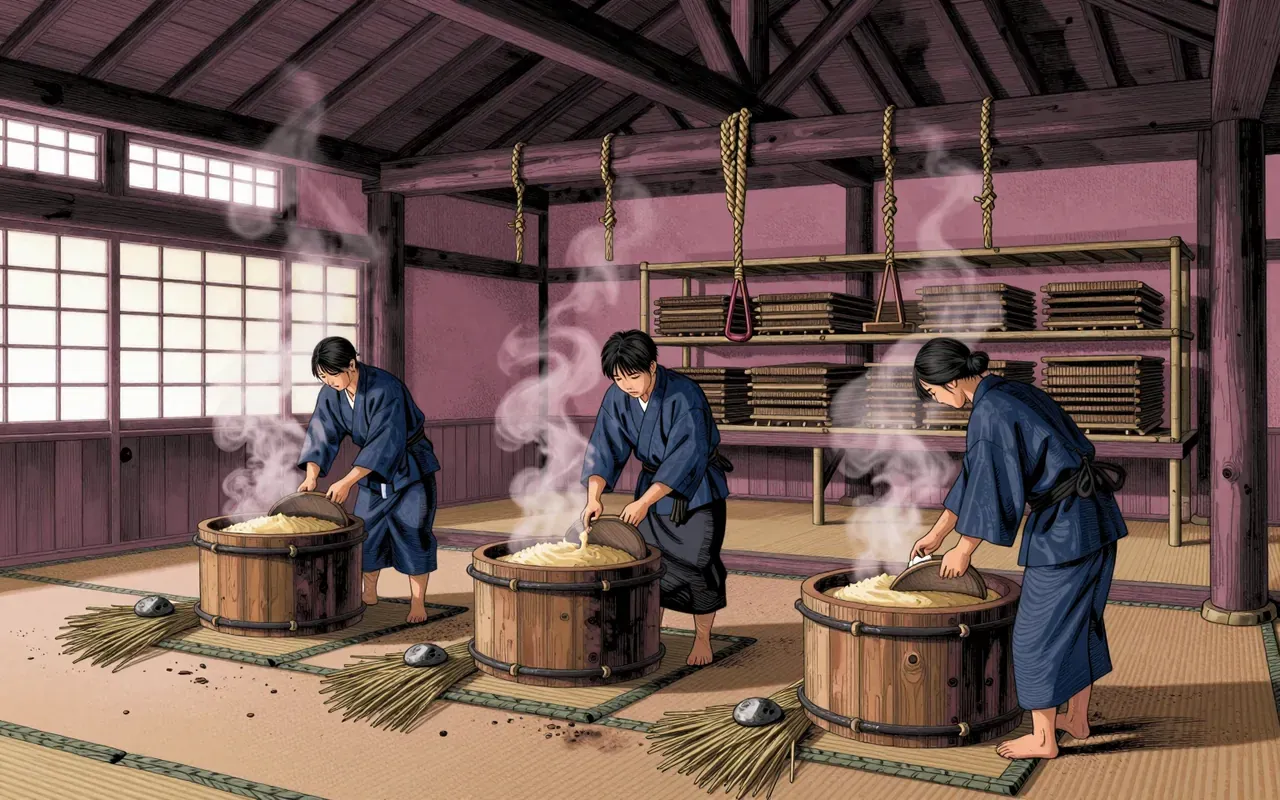
Miso is not a condiment. It is a 14,000-year-old food system in paste form.
Miso is a fermented soybean paste made with salt and kōji, sometimes with rice or barley. It has been produced in Japan since the Jōmon period (14,000–300 BC), with precursors from China in the third century BC and formalisation during the Nara period (710–794). It serves as soup base, pickle medium, marinade, and condiment. It is high in protein and minerals but also high in salt. It played a key nutritional role in feudal Japan.
Miso is a fermented soybean paste—made with salt, kōji, and often grains—not a broth or garnish.
2:12
Where it came from
Miso’s lineage spans Jōmon-era grain ferments, Chinese precursors, Buddhist-era soy imports, and Nara-period codification.
3:25
What it gets right
It feeds people: as soup, pickle, marinade—and as protein and mineral source where meat was scarce.
4:14
What it gets wrong
Its nutritional value is real—but so is its salt load, unmodified by fermentation.
5:07
Why it matters now
It matters now because fermentation isn’t flavour—it’s resilience, adaptation, and regional knowledge encoded in microbes.
Worth your time?
Yes. Cook the whole thing.
4.5/ 5
What works
as food system
as historical record
as microbial archive
What does not
iconic
groundbreaking
timeless
seminal
Cook it if
cooks
historians of food
nutritional epidemiologists
Skip it if
casual diners seeking umami shortcuts
health influencers promoting 'functional' pastes
The written brief1 min read
What the thing is
Miso is a traditional Japanese fermented soybean paste. It is made with salt and kōji (Aspergillus oryzae), sometimes with rice, barley, seaweed, or other ingredients. It functions as a seasoning, sauce, spread, pickle medium, and soup base.
Where it came from
Grain and fish misos were made in Japan since the Jōmon period (14,000–300 BC). A predecessor originated in China in the third century BC. Fermented soy foods like hishio arrived with Buddhism in the sixth century AD. The current form began as mishō in the Nara period (710–794).
What it gets right
Miso delivers protein and minerals in a stable, shelf-stable form. It sustained populations through feudal Japan’s resource constraints. Its regional variations reflect local grain, climate, and labour conditions—not just taste.
What it gets wrong
Its high salt content contradicts modern dietary guidance on hypertension and cardiovascular risk. This is not mitigated by fermentation. Salt remains salt.
Why it matters now
Miso anchors a global conversation about fermentation—not as trend but as preservation logic, microbial literacy, and pre-industrial food sovereignty. Its industrial dominance today obscures its origins in household and temple production.
Is it worth your time
Yes—if you care about how fermentation shapes food systems, nutrition, and regional identity. It is not a novelty ingredient. It is infrastructure.