1:01in productionCh. 1 · What the dish is and where it came from/ 1:01 · ceiling 15 min
Dishes · Restaurants
Nasi padang
Steamed rice with pre-cooked Minangkabau dishes from West Sumatra, Indonesia, served in two distinct service styles.
Nasi padang is a Minangkabau dish of steamed rice served with various pre-cooked dishes. It originates from West Sumatra, Indonesia, and is named after Padang, the province’s capital.
Nasi padang is a Minangkabau dish of steamed rice served with various pre-cooked dishes.
0:11
How it works, in terms someone would actually use
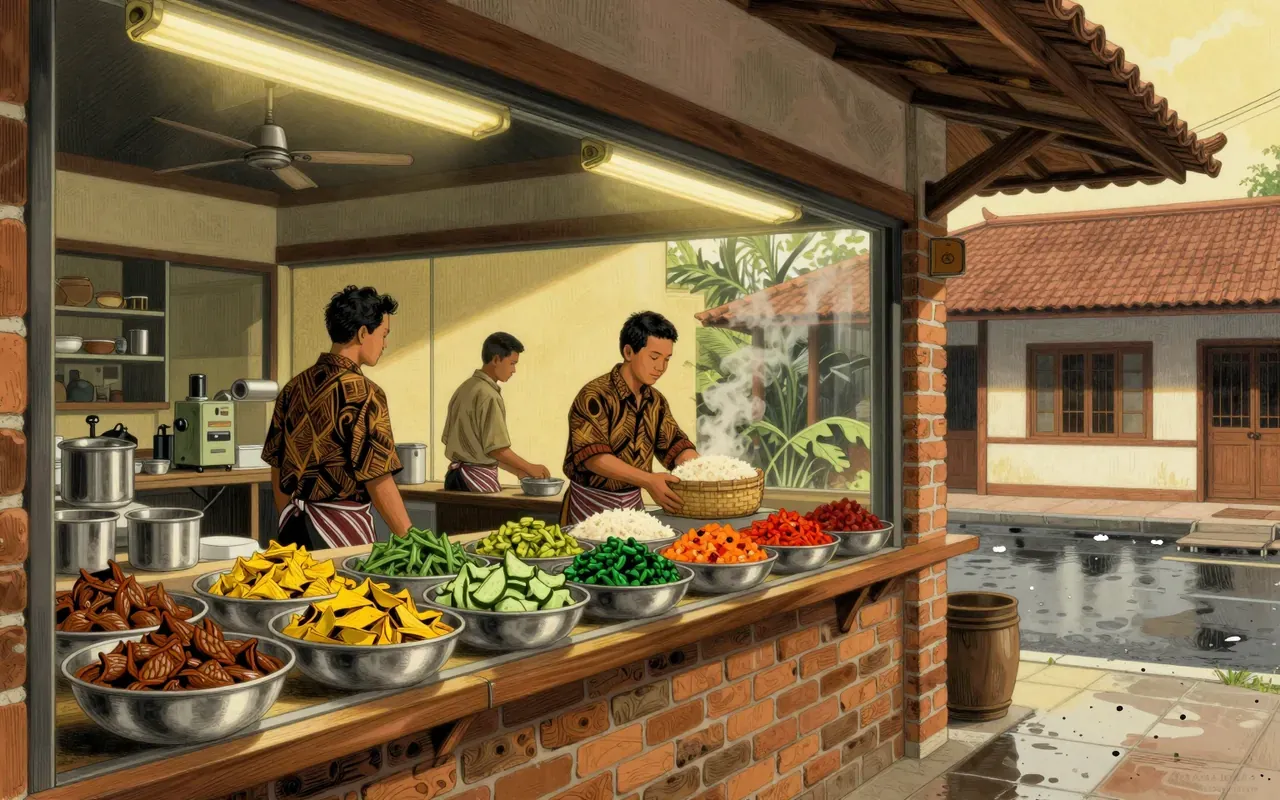
It uses two service methods: pesan (ordering individually from a window display) or hidang (a waiter-served array of dishes at your table, with payment only for what you eat).
0:23
What it gets right
It gets right the balance of texture and spice—rendang, for example, offers tender beef in rich, dried chili–coconut gravy.
0:31
What it does not
It does not offer customization during cooking; all dishes are pre-cooked and selected as-is.
0:37
What it changed
It changed restaurant design: Padang eateries commonly feature Rumah Gadang–style facades and prominent window displays.
0:43
Who it is for, and who it is not
It is for people comfortable eating with hands and using kobokan (lime water) for hand-washing.
0:53
Is it worth your time
It is worth your time if you want variety, control over portion selection, and a social or festive dining format.
Worth your time?
Selectively. Start with the brief, then cook the parts we point at.
What works
It gets right the balance of texture and spice—rendang, for example, offers tender beef in rich, dried chili–coconut gravy.
What does not
It does not offer customization during cooking; all dishes are pre-cooked and selected as-is.
Cook it if
Skip it if
The written brief1 min read
What the dish is and where it came from
Nasi padang is a Minangkabau dish of steamed rice served with various pre-cooked dishes. It originates from West Sumatra, Indonesia, and is named after Padang, the province’s capital.
How it works, in terms someone would actually use
It uses two service methods: pesan (ordering individually from a window display) or hidang (a waiter-served array of dishes at your table, with payment only for what you eat).
What it gets right
It gets right the balance of texture and spice—rendang, for example, offers tender beef in rich, dried chili–coconut gravy.
What it does not
It does not offer customization during cooking; all dishes are pre-cooked and selected as-is.
What it changed
It changed restaurant design: Padang eateries commonly feature Rumah Gadang–style facades and prominent window displays.
Who it is for, and who it is not
It is for people comfortable eating with hands and using kobokan (lime water) for hand-washing. It is not for those who avoid communal or hand-eaten meals.
Is it worth your time
It is worth your time if you want variety, control over portion selection, and a social or festive dining format.