foodbriefs
9:42in productionCh. 1 · Origin/ 9:42 · ceiling 15 min
Dishes

Ossobuco

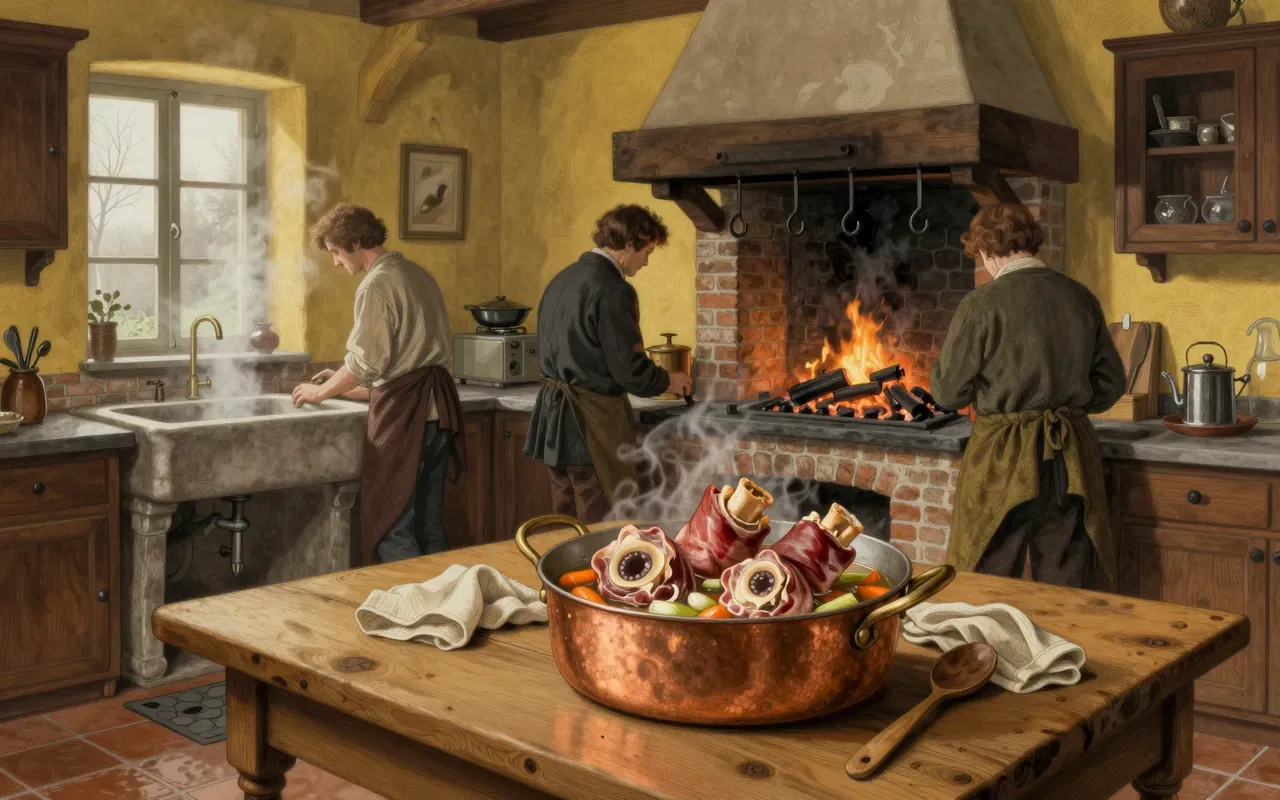
Ossobuco is not about the meat — it’s about the marrow, the bone, and the slow surrender of collagen.

Ossobuco is a Lombard dish of cross-cut veal shanks braised in white wine and meat broth. It exists in two forms: the original tomato-free ossobuco in bianco (with cinnamon, bay leaf, and gremolada) and the modern tomato-based version (with carrots, celery, and onions). Its defining feature is the marrow-filled bone — not the meat — and it belongs only with risotto alla milanese or polenta.

Chapters & takeaways6
  1. 1:02
    Origin

    Ossobuco is a Lombard specialty — not Tuscan, not Neapolitan, not Roman.

  2. 2:00
    The Cut

    The shank is cross-cut into 3 cm sections — a high bone-to-meat ratio is non-negotiable.

  3. 3:05
    Two Versions

    Two versions exist: one with cinnamon and bay leaf, no tomatoes; one with tomatoes, carrots, celery, and onions.

  4. 3:55
    The Braise

    Most recipes start by dredging and browning in butter, then braise in white wine and meat broth.

  5. 5:04
    The Pairing

    Traditional pairings are risotto alla milanese or polenta — not pasta, not potatoes.

  6. 6:37
    The Finish

    Gremolada is mandatory in the original version, optional in the modern one.

Worth your time?

Yes. Cook the whole thing.

4.5/ 5
What works
  • Marrow release into braising liquid
  • Contrast between chewy tendon and soft bone
  • Clean pairing with risotto alla milanese
What does not
  • Deliver even meat yield
  • Work in under two hours
  • Suit bone-averse diners
Cook it if
  • Cooks who respect collagen
  • Eaters who prize marrow as flavour and texture
Skip it if
  • Those seeking lean protein
  • Weeknight cooks without three hours
The written brief1 min read

What the dish is and where it came from

Ossobuco is a Lombard dish of cross-cut veal shanks braised with vegetables, white wine, and broth. It is defined by its marrow-filled bone and two main versions: the original ossobuco in bianco and the modern tomato-based version.

How it works, in terms someone would actually use

It works by braising cross-cut veal shanks — about 3 cm thick — in white wine and meat broth flavoured with vegetables. Most recipes begin by dredging the shanks in flour and browning them in butter.

What it gets right

It gets the marrow right. The cross-cut shank from the top of the shin holds intact, gelatinous marrow that melts into the sauce. It gets the pairing right: risotto alla milanese or polenta absorbs the braising liquid without competing.

What it does not

It does not deliver tender, pull-apart meat. The cut has a high bone-to-meat ratio. It does not rely on acidity or spice for lift: gremolada is optional in the modern version, absent in the original.

What it changed

It changed from a tomato-free preparation — ossobuco in bianco, seasoned with cinnamon and bay leaf — to a modern version that includes tomatoes, carrots, celery, and onions.

Who it is for, and who it is not

It is for cooks who value texture contrast — chewy tendon, soft marrow, yielding meat — and eaters who seek depth over speed. It is not for those who avoid bones, dislike long braises, or expect uniform meat yield.

Is it worth your time

Yes, if you want a rich, marrow-led braise that rewards slow cooking and pairs cleanly with risotto alla milanese or polenta. No, if you expect lean meat or quick results.

Same course · Dishes4 of 485
Up next in Food

Phat kaphrao

· 10:17

Holy basil isn’t garnish here — it’s the brake, the accelerator, and the only reason this stir-fry doesn’t vanish into the pan.

10:17