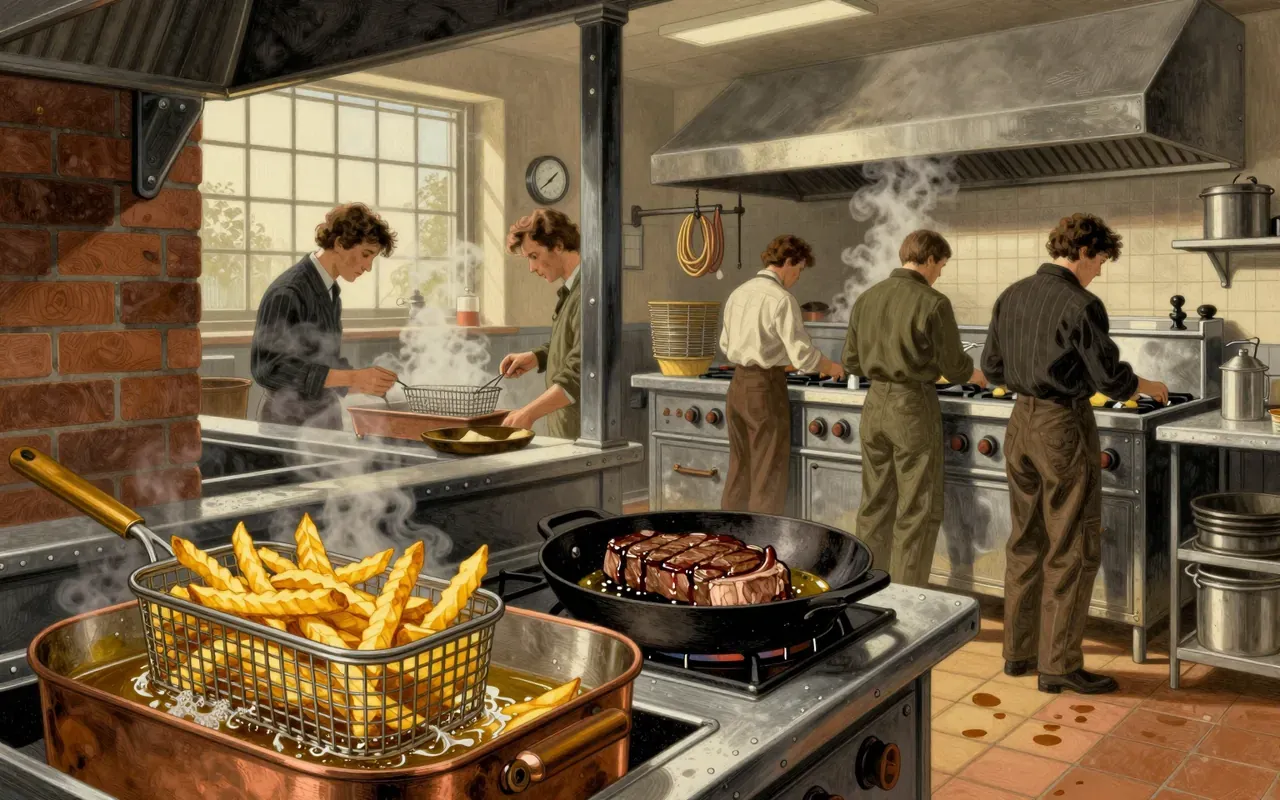
Steak frites is beefsteak served with fried chipped potatoes.
0:07
How it works, in terms someone would actually use
The steak—typically entrecôte, rib eye, or scotch fillet—is pan-fried rare ('saignant') in a pan reduction sauce, sometimes with hollandaise or béarnaise.
0:17
What it gets right
It delivers meat and potatoes in one plate: a substantial cut of beef paired with crisp, deep-fried potatoes and rich sauces.
0:25
What it does not
It is not a vegetable-forward or light dish.
0:35
What it changed
The cut of steak shifted from historically common rump to today’s more frequent entrecôte, rib eye, or scotch fillet.
0:43
Who it is for, and who it is not
It is for people who want a classic brasserie meal centered on beef and fried potatoes.
0:54
Is it worth your time
Yes—if you enjoy beefsteak with deep-fried potatoes in a brasserie setting.
Worth your time?
Selectively. Start with the brief, then cook the parts we point at.
What works
It delivers meat and potatoes in one plate: a substantial cut of beef paired with crisp, deep-fried potatoes and rich sauces.
What does not
It is not a vegetable-forward or light dish. The emphasis on beef and deep-fried potatoes makes it less suitable if you seek low-fat or plant-based meals.
Cook it if
Skip it if
The written brief1 min read
What the dish is and where it came from
Steak frites is beefsteak served with fried chipped potatoes. Its name is French for ‘steak [and] chipped potatoes’.
How it works, in terms someone would actually use
The steak—typically entrecôte, rib eye, or scotch fillet—is pan-fried rare (‘saignant’) in a pan reduction sauce, sometimes with hollandaise or béarnaise. The potatoes are deep-fried.
What it gets right
It delivers meat and potatoes in one plate: a substantial cut of beef paired with crisp, deep-fried potatoes and rich sauces.
What it does not
It is not a vegetable-forward or light dish. The emphasis on beef and deep-fried potatoes makes it less suitable if you seek low-fat or plant-based meals.
What it changed
The cut of steak shifted from historically common rump to today’s more frequent entrecôte, rib eye, or scotch fillet.
Who it is for, and who it is not
It is for people who want a classic brasserie meal centered on beef and fried potatoes. It is not for those avoiding red meat or deep-fried foods.
Is it worth your time
Yes—if you enjoy beefsteak with deep-fried potatoes in a brasserie setting. It is widely served and culturally anchored in Belgium and France.