foodbriefs
8:41in productionCh. 1 · Stranded in Lima/ 8:41 · ceiling 15 min
Dishes · Food history

Pollo a la brasa

A Swiss immigrant’s wartime detour gave Peru its most reliable roast chicken — and rewrote how fast food could taste.

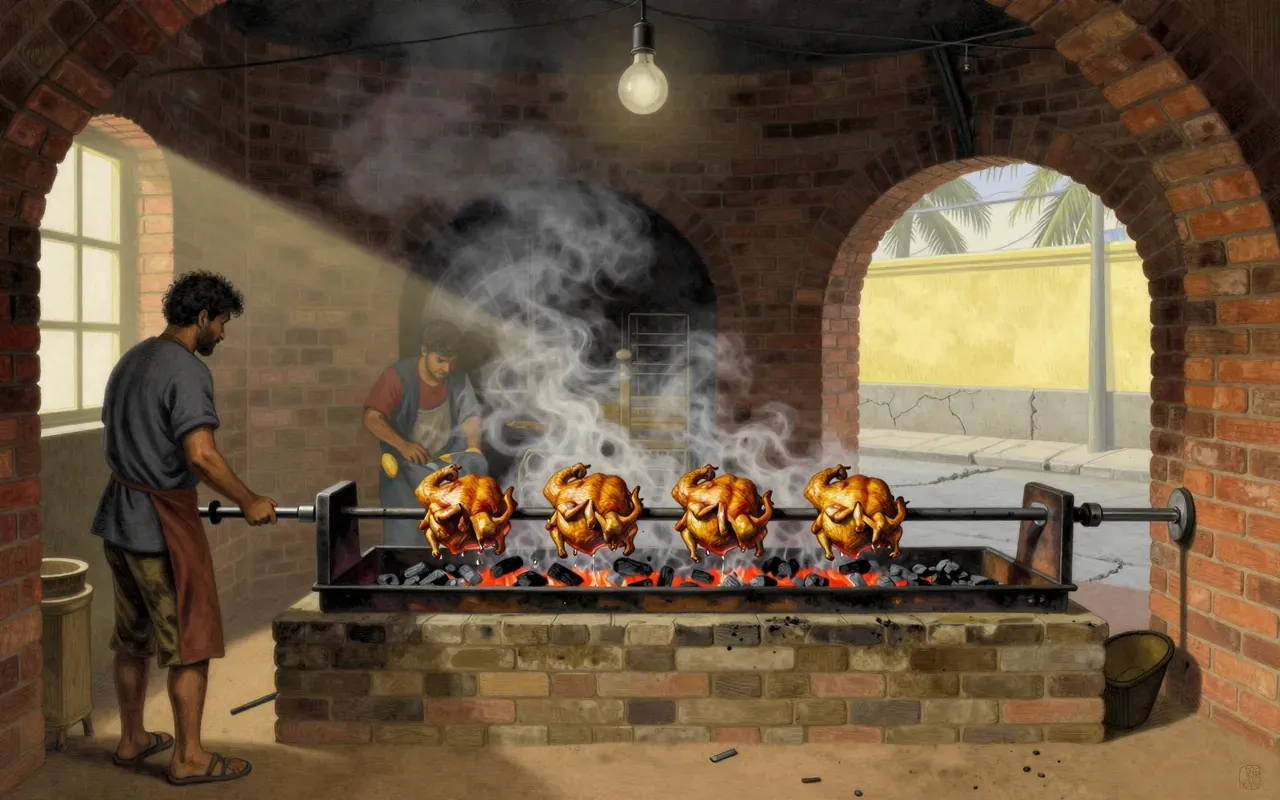
Pollo a la brasa is a Peruvian rotisserie chicken dish developed in 1950 by Swiss immigrant Roger Schuler in Lima. It began as salt-seasoned chicken roasted on a spit over charcoal and served with large french fries. Franz Ulrich later built the 'El rotombo' rotisserie oven to meet catering demand. Over time, spices like huacatay and ají panca were added. Today it is almost always served with ají salsa or mayonnaise-based sauces and appears globally in Peruvian fusion restaurants.

Chapters & takeaways5
  1. 1:08
    Stranded in Lima

    Pollo a la brasa was born from necessity: a Swiss chef stranded in Lima during WWII created it in 1950.

  2. 2:08
    Salt and Spit

    The original method was simple: salt, spit, charcoal, and large french fries — no marinade, no sauce, no cutlery.

  3. 3:17
    The Rotombo Revolution

    High-volume demand led to 'El rotombo' — a custom rotisserie oven built by a fellow Swiss metalworker.

  4. 4:26
    From Hands to Forks

    Spices like huacatay and ají panca were added later. Eating with cutlery and serving with ají or mayo became standard.

  5. 5:07
    Peru’s Roast, Exported

    Today it’s a global staple — found everywhere from Lima street stalls to Peruvian fusion restaurants abroad.

Worth your time?

Yes. Cook the whole thing.

4.5/ 5
What works
  • delivers even browning and juiciness through rotation and radiant charcoal heat
  • pairs well with bold, acidic or creamy accompaniments
  • adapts cleanly to local tastes without losing structural integrity
What does not
  • rely on slow braising, stewing or frying
  • require marinating for hours
  • use gas or electric ovens as its defining heat source
Cook it if
  • people who want fast, hot, shareable, texturally distinct chicken
  • people who want high-heat, evenly cooked chicken with crisp skin and deep charcoal flavour
Skip it if
  • people seeking delicate, sous-vide precision
  • people seeking low-heat, collagen-rich poultry
The written brief1 min read

What the dish is and where it came from

Pollo a la brasa is a Peruvian rotisserie chicken dish. Roger Schuler developed it in Lima in 1950. It began as salt-seasoned chicken roasted on a spit over charcoal.

How it works, in terms someone would actually use

Chicken is roasted on a rotating spit over charcoal. The original method used only salt. Later versions add spices like rosemary, huacatay, ají panca and cumin. It is served with large french fries, ají salsa or mayonnaise-based sauces.

What it gets right

It delivers even browning and juiciness through rotation and radiant charcoal heat. It pairs well with bold, acidic or creamy accompaniments. It adapts cleanly to local tastes without losing structural integrity.

What it does not

It does not rely on slow braising, stewing or frying. It does not require marinating for hours. It does not use gas or electric ovens as its defining heat source.

What it changed

It changed Peruvian street and casual dining by introducing high-throughput rotisserie cooking to Lima, enabling fast, consistent service at scale.

Who it is for, and who it is not

It is for people who want fast, hot, shareable, texturally distinct chicken. It is not for people seeking delicate, sous-vide precision or low-heat, collagen-rich poultry.

Is it worth your time

Yes, if you want a high-heat, evenly cooked chicken with crisp skin and deep charcoal flavour — but only if the rotisserie is properly maintained and the bird is not over-marinated or under-seasoned.

Same course · Dishes4 of 485
Up next in Food

Polbo á feira

· 8:30

Octopus boiled in copper, dipped three times, rested, then dressed: Galicia’s most honest seafood test.

8:30