The original pastel de nata exists only in one building in Belém—and only because monks sold their recipe to survive closure.
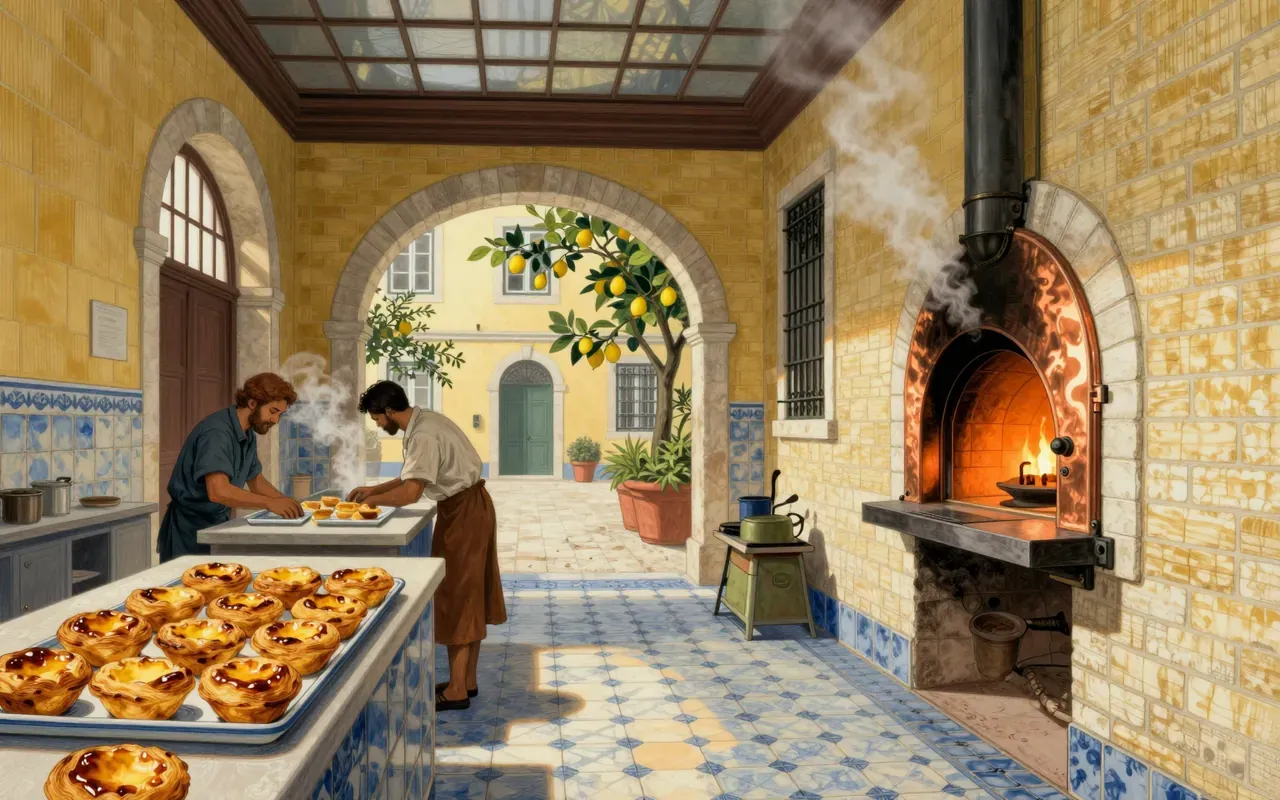
Pastel de nata is a Portuguese egg-custard tart from Belém, Lisbon. Catholic monks at the Jerónimos Monastery created it before the 18th century. After monastery closures began in 1820, they sold it at a nearby sugar refinery to raise revenue. In 1834, the monastery closed and the recipe was sold to that refinery, which opened Fábrica de Pastéis de Belém in 1837. Since then, the original recipe has been kept in a secret room—and used exclusively there. Fábrica de Pastéis de Belém is the only place in the world that produces the original pastry.
It was invented by monks in Belém before the 18th century—long before national borders or modern pastry shops.
2:41
Revenue, not ritual
It became commercial only after 1820, when monks sold it at a sugar refinery to fund themselves amid state closures.
4:16
One recipe, one place
Since 1837, the original recipe has been locked in a secret room—and used nowhere but Fábrica de Pastéis de Belém.
6:10
No originals elsewhere
Every pastel de nata made outside that factory is a derivative—not an interpretation, but a departure.
Worth your time?
Yes. Cook the whole thing.
4.5/ 5
What works
custard-pastry contrast
heat-induced caramelisation
monastic-to-commercial lineage
What does not
replicate reliably
exist outside Belém as the original
explain itself through public technique
Cook it if
people who value procedural fidelity over convenience
those willing to queue for geography-bound authenticity
Skip it if
home bakers seeking a shareable formula
anyone treating ‘authentic’ as a flavour note rather than a condition
The written brief1 min read
What the dish is and where it came from
Pastel de nata is a Portuguese egg-custard tart from Belém, Lisbon. Catholic monks at the Jerónimos Monastery created it before the 18th century.
How it works, in terms someone would actually use
A crisp, flaky puff pastry shell holds a rich, caramelised egg-yolk custard. The custard sets firm but wobbles slightly when jiggled. The pastry is baked at high heat to blister and darken the top of the filling.
What it gets right
The contrast between shatteringly crisp, layered pastry and molten, bittersweet custard. The heat-blistered top that tastes of toasted sugar and scorched yolk.
What it does not
It does not travel. It does not scale without compromise. It does not reveal its method. It is not replicable outside Fábrica de Pastéis de Belém.
What it changed
It turned monastic surplus into commercial tradition. It anchored a global dessert category to one secret recipe and one location.
Who it is for, and who it is not
It is for people who accept that authenticity is geographic and procedural—not just taste-based. It is not for people who believe recipes exist independently of place and custody.
Is it worth your time
Yes—if you are in Belém and can queue at Fábrica de Pastéis de Belém. No—if you are seeking the original elsewhere. Every other version is a variation, not the original.