foodbriefs
1:02in productionCh. 1 · What the dish is and where it came from/ 1:02 · ceiling 15 min
Street food · Dishes

Pizza al taglio

A Roman-origin rectangular pizza baked in trays and sold by weight in slices.

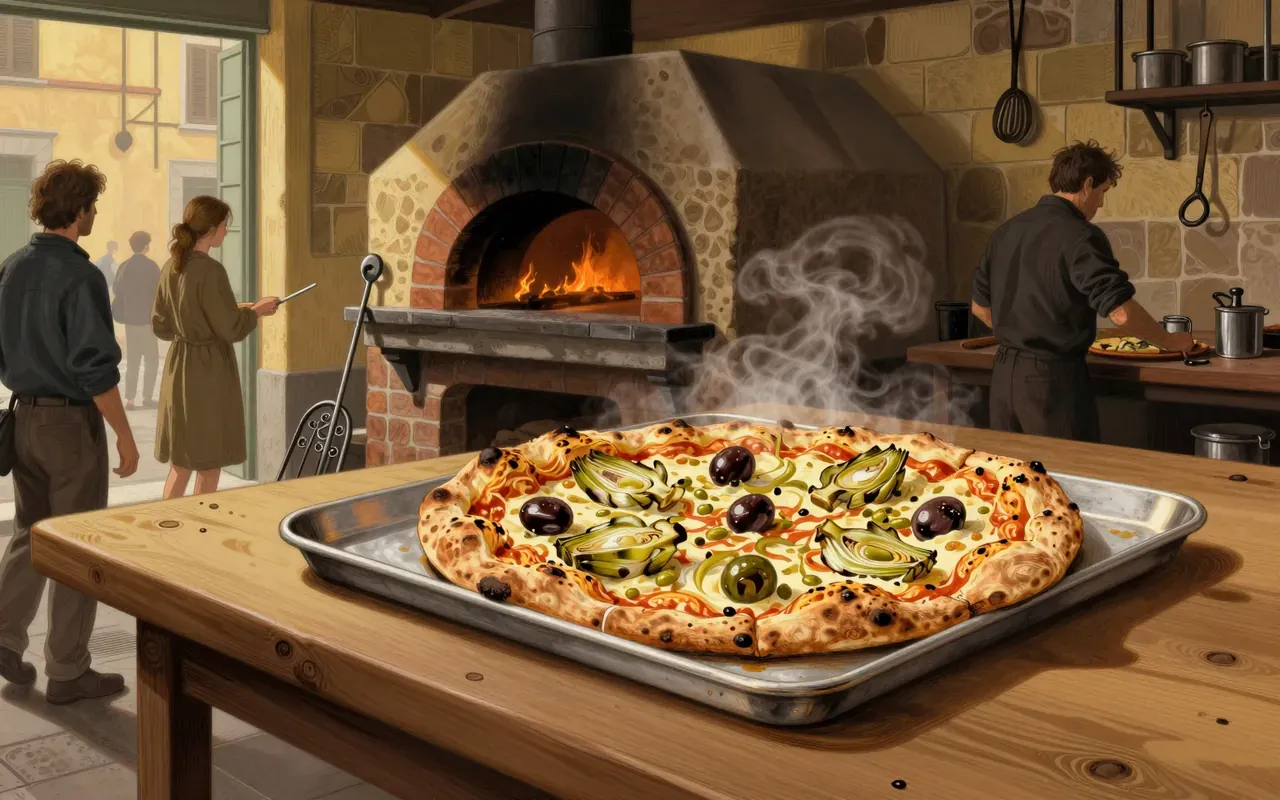
Pizza al taglio is a Roman-origin variety of pizza baked in large rectangular trays. It is common throughout Italy and known as 'pizza by the slice'.

Chapters & takeaways7
  1. 0:00
    What the dish is and where it came from

    Pizza al taglio is a Roman-origin variety of pizza baked in large rectangular trays.

  2. 0:10
    How it works, in terms someone would actually use

    It is sold in rectangular or square slices cut to order and priced per kilogram or per 100 grams.

  3. 0:20
    What it gets right

    Its portability and casual format make it well suited for takeaway and eating outdoors, such as in a public square.

  4. 0:28
    What it does not

    It does not offer pre-portioned individual pies—slices are cut to order and priced by weight, not fixed size or count.

  5. 0:36
    What it changed

    It has expanded beyond Italy into other parts of the world, with many local variations existing alongside the traditional form.

  6. 0:44
    Who it is for, and who it is not

    It is for people seeking portable, weighed portions of pizza, often for immediate outdoor consumption.

  7. 0:54
    Is it worth your time

    Yes—it delivers a flexible, on-the-go pizza option with transparent pricing by weight and broad availability in Italy and beyond.


Worth your time?

Selectively. Start with the brief, then cook the parts we point at.

What works
  • Its portability and casual format make it well suited for takeaway and eating outdoors, such as in a public square.
What does not
  • It does not offer pre-portioned individual pies—slices are cut to order and priced by weight, not fixed size or count.
Cook it if
    Skip it if
      The written brief1 min read

      What the dish is and where it came from

      Pizza al taglio is a Roman-origin variety of pizza baked in large rectangular trays. It is common throughout Italy and known as ‘pizza by the slice’.

      How it works, in terms someone would actually use

      It is sold in rectangular or square slices cut to order and priced per kilogram or per 100 grams. The rectangular shape facilitates portioning by weight.

      What it gets right

      Its portability and casual format make it well suited for takeaway and eating outdoors, such as in a public square.

      What it does not

      It does not offer pre-portioned individual pies—slices are cut to order and priced by weight, not fixed size or count.

      What it changed

      It has expanded beyond Italy into other parts of the world, with many local variations existing alongside the traditional form.

      Who it is for, and who it is not

      It is for people seeking portable, weighed portions of pizza, often for immediate outdoor consumption. It is not for those preferring whole, round, individually served pizzas.

      Is it worth your time

      Yes—it delivers a flexible, on-the-go pizza option with transparent pricing by weight and broad availability in Italy and beyond.
      Same course · Street food4 of 49
      0:46
      SupplìSupplì are Italian snacks consisting of a ball of rice—generally risotto—with tomato sauce, typical of Roman cuisine.
      10:17
      Phat kaphraoPhat kaphrao is a Thai stir-fry of meat, holy basil, and garlic. It began in the 1925–1935 period, made by Chinese immigrants. It became nationally popular only after 1957. Its method is defined by timing: garlic first, meat second, holy basil last. Cookbook versions from the late 1970s used liquor-marinated minced meat and only fish sauce and palm sugar. Some vendors add vegetables to reduce meat costs. It evolved from xiāngcài chǎo niúròu — swapping coriander for holy basil.
      1:12
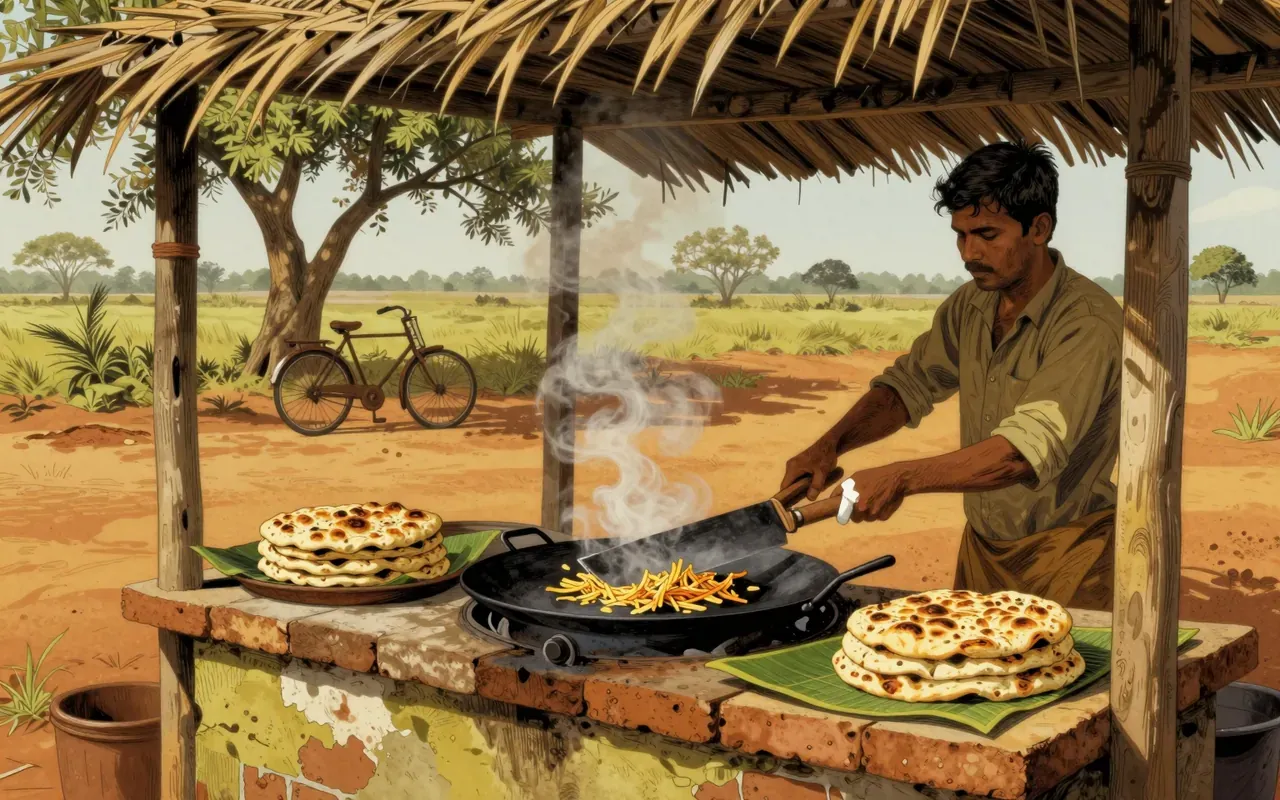
      KottuKottu roti is a Sri Lankan dish of chopped roti mixed with meat curry (beef, mutton, seafood, or chicken), scrambled egg, onions, and chillies. It originated in eastern Sri Lanka—Batticaloa and Trincomalee—among the Sri Lankan Moor community.
      9:07
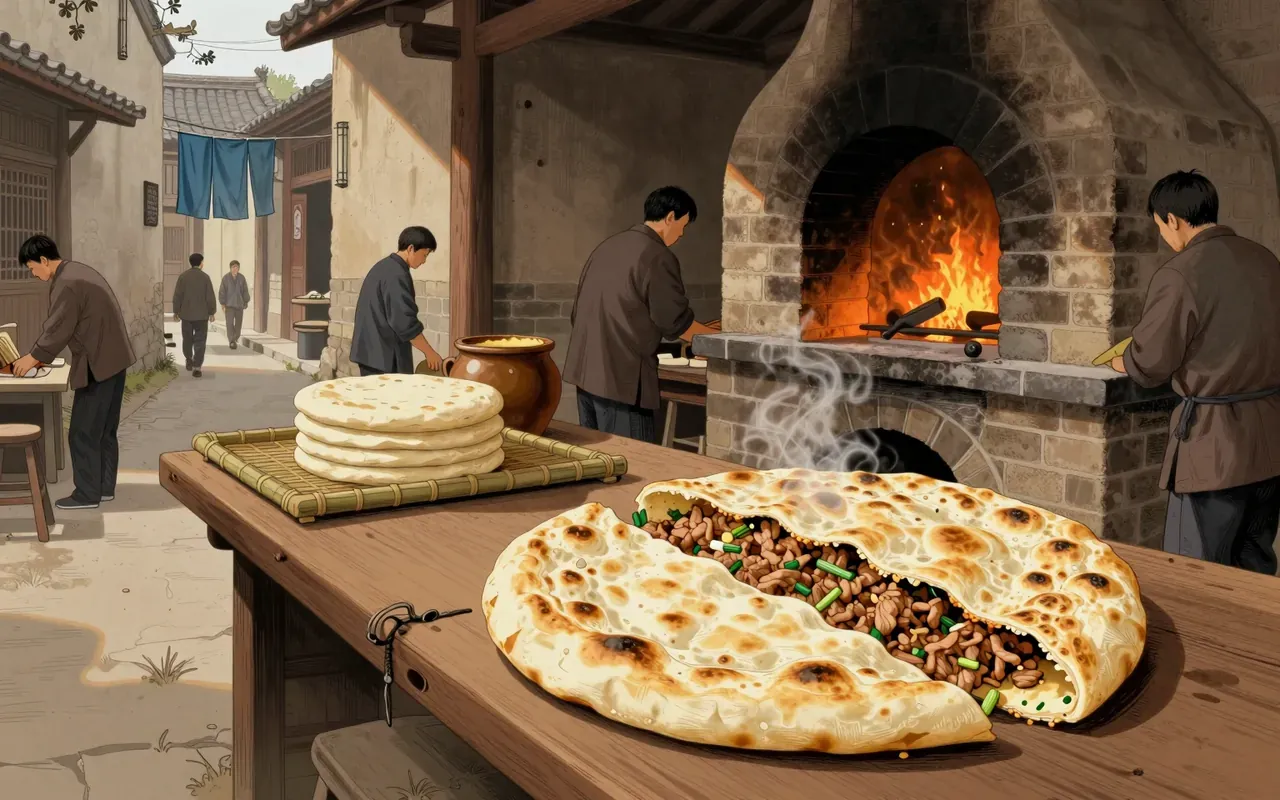
      RoujiamoRoujiamo is a Shaanxi street food: stewed meat—pork, beef or lamb—minced and stuffed into baijimo, a yeast-leavened wheat flatbread baked in a clay oven. Its bread dates to the Qin dynasty (221–206 BC); its meat technique to the Zhou dynasty (1045–256 BC). It works through contrast: chewy, blistered bread against yielding, spiced meat. It gets the texture interplay right. It does not accommodate freshness, lightness or condiment-led brightness. It changed how ancient grains and slow-cooked meats could travel—by hand, not plate. It is for eaters who value depth over delicacy. It is worth your time if you seek a savoury, structural, historically anchored street bite.
      Up next in Food

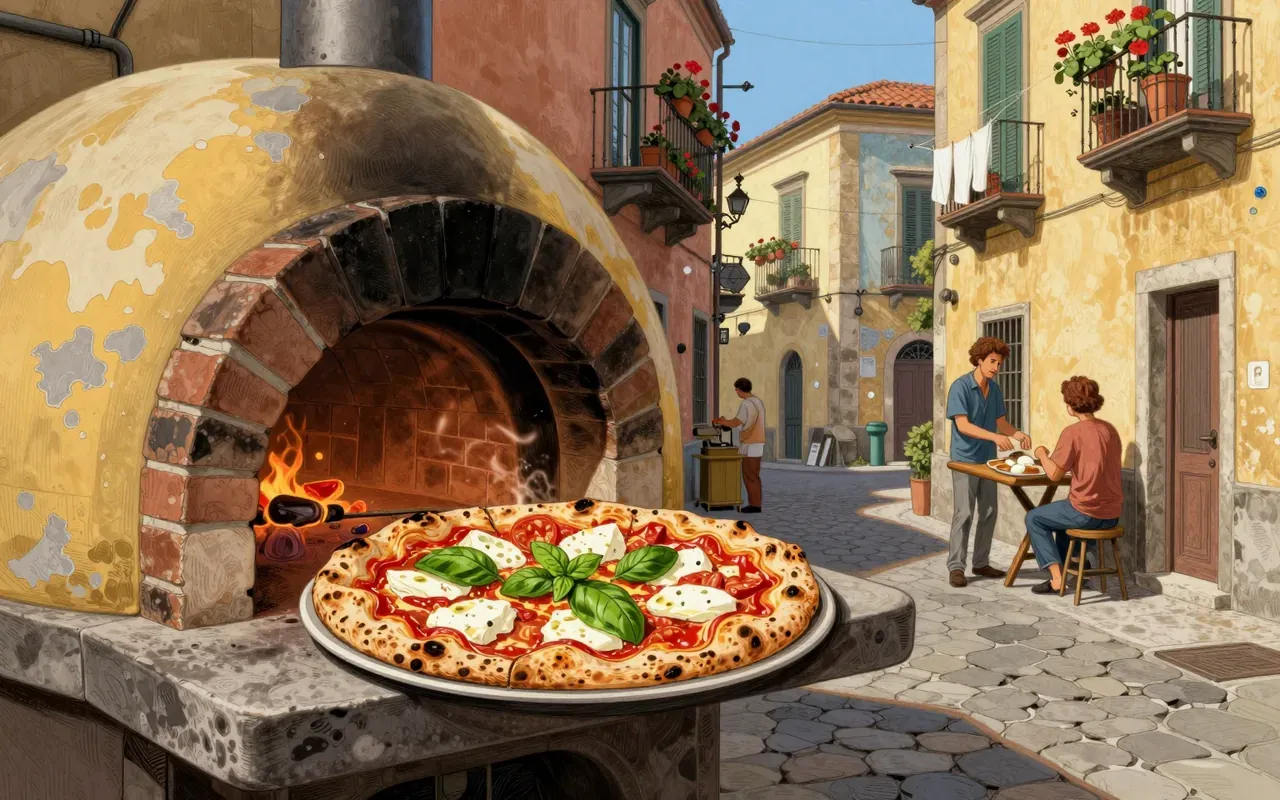
      Pizza Margherita

      · 1:25

      A round Neapolitan pizza with hand-crushed tomatoes, mozzarella, fresh basil, and olive oil, baked in a wood-fired or alternative oven.

      1:25