What the thing is
Guacamole is an avocado-based dip, spread, or salad.
Beyond modern Mexican cuisine it has become part of international cuisine as a dip, condiment and salad ingredient. The name is literal: Classical Nahuatl āhuacatl means ‘avocado’ and mōlli means ‘sauce’ or ‘mole’.
Where it came from
It was first developed in Mexico. Its name comes from Classical Nahuatl āhuacamōlli, meaning ‘avocado sauce’.
Avocado seeds were found in the Tehuacan Valley of Mexico dating from 9,000–10,000 years ago, and various Mesoamerican groups had domesticated the avocado by 5000 BCE. The first known description of a guacamole recipe, though not under that name, is in William Dampier’s 1697 book A New Voyage Round the World. On a visit to Central America he noted a native preparation made by grinding together avocados, sugar and lime juice.
What it gets right
It centres the avocado as a cultivated plant with deep human history. It preserves a functional, modular form: mash, acid, salt, optional additions.
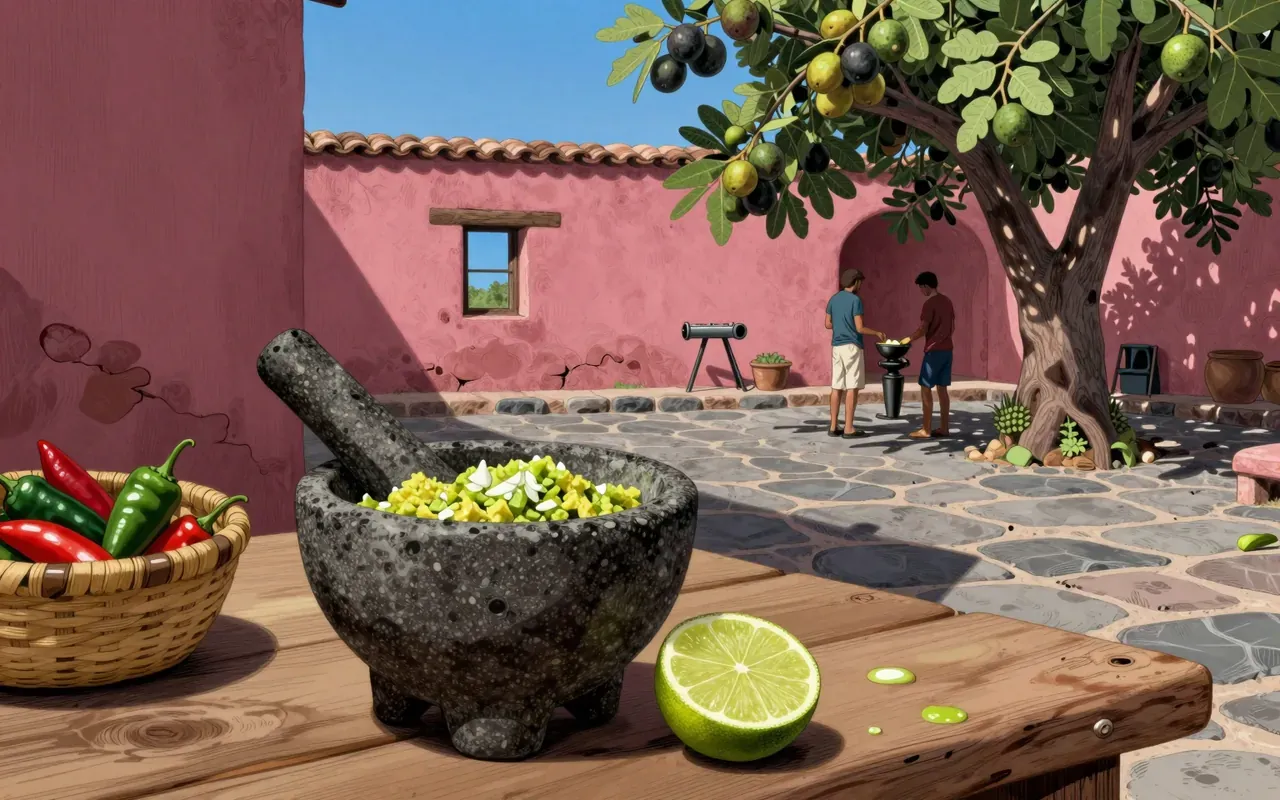
Guacamole is traditionally made by mashing peeled, ripe avocados and salt with a molcajete y tejolote, a mortar and pestle. Recipes often call for lime juice, cilantro, onions and jalapeños, while non-traditional ones may add sour cream, tomatoes, basil or peas.
What it gets wrong
It implies universality. Guacamole is not a neutral dip. It carries colonial erasure—Dampier recorded it as ethnographic curiosity, not culinary exchange.
It also turns brown. Polyphenol oxidase in the cells of the avocado reacts with oxygen in the air and develops melanoidin pigment, a result generally considered unappetizing. The methods used to counter it, some of them anecdotal, include storing the guacamole in an air-tight container or wrapping it tightly in plastic to limit the surface exposed to the air.
Why it matters now
Because its 2022 record-breaking preparation in Peribán—4,972 kg made by 500 people—reasserts local knowledge as collective infrastructure, not exportable trend.
The Peribán serving was made on 20 November 2022 and set the Guinness World Record for the largest serving of guacamole, at 10,961 lb. In the United States, guacamole has increased avocado sales, especially on Super Bowl Sunday and Cinco de Mayo, most likely because the government lifted a ban on avocado imports in the 1990s and the US Latino population grew.
Is it worth your time
Yes—if you care about food as material culture, not just flavour.