What the dish is and where it came from
Chile relleno is a Mexican dish: a roasted green chile—most commonly Puebla’s poblano—stuffed and fried. It was documented in 1858 as minced meat–stuffed and egg-coated.
How it works, in terms someone would actually use
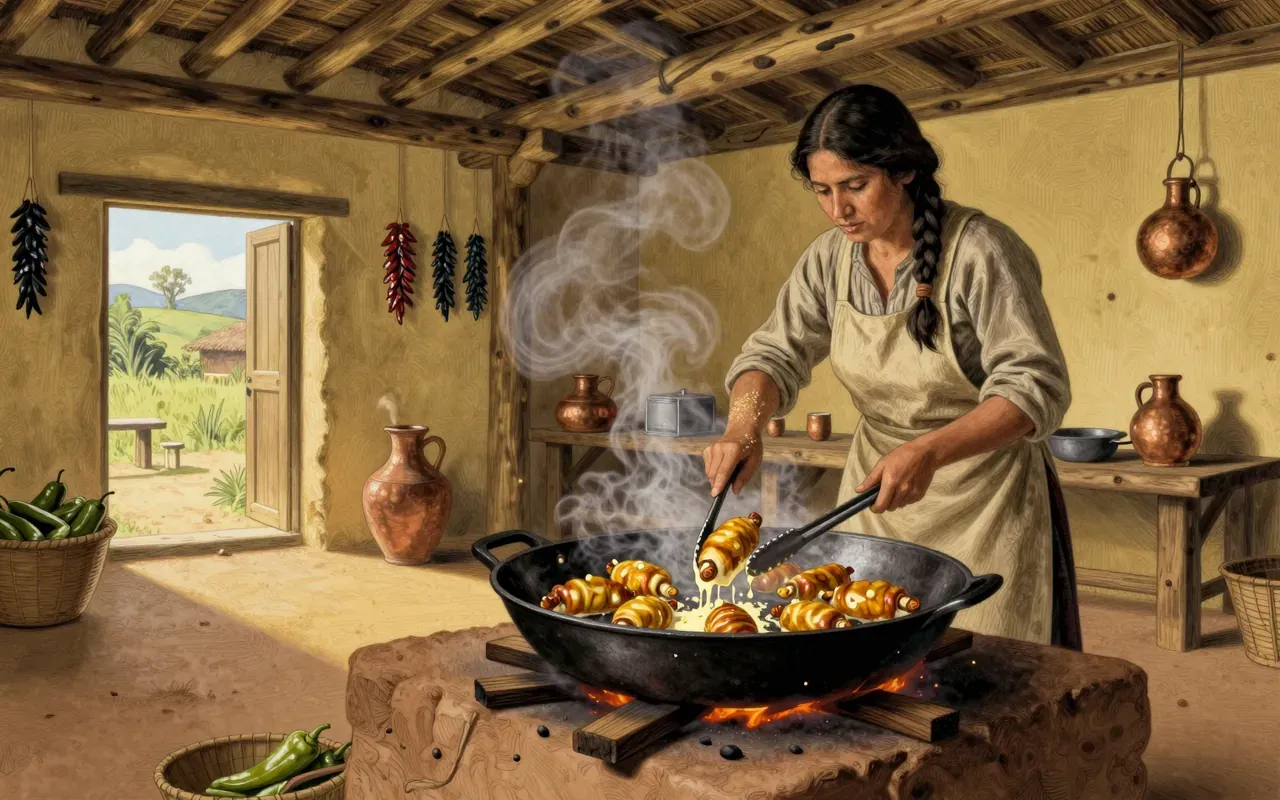
A fresh poblano pepper is roasted, peeled, and stuffed with cheese or picadillo. It is dipped in beaten egg whites or masa batter, then fried until golden. It often lands in a tomato sauce.
What it gets right
The poblano’s thick flesh holds stuffing without collapsing. Egg white batter fries light and crisp without breading weight. Roasting before stuffing deepens sweetness and loosens skin for clean peeling.
What it does not
It does not hold heat evenly. The batter cracks if the pepper swells. The sauce drowns crispness if added too soon. It does not scale well for batch frying without losing structure.
What it changed
It shifted from minced-meat stuffing in 1858 to cheese-dominant versions, especially in the US, where Monterey Jack and asadero replaced traditional picadillo.
Who it is for, and who it is not
It is for cooks who value contrast—soft pepper, molten filling, brittle batter—and who accept that success depends on timing the roast, peel, stuff, and fry sequence precisely. It is not for those who avoid frying or need repeatable, low-attention cooking.
Is it worth your time
Yes—if you want a dish where texture contrast and controlled heat define the experience. No—if you need speed, minimal technique, or consistent results without practice.