What the dish is and where it came from
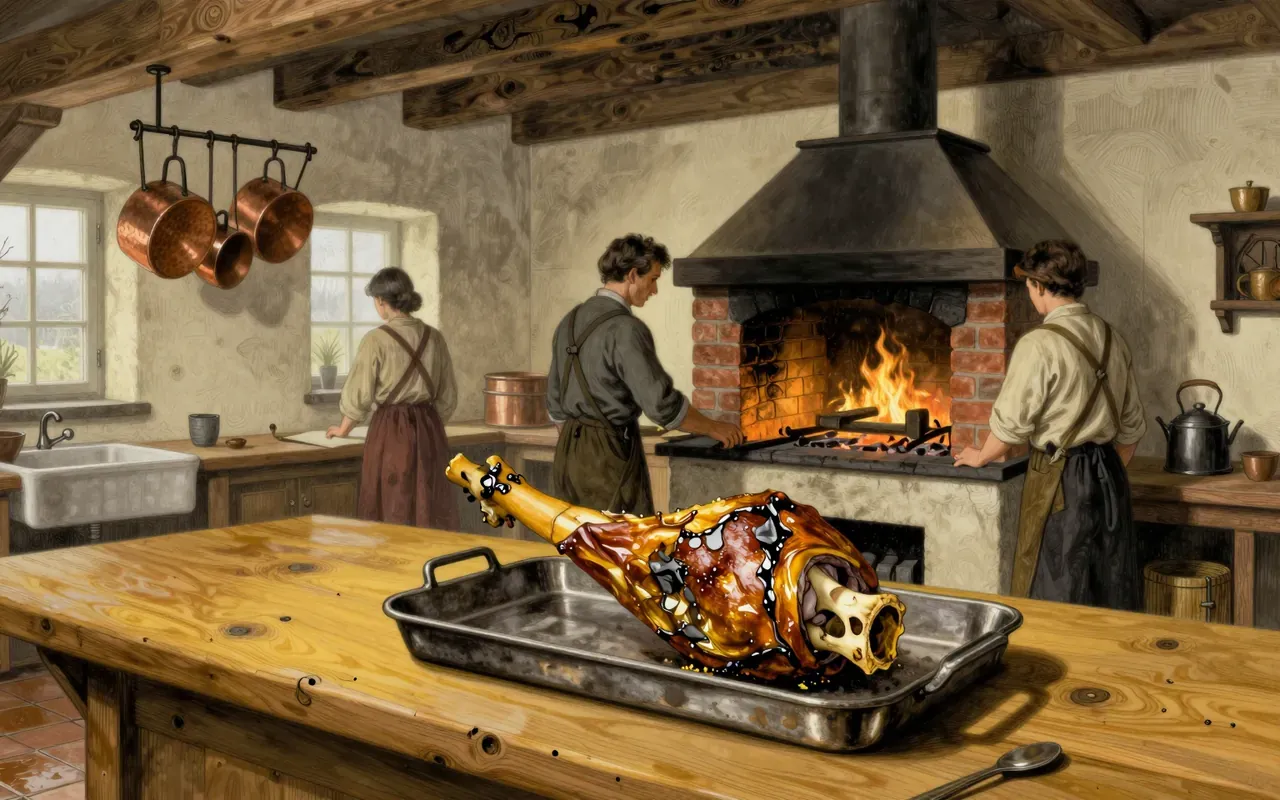
Schweinshaxe is a roasted ham hock, especially popular in Bavaria. It is peasant food: inexpensive, anatomically specific, and built around making tough meat palatable.
How it works, in terms someone would actually use
Roast the ham hock — the end of the pig’s leg, above the ankle — after marinating it for days, sometimes up to a week. Roast at low temperatures for two to three hours until the skin blisters and the meat yields.
What it gets right
It renders connective tissue tender through slow roasting. It leverages marination to deepen savoury depth. It respects the anatomy of the cut — skin, tendon, bone, and muscle — as one system.
What it does not
It does not deliver quick results. It does not suit lean-eating preferences. It does not avoid long prep or high fat content.
What it changed
It turned a cheap, tough cut into a regional staple by prioritising time and heat over refinement.
Who it is for, and who it is not
It is for eaters who value texture contrast, savoury intensity, and meat cooked until yielding. It is not for those avoiding long cooking times, high-fat cuts, or collagen-heavy dishes.
Is it worth your time
Yes, if you want deeply savoury, collagen-rich meat with crackling skin. No, if you expect speed, delicacy or lean texture.