A monastery pastry turned street snack—brilliant in texture, impossible at home.
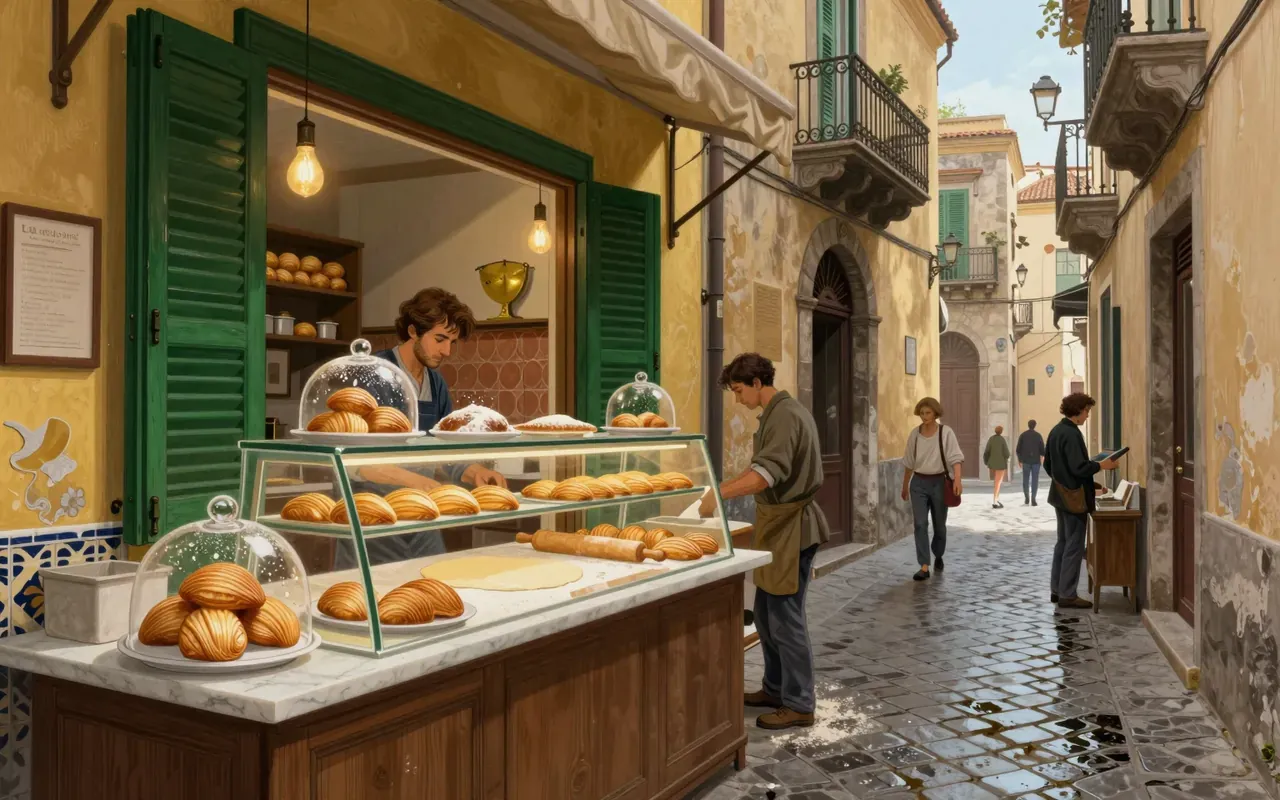
Sfogliatella is a Campanian pastry born in the Santa Rosa monastery in Conca dei Marini in the 17th century. Its riccia version relies on repeated rolling and folding to build crisp, fractal-like layers. Pasquale Pintauro brought it to Naples in 1818, turning it into a commercial product sold in pasticcerie—not made at home. It succeeds through textural contrast and regional specificity. It fails as a domestic project. It changed how monastic food enters civic life: not as relic, but as daily treat.
It began in a convent in Conca dei Marini, Campania, in the 1600s.
2:29
How the layers form
Riccia layers come from rolling and folding—not lamination, not puff, just repetition.
3:51
Shop-bought, not homemade
It lives in pasticcerie, not kitchens.
5:47
From cloister to counter
Pasquale Pintauro launched it into commerce in Naples in 1818.
Worth your time?
Yes. Cook the whole thing.
4.5/ 5
What works
layered texture
regional identity
commercial durability since 1818
What does not
home baking
beginner-friendly technique
ingredient simplicity
Cook it if
pastry enthusiasts
travellers in Campania
people who value texture over convenience
Skip it if
weeknight cooks
bakers without laminating experience
those seeking quick replication
The written brief1 min read
What the dish is and where it came from
Sfogliatella is a shell-shaped pastry from Conca dei Marini, Campania, born in the 17th-century Santa Rosa monastery.
How it works, in terms someone would actually use
The riccia version uses repeated rolling and folding to create crisp, shattering layers. The frolla version skips that step and uses shortcrust dough instead.
What it gets right
It establishes texture as structure: the layered riccia shell delivers contrast—crisp outside, yielding, fragrant filling inside.
What it does not
It does not lend itself to home cooking. It is rarely made at home.
What it changed
Pasquale Pintauro changed its scale: he commercialised it in his Naples shop in 1818, moving it from monastic production to public sale.
Who it is for, and who it is not
It is for people who seek freshly baked pastries from specialist shops. It is not for home bakers.
Is it worth your time
Yes—if you are in Campania or Naples and can buy it fresh from a pasticceria. No—if you plan to make it at home.