What the dish is and where it came from
Har gow is a Cantonese steamed shrimp dumpling from Guangzhou. Yi Zhen restaurant in Wufeng Village, Guangzhou, was the first to serve it.
How it works, in terms someone would actually use
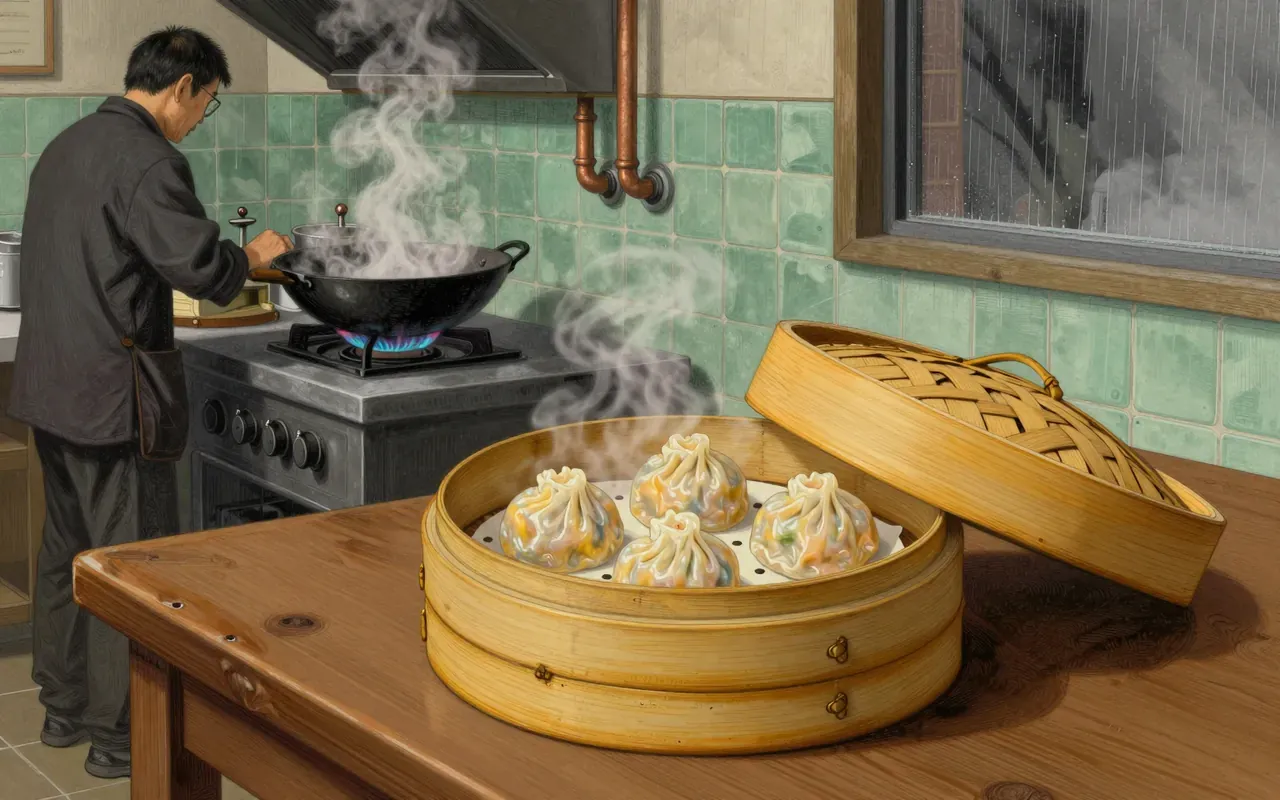
Har gow works by encasing raw shrimp in a thin, translucent wheat-and-tapioca wrapper, then steaming it just long enough for the shrimp to cook through without toughening. The pleating seals the filling and controls steam penetration. The wrapper’s starch composition must balance translucency with structural integrity.
What it gets right
The wrapper achieves translucency without tearing. The pleats hold shape and signal skill. The shrimp stays juicy and tender. It releases cleanly from paper and other dumplings.
What it does not
It does not tolerate overcooking. It does not absorb sauce. It does not scale up — size is fixed at one bite. It does not use pork, bamboo shoot or ginger as primary fillings.
What it changed
It redefined dim sum expectations: from hearty, rustic parcels to delicate, visually exacting vessels where skin quality matters as much as filling.
Who it is for, and who it is not
It is for eaters who notice texture before taste. It is not for those who prioritise speed, heat, richness or convenience.
Is it worth your time
Yes — if you value precision in texture, restraint in seasoning, and technique that reveals rather than masks the shrimp. No — if you prefer bold flavour, chewy dough or generous sauce.