1:15in productionCh. 1 · What the dish is and where it came from/ 1:15 · ceiling 15 min
Dishes · Food history
Tsukemen
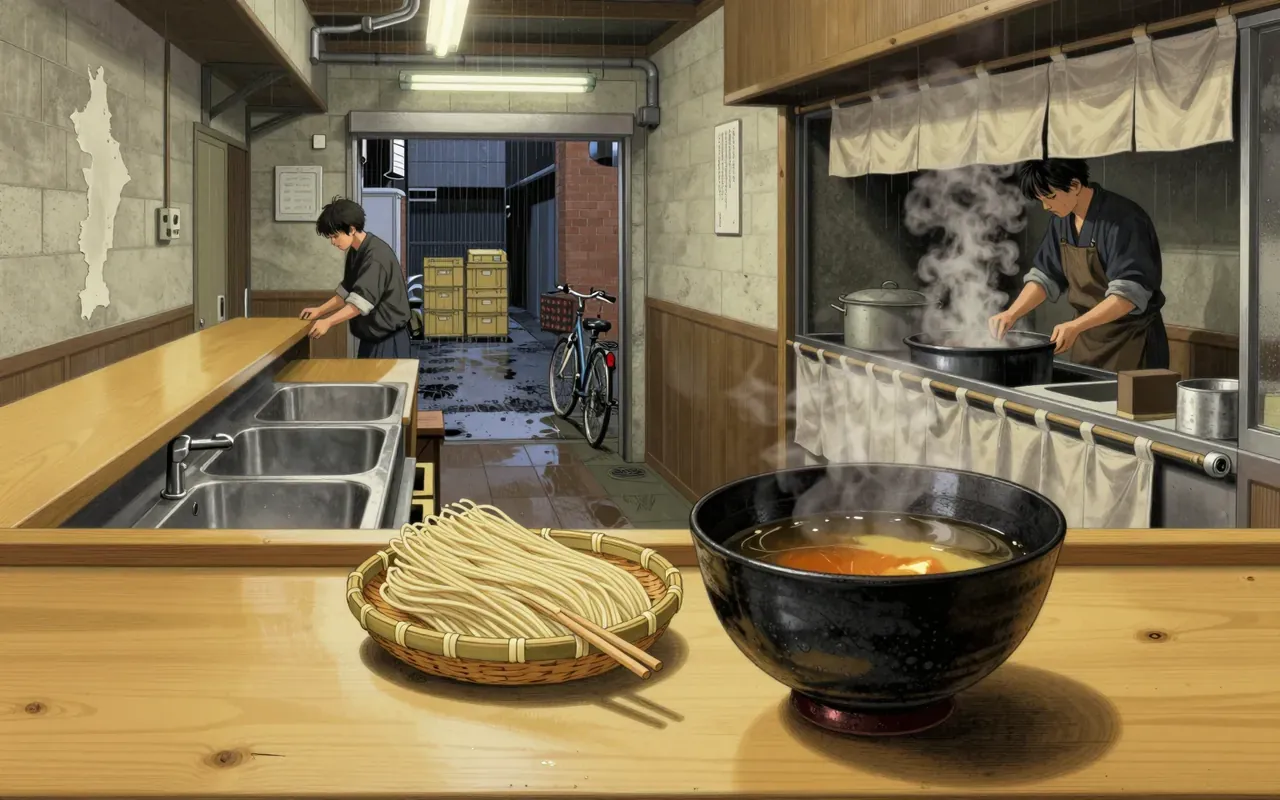
Tsukemen is a Japanese ramen dish of cold noodles served separately from a hot, intensely flavored dipping broth.
Tsukemen is a ramen dish from Japanese cuisine consisting of noodles served separately from soup or broth, for dipping. It was invented in 1961 by Kazuo Yamagishi, a Tokyo restaurateur, who first offered it as 'special morisoba'—cold soba noodles with soup for dipping.
Tsukemen is a ramen dish from Japanese cuisine consisting of noodles served separately from soup or broth, for dipping.
0:17
How it works, in terms someone would actually use
You dip cold noodles into a hot, separate bowl of broth.
0:31
What it gets right
It gets right the contrast of temperatures and intensity: cold noodles meet hot, robust broth, delivering focused flavor in each dip.
0:39
What it does not
It does not serve noodles and broth mixed together.
0:49
What it changed
Some restaurants add hot water to the used broth at the end, turning it into a milder soup to finish the meal.
0:58
Who it is for, and who it is not
It is for people who prefer cold noodles with bold, concentrated broth flavor.
1:08
Is it worth your time
It is worth your time if you want a distinct ramen variation built around temperature contrast and dipping.
Worth your time?
Selectively. Start with the brief, then cook the parts we point at.
What works
It gets right the contrast of temperatures and intensity: cold noodles meet hot, robust broth, delivering focused flavor in each dip.
What does not
It does not serve noodles and broth mixed together. The separation means you don’t get a unified hot noodle-soup experience like in standard ramen.
Cook it if
Skip it if
The written brief1 min read
What the dish is and where it came from
Tsukemen is a ramen dish from Japanese cuisine consisting of noodles served separately from soup or broth, for dipping. It was invented in 1961 by Kazuo Yamagishi, a Tokyo restaurateur, who first offered it as ‘special morisoba’—cold soba noodles with soup for dipping.
How it works, in terms someone would actually use
You dip cold noodles into a hot, separate bowl of broth. The broth is stronger and more intense than standard ramen soup. The contrast between cold noodles and hot broth seasons and moistens the noodles.
What it gets right
It gets right the contrast of temperatures and intensity: cold noodles meet hot, robust broth, delivering focused flavor in each dip.
What it does not
It does not serve noodles and broth mixed together. The separation means you don’t get a unified hot noodle-soup experience like in standard ramen.
What it changed
Some restaurants add hot water to the used broth at the end, turning it into a milder soup to finish the meal.
Who it is for, and who it is not
It is for people who prefer cold noodles with bold, concentrated broth flavor. It is not for those seeking a single-bowl hot noodle-and-soup combination.
Is it worth your time
It is worth your time if you want a distinct ramen variation built around temperature contrast and dipping.