1:09in productionCh. 1 · What the dish is and where it came from/ 1:09 · ceiling 15 min
Dishes · Baking
Simit
A ring-shaped sesame-encrusted bread with Byzantine roots, now widespread across former Ottoman regions.
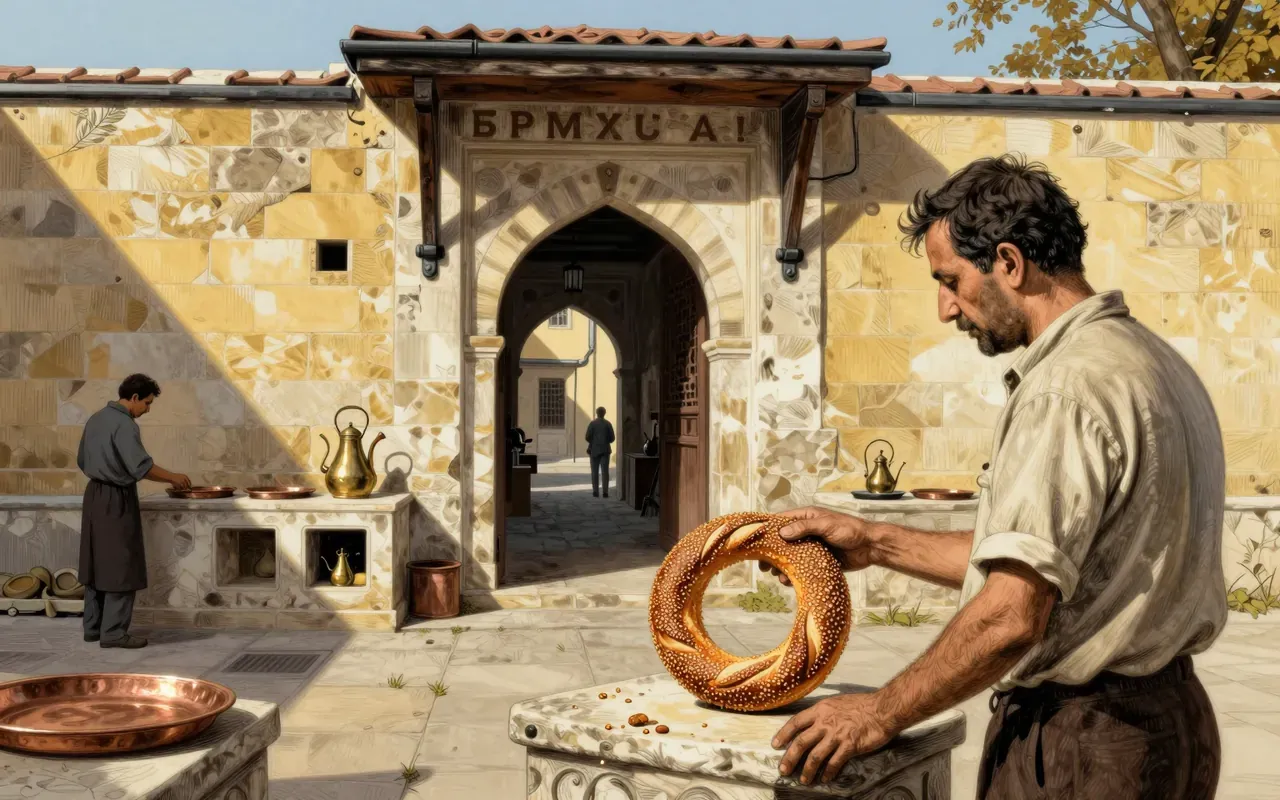
Simit is a circular bread encrusted with sesame, poppy, flax, or sunflower seeds. It originated in the Byzantine Empire as boukellon or kollikion—a small ring-shaped bread sold in Constantinople by the 9th century.
Simit is a circular bread encrusted with sesame, poppy, flax, or sunflower seeds.
0:13
How it works, in terms someone would actually use
The dough rings are dipped in water and molasses syrup before baking, with seeds forming the characteristic coating.
0:20
What it gets right
Its ring shape and seed crust make it portable and texturally distinctive.
0:31
What it does not
Its plain ring-bread format may be less appealing if you want a filled bread or a complete meal on its own.
0:39
What it changed
Simit became standardized in weight and price in Üsküdar by 1593 and was widely sold by street vendors in Istanbul by the 1630s and into the 20th century.
0:50
Who it is for, and who it is not
It is for people seeking a plain, handheld bread with mild seed flavor.
1:00
Is it worth your time
Worth trying as a ring bread with tea, cheese or fruit preserves, especially if you are interested in Istanbul’s street-food and breakfast traditions.
Worth your time?
Selectively. Start with the brief, then cook the parts we point at.
What works
Its ring shape and seed crust make it portable and texturally distinctive. It pairs simply with tea, fruit preserves, cheese, or ayran—fitting everyday breakfast or snack use.
What does not
Its plain ring-bread format may be less appealing if you want a filled bread or a complete meal on its own.
Cook it if
Skip it if
The written brief1 min read
What the dish is and where it came from
Simit is a circular bread encrusted with sesame, poppy, flax, or sunflower seeds. It originated in the Byzantine Empire as boukellon or kollikion—a small ring-shaped bread sold in Constantinople by the 9th century.
How it works, in terms someone would actually use
The dough rings are dipped in water and molasses syrup before baking, with seeds forming the characteristic coating.
What it gets right
Its ring shape and seed crust make it portable and texturally distinctive. It pairs simply with tea, fruit preserves, cheese, or ayran—fitting everyday breakfast or snack use.
What it does not
Its plain ring-bread format may be less appealing if you want a filled bread or a complete meal on its own.
What it changed
Simit became standardized in weight and price in Üsküdar by 1593 and was widely sold by street vendors in Istanbul by the 1630s and into the 20th century.
Who it is for, and who it is not
It is for people seeking a plain, handheld bread with mild seed flavor. It is not for those seeking a filled, sweet, or savory main dish.
Is it worth your time
Worth trying as a ring bread with tea, cheese or fruit preserves, especially if you are interested in Istanbul’s street-food and breakfast traditions.