foodbriefs
1:26in productionCh. 1 · What the dish is and where it came from/ 1:26 · ceiling 15 min
Dishes · Food history

Kofta

Kofta is a family of meatball and meatloaf dishes across South Asian, Central Asian, Balkan, Middle Eastern, North African, and South Caucasian cuisines.

Kofta is a family of meatball and meatloaf dishes found across South Asian, Central Asian, Balkan, Middle Eastern, North African, and South Caucasian cuisines. The earliest known recipes appear in early Arab cookbooks and the Byzantine Empire, calling for ground lamb.

Chapters & takeaways7
  1. 0:00
    What the dish is and where it came from

    Kofta is a family of meatball and meatloaf dishes found across South Asian, Central Asian, Balkan, Middle Eastern, North African, and South Caucasian cuisines.

  2. 0:16
    How it works, in terms someone would actually use

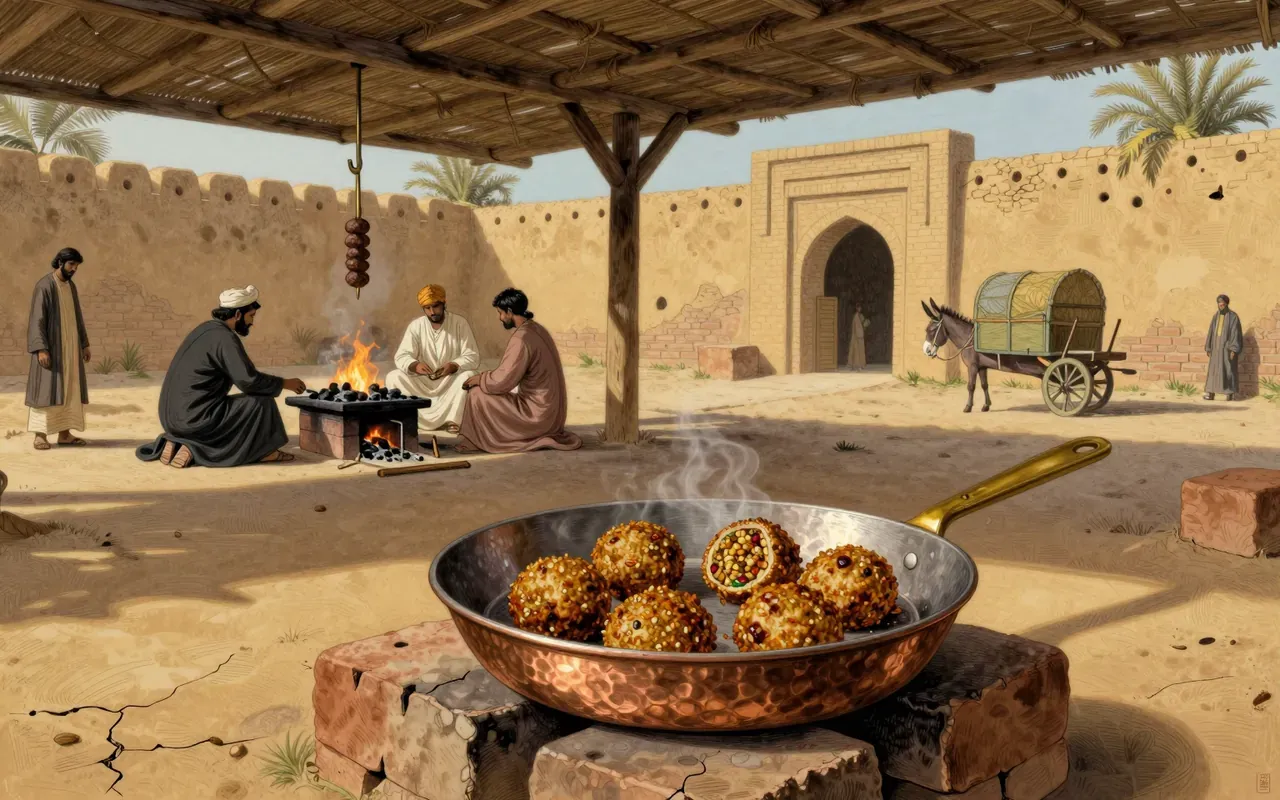
    Koftas are made by mixing minced meat—usually beef, chicken, lamb, mutton, or camel—with spices and often rice, bulgur, vegetables, or eggs to form a paste, then shaping into balls or loaves.

  3. 0:36
    What it gets right

    It offers flexible portion sizes—from golf ball to orange—and varied preparation methods.

  4. 0:47
    What it does not

    The meat filling makes it less suitable if you seek a vegetarian dish.

  5. 0:56
    What it changed

    Koftas moved to India, where Nargisi kofta appeared at the Mughal court.

  6. 1:06
    Who it is for, and who it is not

    It is for people who eat meat—including beef, chicken, lamb, mutton, or camel—and are open to regional variations across multiple continents.

  7. 1:18
    Is it worth your time

    Yes, if you want a globally widespread, adaptable meat dish that can be grilled, baked, or served in soup or sauce.
Worth your time?

Selectively. Start with the brief, then cook the parts we point at.

What works
  • It offers flexible portion sizes—from golf ball to orange—and varied preparation methods. The inclusion of grains, vegetables, or eggs alongside spiced meat broadens texture and serving options.
What does not
  • The meat filling makes it less suitable if you seek a vegetarian dish. Pork is seldom used, limiting options for some dietary preferences.
Cook it if
    Skip it if
      The written brief1 min read

      What the dish is and where it came from

      Kofta is a family of meatball and meatloaf dishes found across South Asian, Central Asian, Balkan, Middle Eastern, North African, and South Caucasian cuisines. The earliest known recipes appear in early Arab cookbooks and the Byzantine Empire, calling for ground lamb.

      How it works, in terms someone would actually use

      Koftas are made by mixing minced meat—usually beef, chicken, lamb, mutton, or camel—with spices and often rice, bulgur, vegetables, or eggs to form a paste, then shaping into balls or loaves. They are grilled, fried, steamed, poached, baked, or marinated, and served with sauce, in soup, or in stew.

      What it gets right

      It offers flexible portion sizes—from golf ball to orange—and varied preparation methods. The inclusion of grains, vegetables, or eggs alongside spiced meat broadens texture and serving options.

      What it does not

      The meat filling makes it less suitable if you seek a vegetarian dish. Pork is seldom used, limiting options for some dietary preferences.

      What it changed

      Koftas moved to India, where Nargisi kofta appeared at the Mughal court. Tabriz köftesi represents a documented size variation, averaging 20 cm in diameter.

      Who it is for, and who it is not

      It is for people who eat meat—including beef, chicken, lamb, mutton, or camel—and are open to regional variations across multiple continents. It is not for vegetarians or those avoiding all meat.

      Is it worth your time

      Yes, if you want a globally widespread, adaptable meat dish that can be grilled, baked, or served in soup or sauce.

      Same course · Dishes4 of 327
      Up next in Food

      Kōji (food)

      · 1:23

      Koji is a filamentous fungus—most commonly Aspergillus oryzae—or a mixture of that culture with wheat and soybean meal, used in Japanese food fermentation.

      1:23