1:13in productionCh. 1 · What the dish is and where it came from/ 1:13 · ceiling 15 min
Baking · Food history
Baklava
A layered pastry dessert of filo, chopped nuts, and syrup or honey.
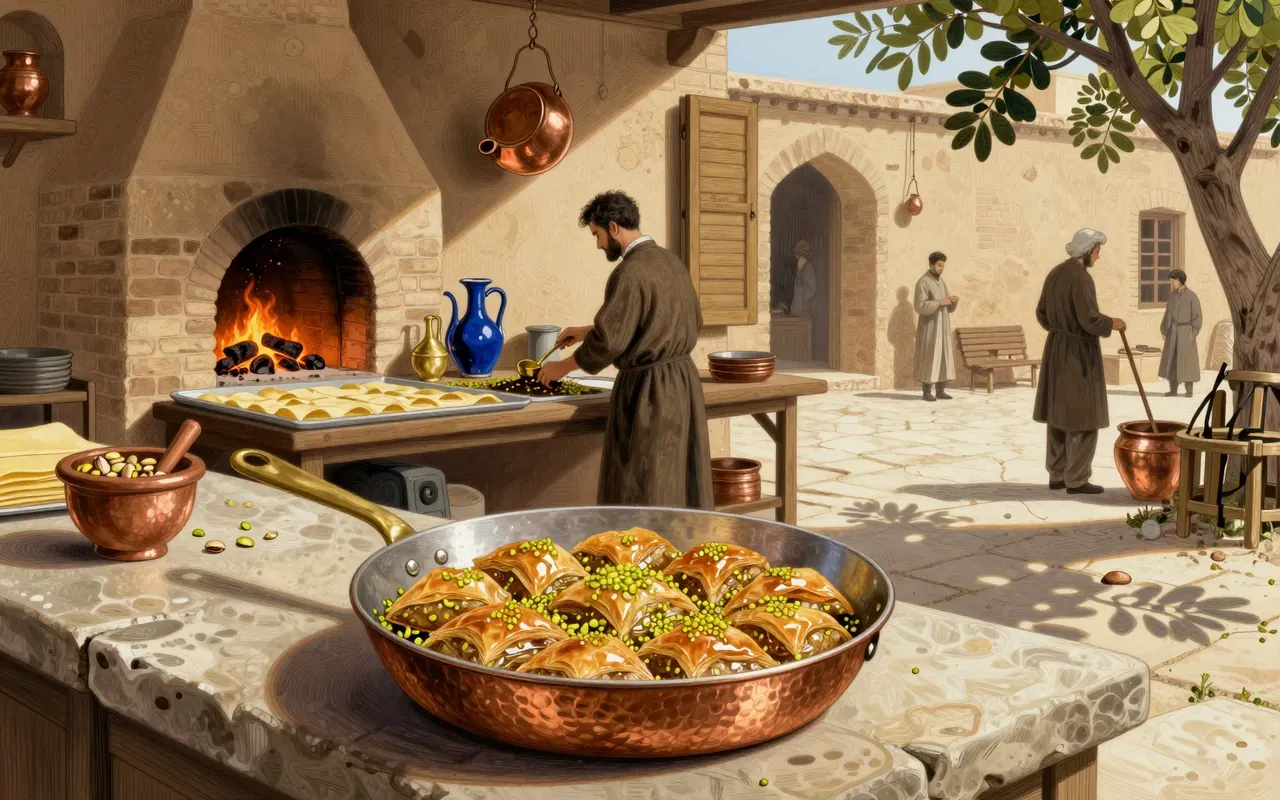
Baklava is a layered pastry dessert with disputed origins. An archaic version appeared in the Byzantine Empire; its Turkish form likely developed in the imperial kitchens of Topkapı Palace in Constantinople.
Baklava is a layered pastry dessert with disputed origins.
0:12
How it works, in terms someone would actually use
It is made by stacking multiple layers of filo dough, separated by melted butter and starch, then cutting before baking.
0:26
What it gets right
It gets right a clear structure: crisp, thin layers; nutty filling; and sweet, aromatic syrup or honey.
0:36
What it does not
It does not offer savory or dairy-based variation.
0:45
What it changed
It changed from ancient placenta—a honey-covered layered-dough dessert documented in the 2nd century BC—into a nut-filled, syrup-saturated form associated with Ottoman court cuisine.
0:54
Who it is for, and who it is not
It is for people who enjoy nut-based, syrup-sweetened pastries with crisp, flaky layers.
1:04
Is it worth your time
It is worth your time if you seek a traditional, widely shared dessert defined by its layered structure, nut filling, and syrup finish.
Worth your time?
Selectively. Start with the brief, then cook the parts we point at.
What works
It gets right a clear structure: crisp, thin layers; nutty filling; and sweet, aromatic syrup or honey. The combination delivers texture contrast and balanced sweetness.
What does not
It does not offer savory or dairy-based variation. The syrup-soaked format makes it less suitable if you prefer dry or low-moisture desserts.
Cook it if
Skip it if
The written brief1 min read
What the dish is and where it came from
Baklava is a layered pastry dessert with disputed origins. An archaic version appeared in the Byzantine Empire; its Turkish form likely developed in the imperial kitchens of Topkapı Palace in Constantinople.
How it works, in terms someone would actually use
It is made by stacking multiple layers of filo dough, separated by melted butter and starch, then cutting before baking. After baking, syrup—sometimes with rosewater or orange flower water—is poured over and soaked in.
What it gets right
It gets right a clear structure: crisp, thin layers; nutty filling; and sweet, aromatic syrup or honey. The combination delivers texture contrast and balanced sweetness.
What it does not
It does not offer savory or dairy-based variation. The syrup-soaked format makes it less suitable if you prefer dry or low-moisture desserts.
What it changed
It changed from ancient placenta—a honey-covered layered-dough dessert documented in the 2nd century BC—into a nut-filled, syrup-saturated form associated with Ottoman court cuisine.
Who it is for, and who it is not
It is for people who enjoy nut-based, syrup-sweetened pastries with crisp, flaky layers. It is not for those avoiding nuts, honey, or high-sugar desserts.
Is it worth your time
It is worth your time if you seek a traditional, widely shared dessert defined by its layered structure, nut filling, and syrup finish.