1:12in productionCh. 1 · What the dish is and where it came from/ 1:12 · ceiling 15 min
Dishes
Sisig
A Filipino dish from Pampanga made from grilled and chopped pork jowl and ears, seasoned with calamansi, onions, chili peppers, and chicken liver.
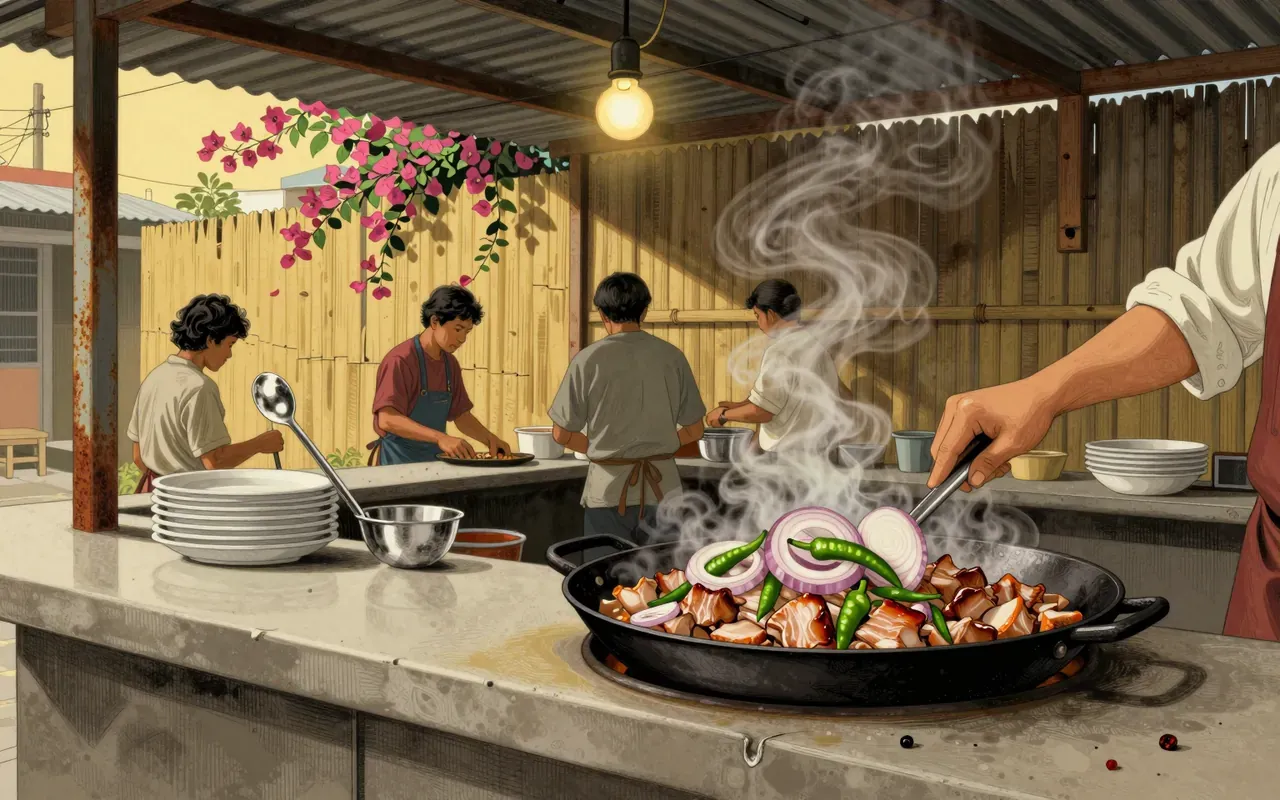
Sisig is a Filipino dish made from pork jowl and ears (maskara), seasoned with calamansi, onions, and chili peppers. It originates from the Pampanga region in Luzon.
Sisig is a Filipino dish made from pork jowl and ears (maskara), seasoned with calamansi, onions, and chili peppers.
0:11
How it works, in terms someone would actually use
It is prepared in three phases: boiling, broiling, then grilling.
0:25
What it gets right
It gets right a bold combination of textures—crisp, chewy, and creamy—and bright, tangy, spicy flavors from calamansi, chili peppers, and onions.
0:33
What it does not
It does not include vegetables as primary components, making it less suitable if you seek a plant-forward or lean protein dish.
0:41
What it changed
The word 'sisig' first appeared in 1732 as a term for a sour salad; it later expanded to describe a marinating and seasoning method for fish and meat.
0:52
Who it is for, and who it is not
It is for people who enjoy rich, savory, and highly seasoned pork dishes.
1:03
Is it worth your time
It is worth your time if you want a distinctive regional dish with layered textures and assertive seasoning rooted in Kapampangan culinary practice.
Worth your time?
Selectively. Start with the brief, then cook the parts we point at.
What works
It gets right a bold combination of textures—crisp, chewy, and creamy—and bright, tangy, spicy flavors from calamansi, chili peppers, and onions.
What does not
It does not include vegetables as primary components, making it less suitable if you seek a plant-forward or lean protein dish.
Cook it if
Skip it if
The written brief1 min read
What the dish is and where it came from
Sisig is a Filipino dish made from pork jowl and ears (maskara), seasoned with calamansi, onions, and chili peppers. It originates from the Pampanga region in Luzon.
How it works, in terms someone would actually use
It is prepared in three phases: boiling, broiling, then grilling. The final dish includes grilled and chopped pig ears and cheeks, seasoned with vinegar, calamansi juice, chopped onions, and chicken liver, served on hot plates.
What it gets right
It gets right a bold combination of textures—crisp, chewy, and creamy—and bright, tangy, spicy flavors from calamansi, chili peppers, and onions.
What it does not
It does not include vegetables as primary components, making it less suitable if you seek a plant-forward or lean protein dish.
What it changed
The word ‘sisig’ first appeared in 1732 as a term for a sour salad; it later expanded to describe a marinating and seasoning method for fish and meat.
Who it is for, and who it is not
It is for people who enjoy rich, savory, and highly seasoned pork dishes. It is not for those avoiding organ meats, pork, or strong acidity and heat.
Is it worth your time
It is worth your time if you want a distinctive regional dish with layered textures and assertive seasoning rooted in Kapampangan culinary practice.

Cantonese roasted meats—often spit- or rotisserie-cooked, sometimes sauce-glazed, served hot or at room temperature in take-out shops and party platters.