foodbriefs
1:19in productionCh. 1 · What the dish is and where it came from/ 1:19 · ceiling 15 min
Dishes · Food history

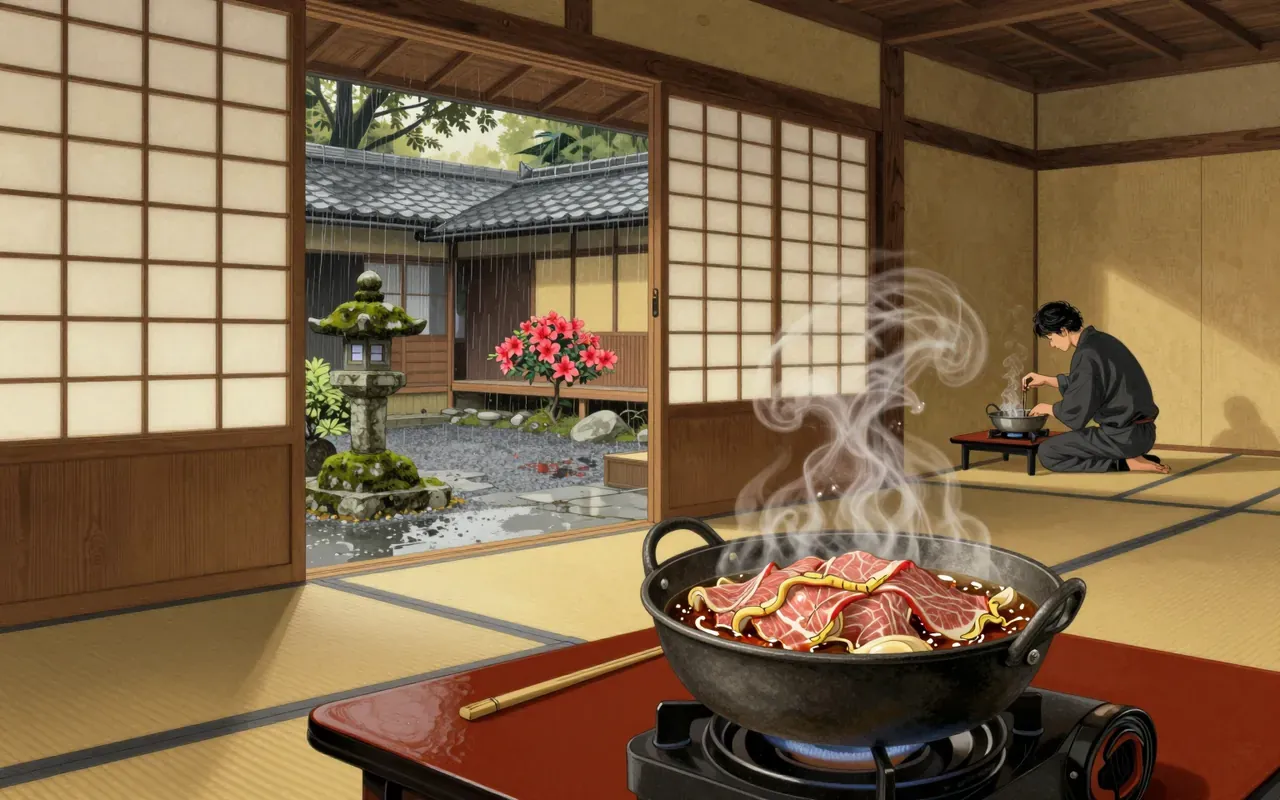
Sukiyaki

A Japanese nabemono dish of thinly sliced beef and vegetables simmered at the table in a sweet-savory broth, served with raw egg dip.

Sukiyaki is a Japanese nabemono (hot pot) dish developed during the Meiji era. It is a one-pot meal cooked and served at the table. Its name may derive from 'suki' (spade) and 'yaki' (grill), though its origin is disputed.

Chapters & takeaways7
  1. 0:00
    What the dish is and where it came from

    Sukiyaki is a Japanese nabemono (hot pot) dish developed during the Meiji era.

  2. 0:16
    How it works, in terms someone would actually use

    It is cooked in a shallow iron pot.

  3. 0:32
    What it gets right

    It gets right a balance of savory and sweet flavors, tableside cooking, and the contrast of hot food dipped in cool raw egg.

  4. 0:46
    What it does not

    It does not emphasize vegetables alone—the meat is central.

  5. 0:54
    What it changed

    It changed by developing two distinct regional preparations: Kanto-style (broth-first) and Kansai-style (meat-first).

  6. 0:59
    Who it is for, and who it is not

    It is for people who enjoy beef-centered hot pot meals with sweet-savory broth and raw egg dip.

  7. 1:11
    Is it worth your time

    It is worth your time if you want a shared, interactive, hot-table meal with beef, vegetables, and a rich dipping element.
Worth your time?

Selectively. Start with the brief, then cook the parts we point at.

What works
  • It gets right a balance of savory and sweet flavors, tableside cooking, and the contrast of hot food dipped in cool raw egg. The combination of beef, vegetables, and seasoned broth offers layered texture and temperature.
What does not
  • It does not emphasize vegetables alone—the meat is central. It is not a vegetarian or poultry-based dish per the source.
Cook it if
    Skip it if
      The written brief1 min read

      What the dish is and where it came from

      Sukiyaki is a Japanese nabemono (hot pot) dish developed during the Meiji era. It is a one-pot meal cooked and served at the table. Its name may derive from ‘suki’ (spade) and ‘yaki’ (grill), though its origin is disputed.

      How it works, in terms someone would actually use

      It is cooked in a shallow iron pot. In Kanto style, warishita (soy sauce, sugar, mirin, sake, dashi) is heated first, then meat and vegetables are added and simmered together. In Kansai style, meat is heated first, then seasonings, then vegetables.

      What it gets right

      It gets right a balance of savory and sweet flavors, tableside cooking, and the contrast of hot food dipped in cool raw egg. The combination of beef, vegetables, and seasoned broth offers layered texture and temperature.

      What it does not

      It does not emphasize vegetables alone—the meat is central. It is not a vegetarian or poultry-based dish per the source.

      What it changed

      It changed by developing two distinct regional preparations: Kanto-style (broth-first) and Kansai-style (meat-first).

      Who it is for, and who it is not

      It is for people who enjoy beef-centered hot pot meals with sweet-savory broth and raw egg dip. It is not for people seeking a vegetable-forward, meat-free, or egg-free dish.

      Is it worth your time

      It is worth your time if you want a shared, interactive, hot-table meal with beef, vegetables, and a rich dipping element.
      Same course · Dishes4 of 328
      Up next in Food

      Sundubu-jjigae

      · 1:18

      A Korean stew built around unpressed, freshly curdled soft tofu, cooked at the table with vegetables, optional seafood or meat, and chili paste or flakes.

      1:18