foodbriefs
9:37in productionCh. 1 · How it forms/ 9:37 · ceiling 15 min
Technique · Dishes

Scorched rice

Scorched rice isn’t a mistake—it’s the dish that made failure edible.

Scorched rice is a globally distributed culinary phenomenon — a thin, crisp, slightly browned crust formed at the bottom of a cooking vessel during rice preparation — with regionally distinct names, preparation methods, and cultural roles, including use as snack, ingredient, medicinal food, or ceremonial element.

Chapters & takeaways4
  1. 1:03
    How it forms

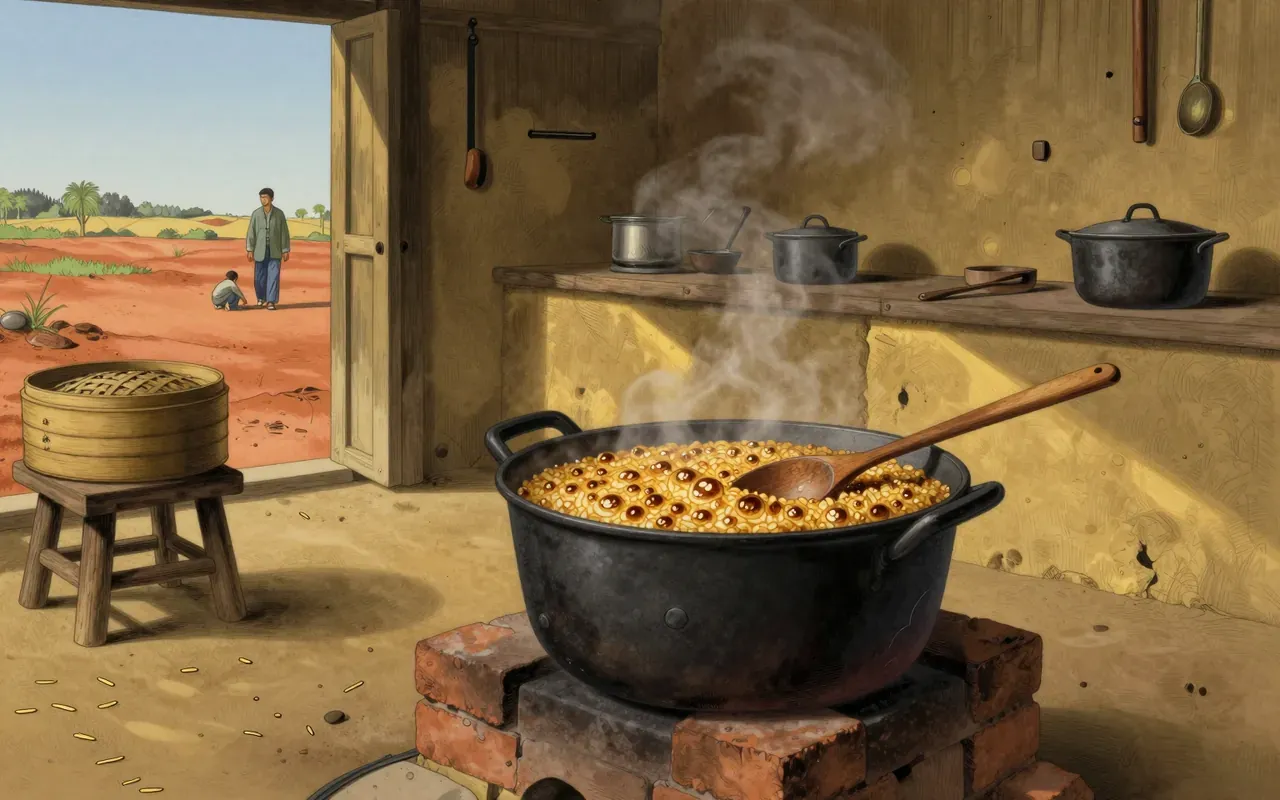
    It is not fried, baked, or toasted—it forms by direct contact between rice and hot pot base.

  2. 2:38
    What it’s called around the world

    Six cultures name it separately—proof that this crust is not an accident, but a deliberate target.

  3. 4:42
    When it becomes the main event

    Tahdig proves scorched rice can anchor a national dish—not as garnish, but as the prized layer.

  4. 6:14
    The three conditions for success

    It works only if the rice layer is shallow, the heat steady, and the pot base conductive.

Worth your time?

Yes. Cook the whole thing.

4/ 5
What works
  • It concentrates starch and heat into a single-layer crunch that contrasts with soft rice.
  • It requires no added fat or frying—just controlled conduction from pot to grain.
What does not
  • It does not deliver uniform texture.
  • It offers no sauce, no protein, no seasoning beyond what was already in the rice water or oil.
Cook it if
  • It is for cooks who value textural contrast, minimal-ingredient ingenuity, and regional specificity.
  • It is not for those seeking convenience, consistency, or hands-off results.
Skip it if
  • It is not for those seeking convenience, consistency, or hands-off results.
The written brief1 min read

What the dish is and where it came from

Scorched rice is a thin, crisp, slightly browned crust formed at the bottom of a cooking vessel during rice preparation. It appears in Cape Verde (kokorota), China (guōbā), Madagascar (apango), Central Java (intip), Iran (tahdig), and Iraq (hikakeh).

How it works, in terms someone would actually use

Scorched rice forms when rice cooks in a pot and the bottom layer dries, browns, and crisps against the hot surface.

What it gets right

It concentrates starch and heat into a single-layer crunch that contrasts with soft rice. It requires no added fat or frying—just controlled conduction from pot to grain.

What it does not

It does not deliver uniform texture. It is either crisp or burnt. It offers no sauce, no protein, no seasoning beyond what was already in the rice water or oil.

What it changed

It turned a cooking by-product into a named, culturally embedded element—kokorota, guōbā, apango, intip, tahdig, hikakeh—each with distinct culinary weight.

Who it is for, and who it is not

It is for cooks who value textural contrast, minimal-ingredient ingenuity, and regional specificity. It is not for those seeking convenience, consistency, or hands-off results.

Is it worth your time

Yes—if you want crisp texture without extra ingredients or steps, and are willing to manage heat and timing to avoid burning instead of browning.
Same course · Technique4 of 121
Up next in Food

Texas smoked brisket

· 10:13

Smoked brisket didn’t come from Texas pitmasters — it came from Jewish delis, and it changed barbecue by making beef central.

10:13