1:09in productionCh. 1 · What the dish is and where it came from/ 1:09 · ceiling 15 min
Drinks · Street food
Teh tarik
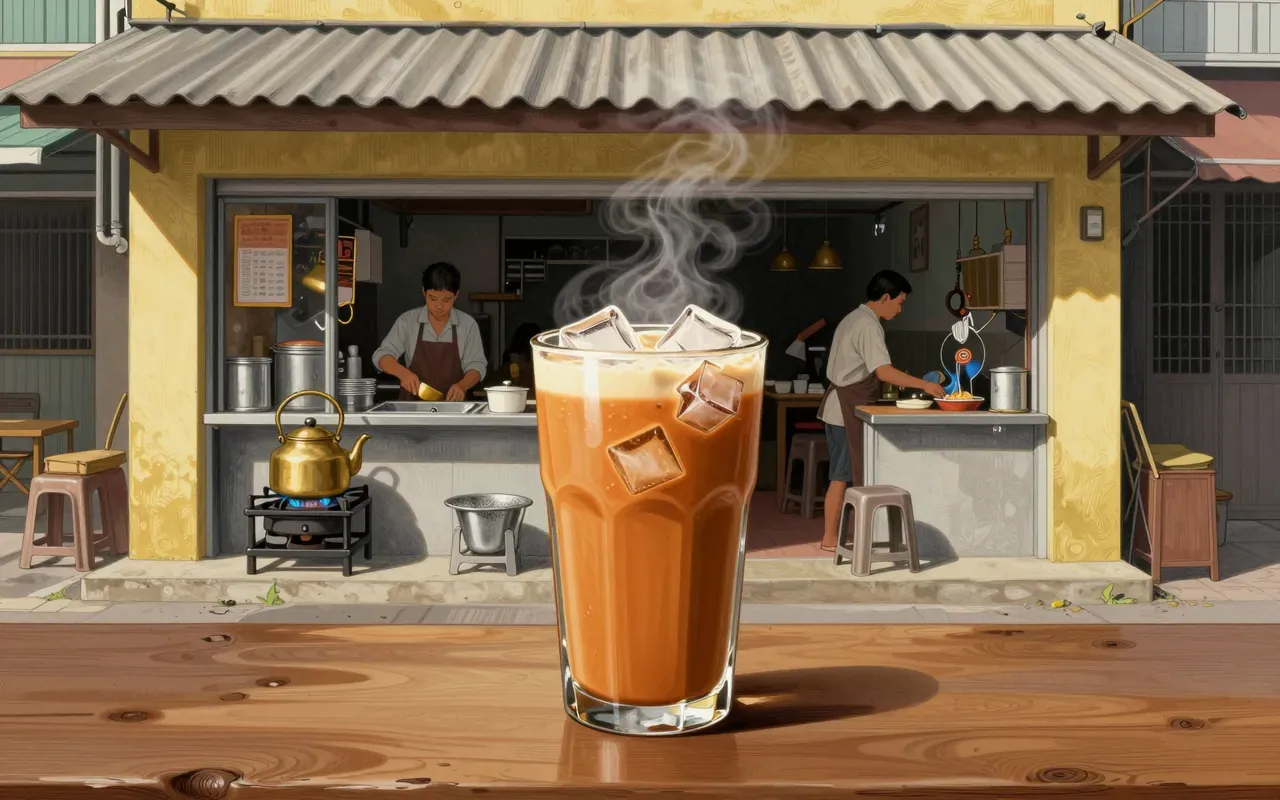
A frothy black tea drink made by pulling hot tea and condensed milk between containers.
Teh tarik originated with Indian Muslim immigrants in the Malay Peninsula who served masala chai at rubber plantations from the 1870s. After World War II, vendors switched to cheaper tea dust and added condensed milk to mask its bitterness, creating teh tarik.
Teh tarik originated with Indian Muslim immigrants in the Malay Peninsula who served masala chai at rubber plantations from the 1870s.
0:17
How it works, in terms someone would actually use
It is made by repeatedly pouring a strong black tea and condensed milk mixture between two containers—arms extended—to cool it, mix it thoroughly, and create a frothy head.
0:28
What it gets right
The pulling process delivers a frothy texture, optimal drinking temperature, and thorough mixing of tea and condensed milk—components central to its appeal.
0:37
What it does not
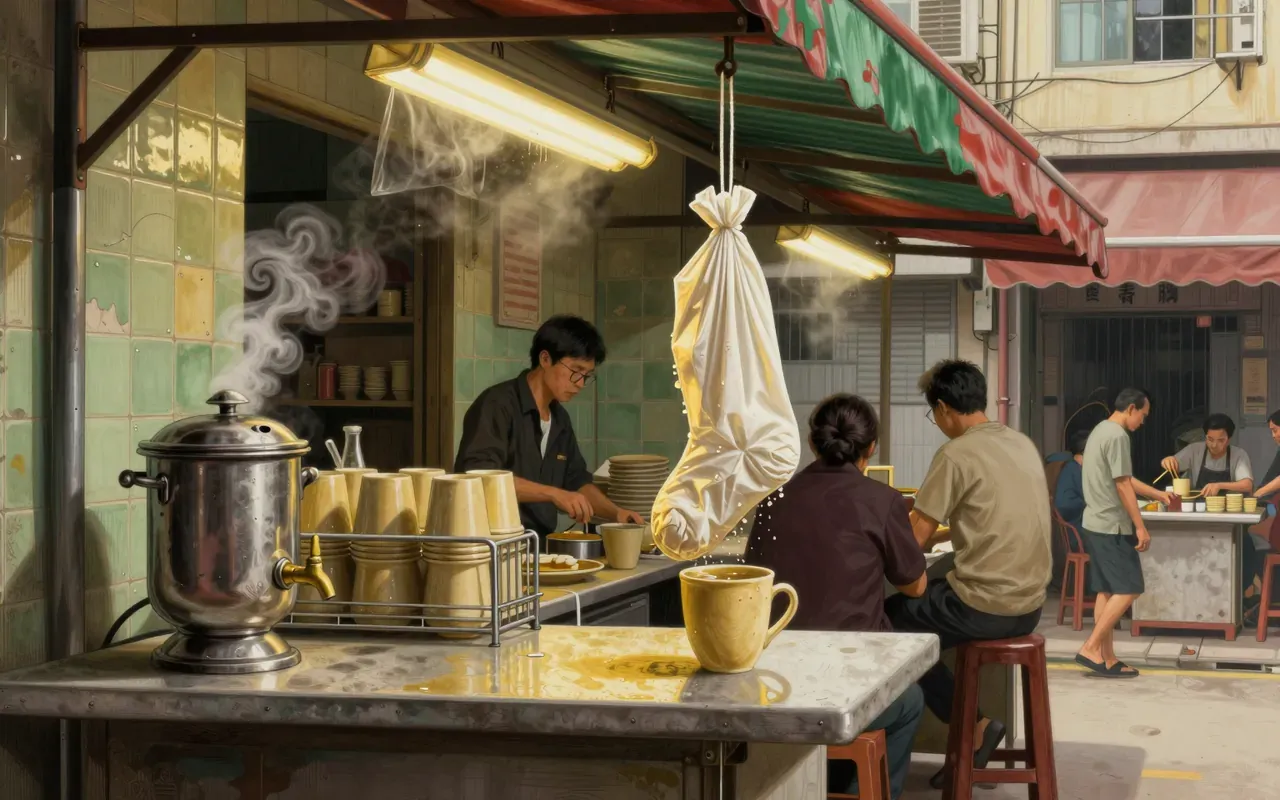
It relies on lower-quality grade-B tea or tea dust, making it less appealing if you prefer higher-grade loose-leaf teas.
0:45
What it changed
It evolved from masala chai into a distinct beverage defined by tea dust and condensed milk, shaped by postwar economic constraints.
0:53
Who it is for, and who it is not
It is for people who enjoy sweet, creamy, frothy black tea.
1:03
Is it worth your time
Yes—it delivers a distinctive texture and temperature profile through its signature pulling method and simple ingredients.
Worth your time?
Selectively. Start with the brief, then cook the parts we point at.
What works
The pulling process delivers a frothy texture, optimal drinking temperature, and thorough mixing of tea and condensed milk—components central to its appeal.
What does not
It relies on lower-quality grade-B tea or tea dust, making it less appealing if you prefer higher-grade loose-leaf teas.
Cook it if
Skip it if
The written brief1 min read
What the dish is and where it came from
Teh tarik originated with Indian Muslim immigrants in the Malay Peninsula who served masala chai at rubber plantations from the 1870s. After World War II, vendors switched to cheaper tea dust and added condensed milk to mask its bitterness, creating teh tarik.
How it works, in terms someone would actually use
It is made by repeatedly pouring a strong black tea and condensed milk mixture between two containers—arms extended—to cool it, mix it thoroughly, and create a frothy head.
What it gets right
The pulling process delivers a frothy texture, optimal drinking temperature, and thorough mixing of tea and condensed milk—components central to its appeal.
What it does not
It relies on lower-quality grade-B tea or tea dust, making it less appealing if you prefer higher-grade loose-leaf teas.
What it changed
It evolved from masala chai into a distinct beverage defined by tea dust and condensed milk, shaped by postwar economic constraints.
Who it is for, and who it is not
It is for people who enjoy sweet, creamy, frothy black tea. It is not for those avoiding condensed milk or seeking unsweetened or herbal infusions.
Is it worth your time
Yes—it delivers a distinctive texture and temperature profile through its signature pulling method and simple ingredients.