8:45in productionCh. 1 · Who Made It?/ 8:45 · ceiling 15 min
Dishes · Food history
Toast Skagen
A Swedish starter that made prawns elegant, not hearty — and still defines Nordic spring dining.
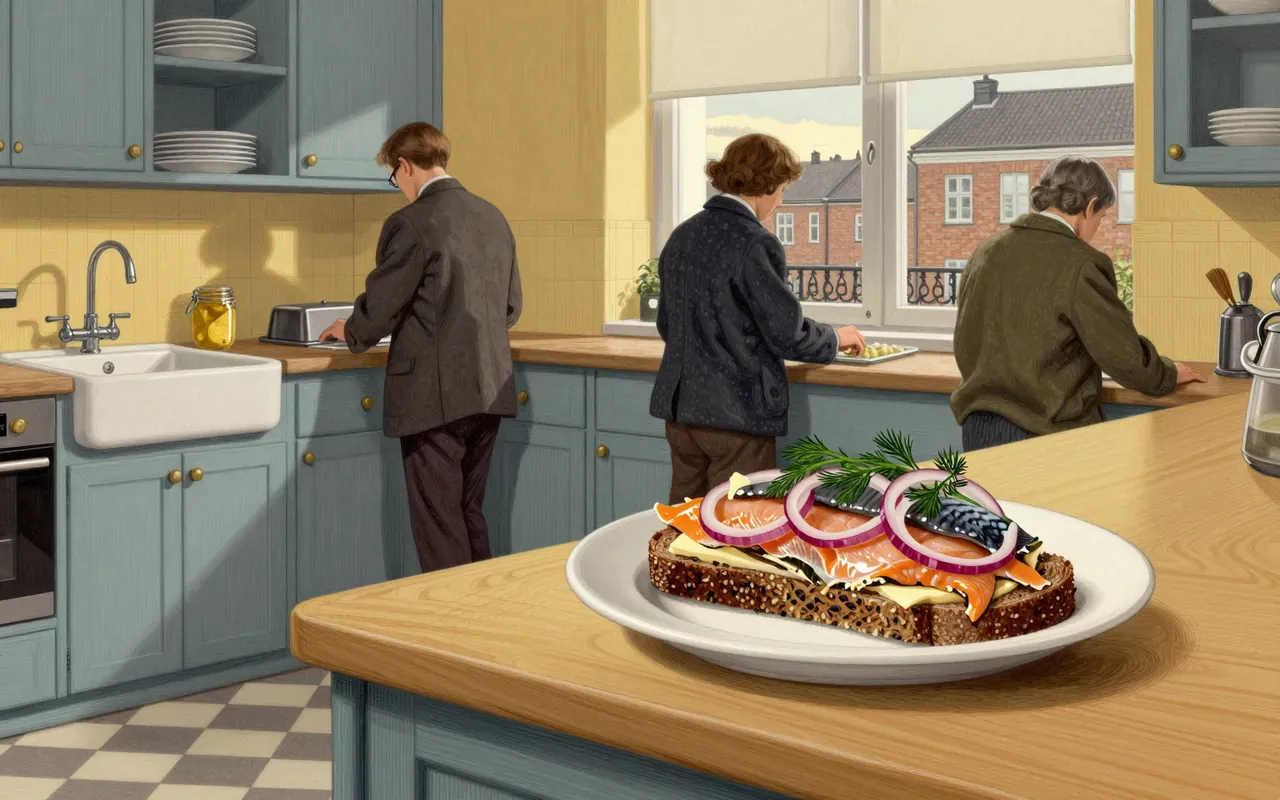
Toast Skagen is a Swedish starter dish created by Stockholm chef Tore Wretman in the 1950s. It consists of toasted bread topped with skagenröra — a prawn salad made with mayonnaise, sour cream, dill and sometimes Dijon mustard, garnished with roe. Though named after Skagen in Denmark, where it is known as Skagenssalat, it is Swedish in origin and especially popular across the Nordics in spring, summer and autumn.
Toast Skagen is Swedish, not Danish — invented by Stockholm chef Tore Wretman in the 1950s.
2:20
What’s In It?
Skagenröra is prawn salad bound with mayonnaise and sour cream, lifted by dill and sometimes Dijon mustard, crowned with roe.
3:45
Why the Danish Name?
The name comes from Skagen in Denmark — where it’s called Skagenssalat — but it’s Swedish in creation and execution.
5:01
When Do You Eat It?
It is a cold, seasonal starter — not a sandwich, not a hot dish, not a main — built for spring, summer and autumn.
Worth your time?
Yes. Cook the whole thing.
4/ 5
What works
The prawn-to-dressing ratio keeps it light.
Dill cuts through the fat without bitterness.
Roe adds pop and salinity without salt overload.
What does not
It does not hold up with low-quality prawns.
It does not suit winter menus or heavy meals.
It does not work without fresh dill.
Cook it if
It is for cooks who treat seafood with restraint.
It is for diners who prefer brightness over richness.
It is not for those who avoid raw or chilled seafood.
Skip it if
It is not for those who avoid raw or chilled seafood.
The written brief1 min read
What the dish is and where it came from
Toast Skagen is a Swedish starter dish created in Stockholm by chef Tore Wretman in the 1950s. Though named after Skagen in Denmark, it is Swedish in origin and most popular across the Nordics.
How it works, in terms someone would actually use
It is a cold starter: toasted bread topped with skagenröra, a prawn salad bound with mayonnaise and sour cream, flavoured with dill and sometimes Dijon mustard, finished with roe.
What it gets right
The balance of fat (mayonnaise, sour cream), acidity (mustard, lemon juice implied by freshness), and herb lift (dill) makes it light but substantial.
What it does not
It does not work without fresh, sweet prawns. Canned or overcooked prawns collapse the texture and mute the flavour.
What it changed
It gave prawns a new role in Nordic hospitality: not as boiled or grilled main, but as a cool, composed, shareable first course.
Who it is for, and who it is not
It is for people who eat seasonally, value clarity over complexity, and want a dish that tastes of the sea and herbs — not the kitchen. It is not for those who dislike raw or lightly cooked seafood, or who expect warmth, crunch or spice.
Is it worth your time
Yes — if you want a clean, bright, spring-summer Nordic starter that delivers prawn sweetness and dill freshness without heaviness or heat.