1:05in productionCh. 1 · What the dish is and where it came from/ 1:05 · ceiling 15 min
Dishes · Technique
Yorkshire pudding
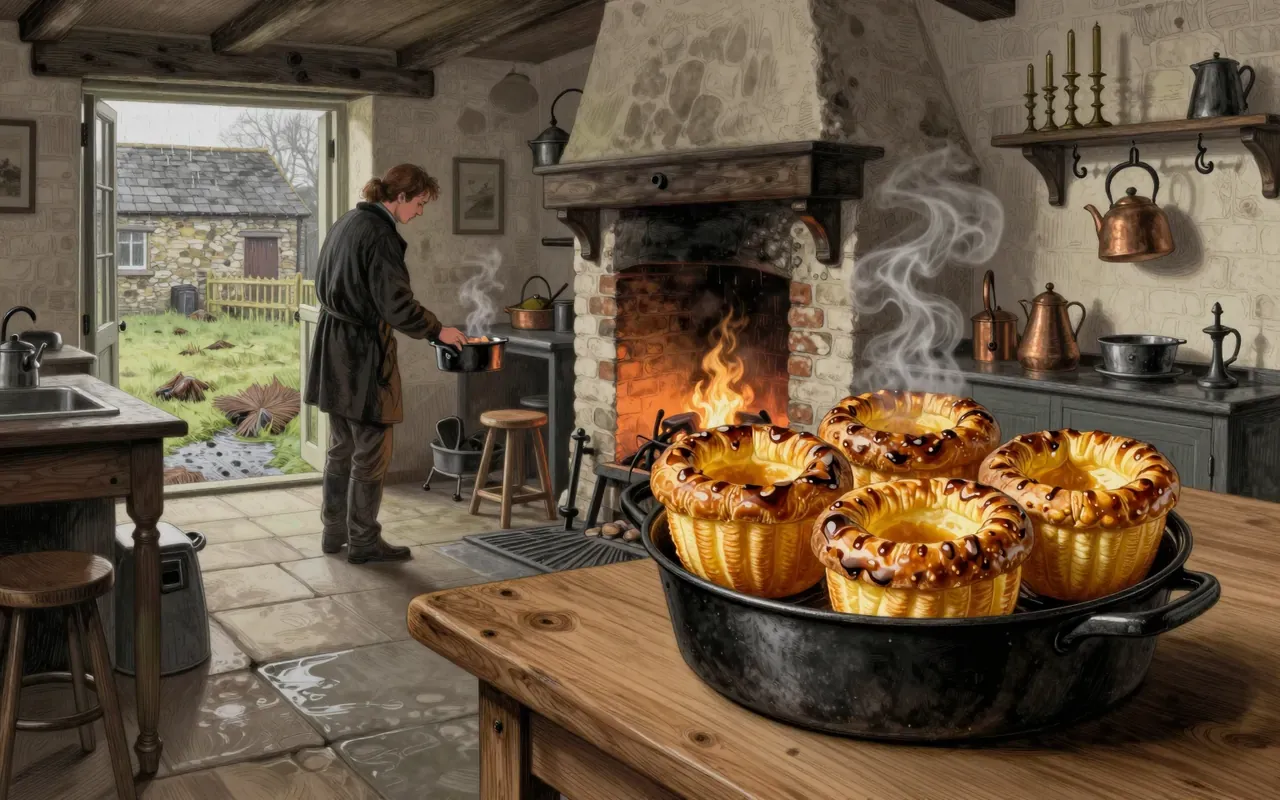
A baked batter pudding from Yorkshire, traditionally made with roast meat drippings, eggs, flour, and milk or water.
Yorkshire pudding is a baked batter pudding originating in Northern England, specifically Yorkshire. The term first appeared in print in the 18th century, credited to cookery writer Hannah Glasse. It was devised to use meat drippings from roasting, combining them with eggs, flour, and milk or water.
Yorkshire pudding is a baked batter pudding originating in Northern England, specifically Yorkshire.
0:19
How it works, in terms someone would actually use
A batter of eggs, flour and milk or water is baked to make the pudding.
0:25
What it gets right
It delivers economical satiety: historically used to blunt appetite before costly meat, or as the sole course in poorer households.
0:33
What it does not
It requires meat drippings for traditional preparation, making it unsuitable as a standalone vegetarian dish.
0:39
What it changed
It shifted from a first-course appetite suppressant—served with rich gravy—to sometimes replacing the main course entirely.
0:45
Who it is for, and who it is not
It is for people eating roast meat with drippings, or those seeking a low-cost, filling starch.
0:57
Is it worth your time
It is worth your time if you are serving roast meat and want a traditional, economical accompaniment made from its drippings.
Worth your time?
Selectively. Start with the brief, then cook the parts we point at.
What works
It delivers economical satiety: historically used to blunt appetite before costly meat, or as the sole course in poorer households.
What does not
It requires meat drippings for traditional preparation, making it unsuitable as a standalone vegetarian dish.
Cook it if
Skip it if
The written brief1 min read
What the dish is and where it came from
Yorkshire pudding is a baked batter pudding originating in Northern England, specifically Yorkshire. The term first appeared in print in the 18th century, credited to cookery writer Hannah Glasse. It was devised to use meat drippings from roasting, combining them with eggs, flour, and milk or water.
How it works, in terms someone would actually use
A batter of eggs, flour and milk or water is baked to make the pudding.
What it gets right
It delivers economical satiety: historically used to blunt appetite before costly meat, or as the sole course in poorer households.
What it does not
It requires meat drippings for traditional preparation, making it unsuitable as a standalone vegetarian dish.
What it changed
It shifted from a first-course appetite suppressant—served with rich gravy—to sometimes replacing the main course entirely.
Who it is for, and who it is not
It is for people eating roast meat with drippings, or those seeking a low-cost, filling starch. It is not for people avoiding meat fat or seeking a vegetarian main course.
Is it worth your time
It is worth your time if you are serving roast meat and want a traditional, economical accompaniment made from its drippings.