8:52in productionCh. 1 · Origin/ 8:52 · ceiling 15 min
Dishes
Arroz de marisco
Arroz de marisco isn’t paella’s cousin—it’s its sharper-tongued sibling, built on shellfish and wine, not saffron and smoke.
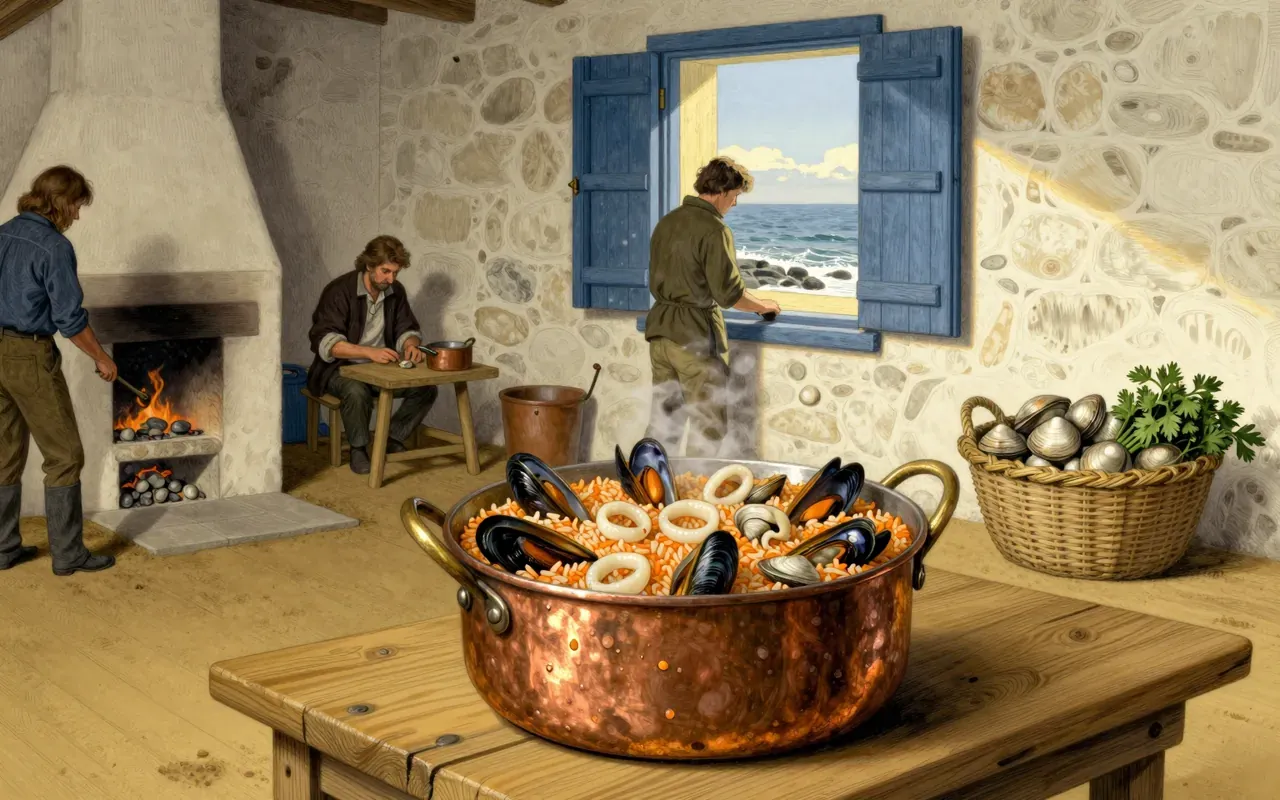
Arroz de marisco is a Portuguese rice-and-seafood dish whose typical ingredients include shellfish, squid, white wine, and fish, and which bears similarity to Spanish paella.
It is Portuguese—not Spanish, not Catalan, not regional fusion.
2:24
Ingredients
Shellfish, squid, white wine, and fish define its core—not tomatoes, peppers, or cured meats.
4:07
Paella Parallel
It shares structure with paella but diverges in flavour logic and seafood emphasis.
5:28
Wine’s Role
White wine isn’t just liquid—it lifts and binds shellfish juices into the rice.
Worth your time?
Yes. Cook the whole thing.
4/ 5
What works
unifies disparate seafood with wine and stock into a single cohesive texture
treats shellfish as both ingredient and seasoning
What does not
deliver crisp socarrat
rely on smoked paprika or chorizo
use short-grain rice exclusively
Cook it if
cooks who value layered seafood flavour and controlled rice texture
those who want a rich, briny rice dish that foregrounds shellfish
Skip it if
those seeking quick, hands-off rice dishes
The written brief1 min read
What the dish is and where it came from
Arroz de marisco is a Portuguese rice-and-seafood dish originating in coastal Portugal.
How it works, in terms someone would actually use
It builds flavour in stages: shellfish and squid are sautéed, white wine deglazes the pan, then rice simmers in seafood stock until creamy but distinct.
What it gets right
It unifies disparate seafood with wine and stock into a single cohesive texture. It treats shellfish as both ingredient and seasoning.
What it does not
It does not deliver crisp socarrat. It does not rely on smoked paprika or chorizo. It does not use short-grain rice exclusively—some versions use medium-grain.
What it changed
It offered a Portuguese counterpoint to paella—less reliant on saffron and tomato, more focused on shellfish intensity and wine-accented broth.
Who it is for, and who it is not
It is for cooks who value layered seafood flavour and controlled rice texture. It is not for those seeking quick, hands-off rice dishes.
Is it worth your time
Yes—if you want a rich, briny rice dish that foregrounds shellfish and demands attention to timing and stock depth.