What the dish is and where it came from
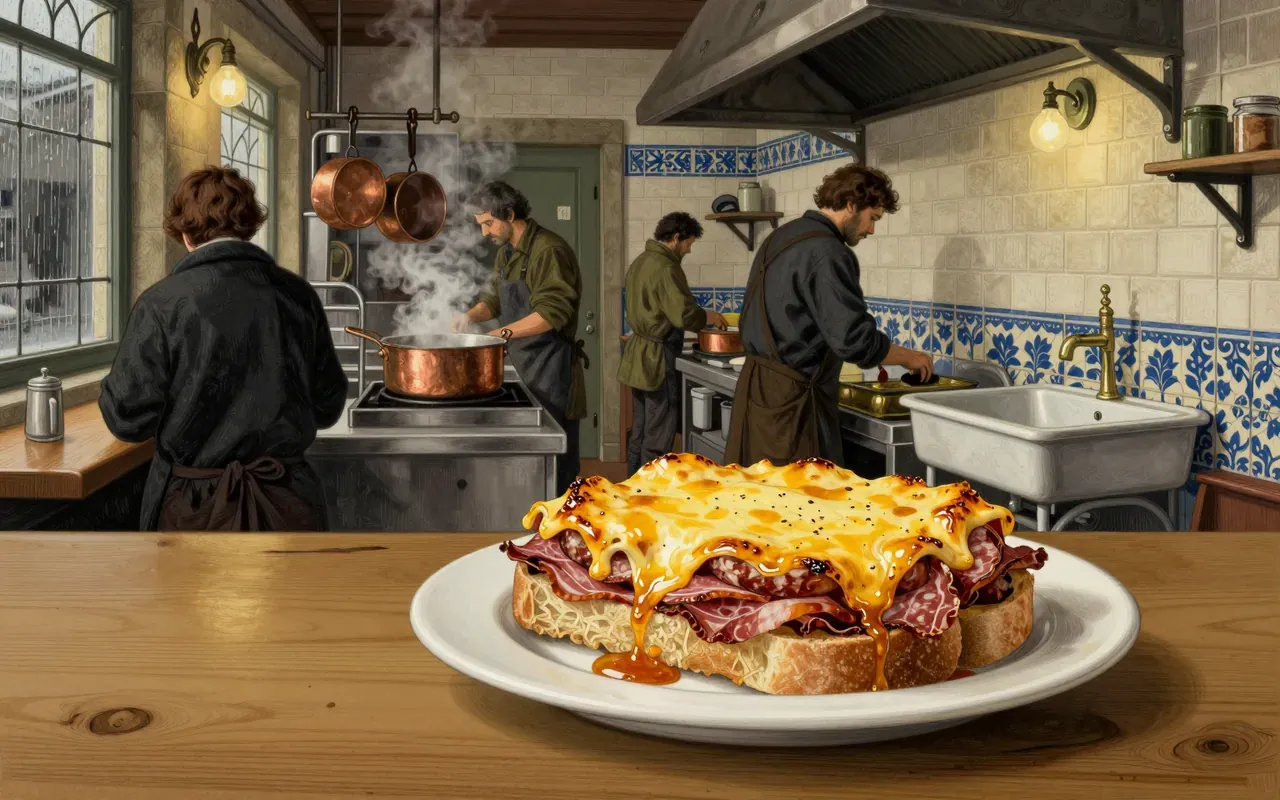
The francesinha is a 20th-century Portuguese sandwich from Porto, created by Daniel David de Silva in 1953 as an adaptation of the croque monsieur using local meats and a custom tomato-and-beer sauce.
How it works, in terms someone would actually use
It layers toasted bread, hot meats — typically ham, linguiça, fresh sausage and steak — and melted cheese, then drowns the stack in a rich, spiced tomato-and-beer sauce.
What it gets right
It commits fully to its concept: meat, cheese, toast and sauce work as one unit, each layer reinforcing the next, with the sauce binding everything without overwhelming the meats’ salt and smoke.
What it does not
It does not offer subtlety, balance or restraint. It does not suit light appetites, quick lunches or dietary moderation.
What it changed
It redefined the Portuguese café sandwich from light snack to main-event meal, anchoring itself in Porto’s identity through variation rather than standardisation.
Who it is for, and who it is not
It is for people who want food that asserts itself — those seeking richness, regional character and layered texture. It is not for anyone prioritising lightness, speed, simplicity or dietary neutrality.
Is it worth your time
Yes, if you want a dense, savoury, unapologetically heavy sandwich that demands attention and delivers on its promise of intensity.