1:08in productionCh. 1 · What the dish is and where it came from/ 1:08 · ceiling 15 min
Dishes · Food history
Bandeja paisa
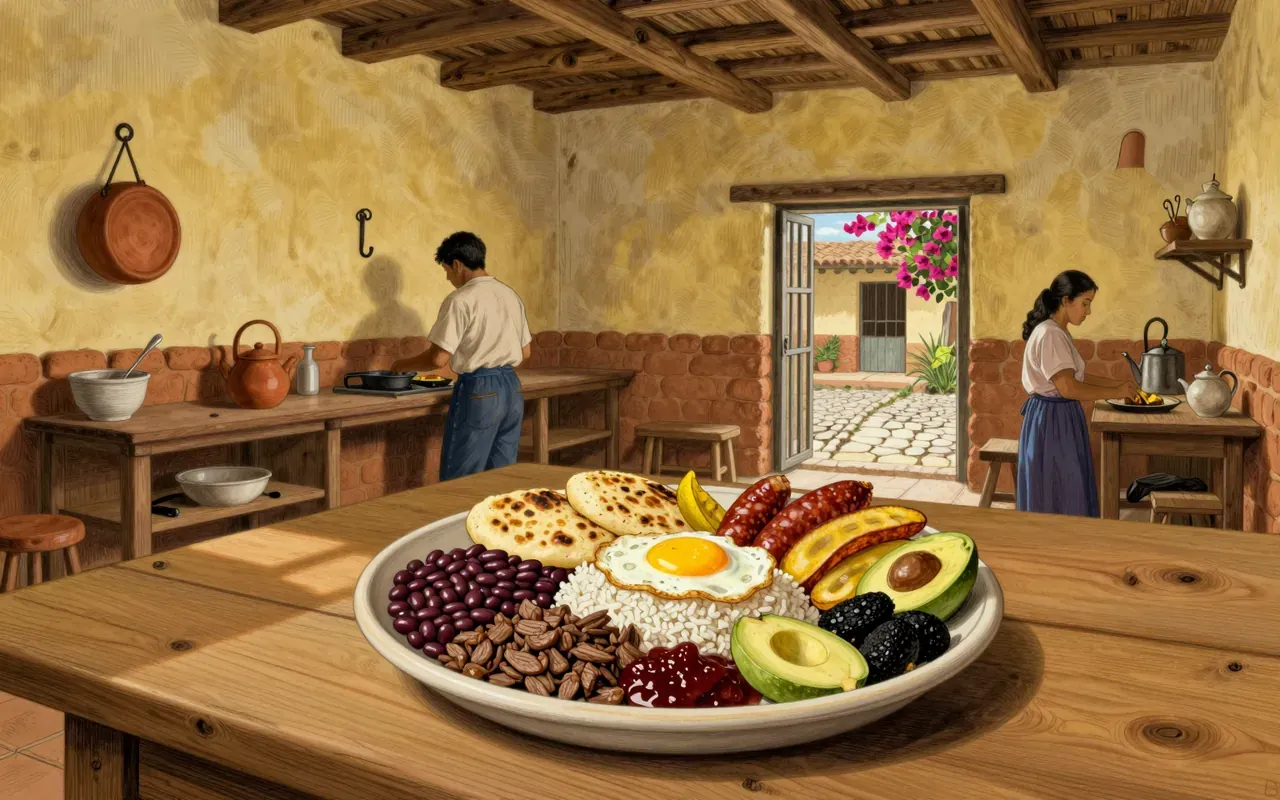
A large platter from Colombia’s Paisa region featuring red beans with pork, rice, ground meat, chicharrón, fried egg, ripe plantain, chorizo, arepa, hogao sauce, black pudding, avocado, and lemon.
Bandeja paisa is a representative Colombian meal from the Antioquia department and Paisa region, also associated with the Coffee-Growers Axis departments of Caldas, Quindío, Risaralda, Tolima, and Valle del Cauca.
Bandeja paisa is a representative Colombian meal from the Antioquia department and Paisa region, also associated with the Coffee-Growers Axis departments of Caldas, Quindío, Risaralda, Tolima, and Valle del Cauca.
0:12
How it works, in terms someone would actually use
It is served on a platter or tray and includes red beans cooked with pork, white rice, ground meat, chicharrón, fried egg, ripe plantain, chorizo, arepa, hogao sauce, black pudding, avocado, and lemon.
0:25
What it gets right
Its appeal lies in the generous variety and juxtaposition of native American and European ingredients, reflecting broader mestizo culinary traditions in Latin America.
0:34
What it does not
The inclusion of multiple meats and starches makes it less suitable for those seeking a light, vegetable-forward, or low-carbohydrate meal.
0:42
What it changed
It evolved from simpler peasant dishes into its current form through local restaurant interpretation; documented references appear only after 1950.
0:50
Who it is for, and who it is not
It is for people seeking a hearty, regional Colombian meal with diverse textures and proteins.
1:01
Is it worth your time
Yes, if you want a substantial, culturally emblematic Colombian dish with varied components served together on one platter.
Worth your time?
Selectively. Start with the brief, then cook the parts we point at.
What works
Its appeal lies in the generous variety and juxtaposition of native American and European ingredients, reflecting broader mestizo culinary traditions in Latin America.
What does not
The inclusion of multiple meats and starches makes it less suitable for those seeking a light, vegetable-forward, or low-carbohydrate meal.
Cook it if
Skip it if
The written brief1 min read
What the dish is and where it came from
Bandeja paisa is a representative Colombian meal from the Antioquia department and Paisa region, also associated with the Coffee-Growers Axis departments of Caldas, Quindío, Risaralda, Tolima, and Valle del Cauca.
How it works, in terms someone would actually use
It is served on a platter or tray and includes red beans cooked with pork, white rice, ground meat, chicharrón, fried egg, ripe plantain, chorizo, arepa, hogao sauce, black pudding, avocado, and lemon.
What it gets right
Its appeal lies in the generous variety and juxtaposition of native American and European ingredients, reflecting broader mestizo culinary traditions in Latin America.
What it does not
The inclusion of multiple meats and starches makes it less suitable for those seeking a light, vegetable-forward, or low-carbohydrate meal.
What it changed
It evolved from simpler peasant dishes into its current form through local restaurant interpretation; documented references appear only after 1950.
Who it is for, and who it is not
It is for people seeking a hearty, regional Colombian meal with diverse textures and proteins. It is not for those avoiding pork, offal, or high-calorie, multi-component plates.
Is it worth your time
Yes, if you want a substantial, culturally emblematic Colombian dish with varied components served together on one platter.