What the dish is and where it came from
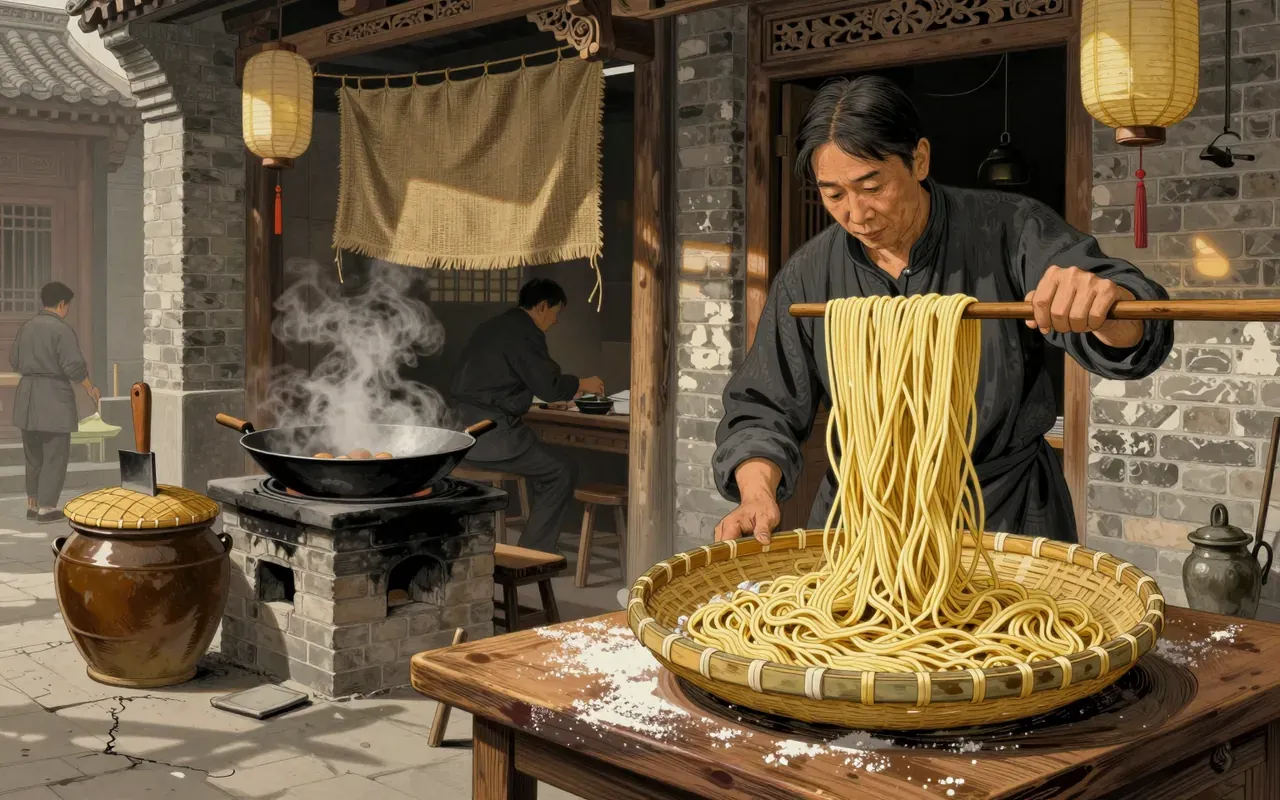
Biangbiang noodles are thick, hand-pulled noodles from Shaanxi cuisine. They originate in Xi’an. They are tied to workers’ meals, not banquet tables.
How it works, in terms someone would actually use
The noodles are pulled by hand into thick, belt-like strands. They are boiled, then dressed with oil, chilli, garlic, and sometimes vinegar or soy sauce. The slap of dough on the counter is part of the method — not ritual, but speed.
What it gets right
It gets thickness right: wide enough to hold oil and spice, chewy enough to resist mush. It gets urgency right: made in minutes, eaten hot, built for stamina.
What it does not
It does not rely on fermentation, long resting, or precise hydration. It does not require broth, meat, or garnish to function. It does not scale cleanly for restaurants outside its local context.
What it changed
It changed how Shaanxi workers ate lunch: favouring speed and satiety over refinement. It did not change regional cuisine beyond Xi’an, nor enter mainstream Chinese culinary canon.
Who it is for, and who it is not
It is for cooks who value tactile control and immediate feedback from dough. It is not for those seeking precision, repeatability, or minimal effort.
Is it worth your time
Yes, if you want a fast, chewy, texturally emphatic noodle that rewards manual pulling over machine extrusion. No, if you expect subtlety, balance, or ease of replication without practice.