What the dish is and where it came from
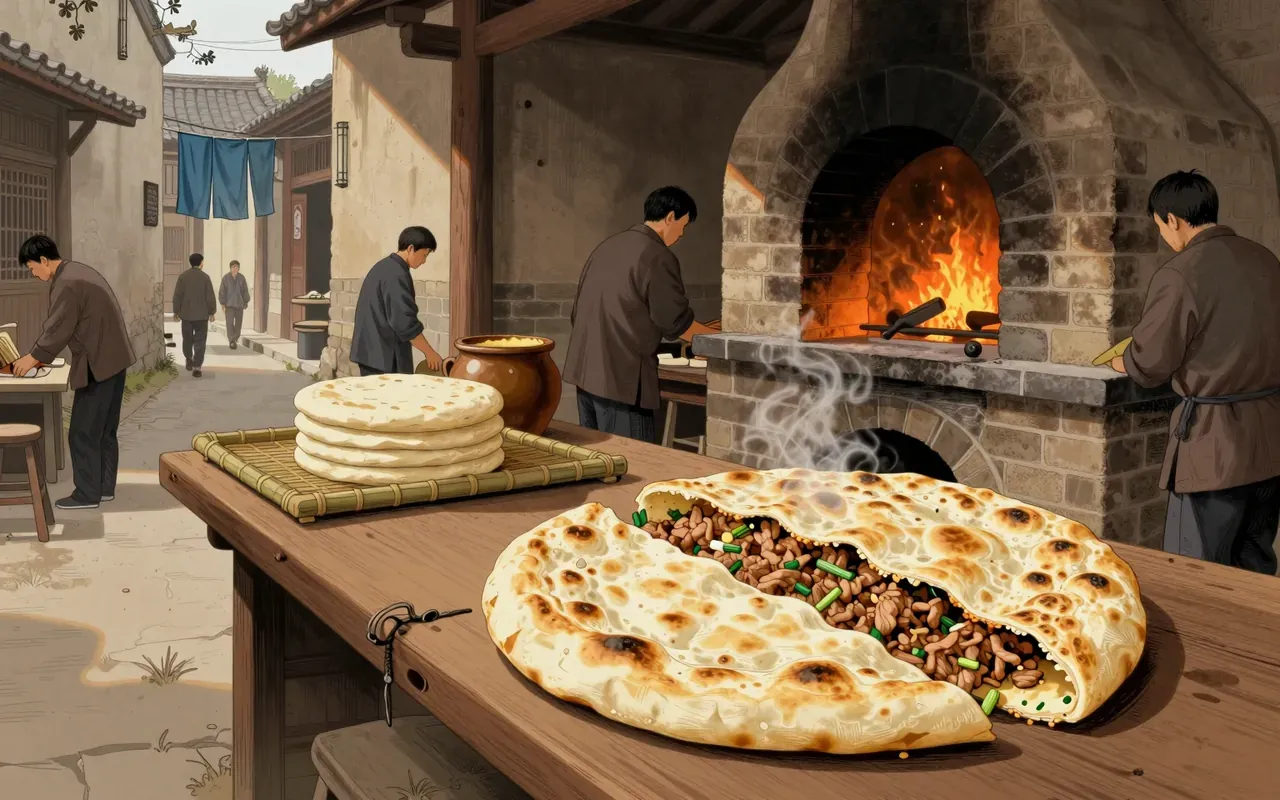
Roujiamo is a Shaanxi street food: stewed meat minced and stuffed into baijimo, a yeast-leavened wheat flatbread. Its roots are in Shaanxi province, with the bread dating to the Qin dynasty (221–206 BC) and the meat preparation to the Zhou dynasty (1045–256 BC).
How it works, in terms someone would actually use
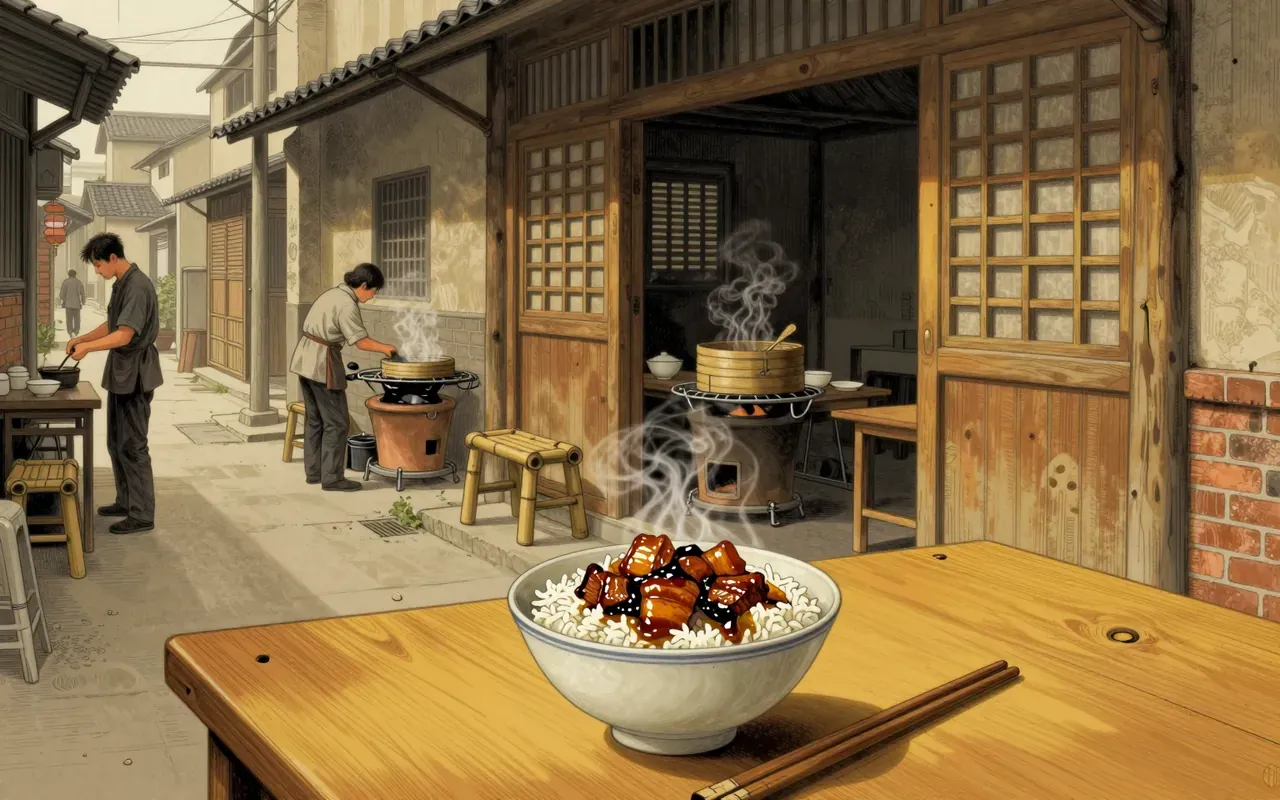
Stewed meat—pork, beef or lamb—is minced and stuffed into baijimo, a yeast-leavened wheat flatbread. The bread is split open, not sliced, to hold the filling without breaking. The stewing step defines the texture: hours in spiced broth render the meat tender enough to cling, not slump.
What it gets right
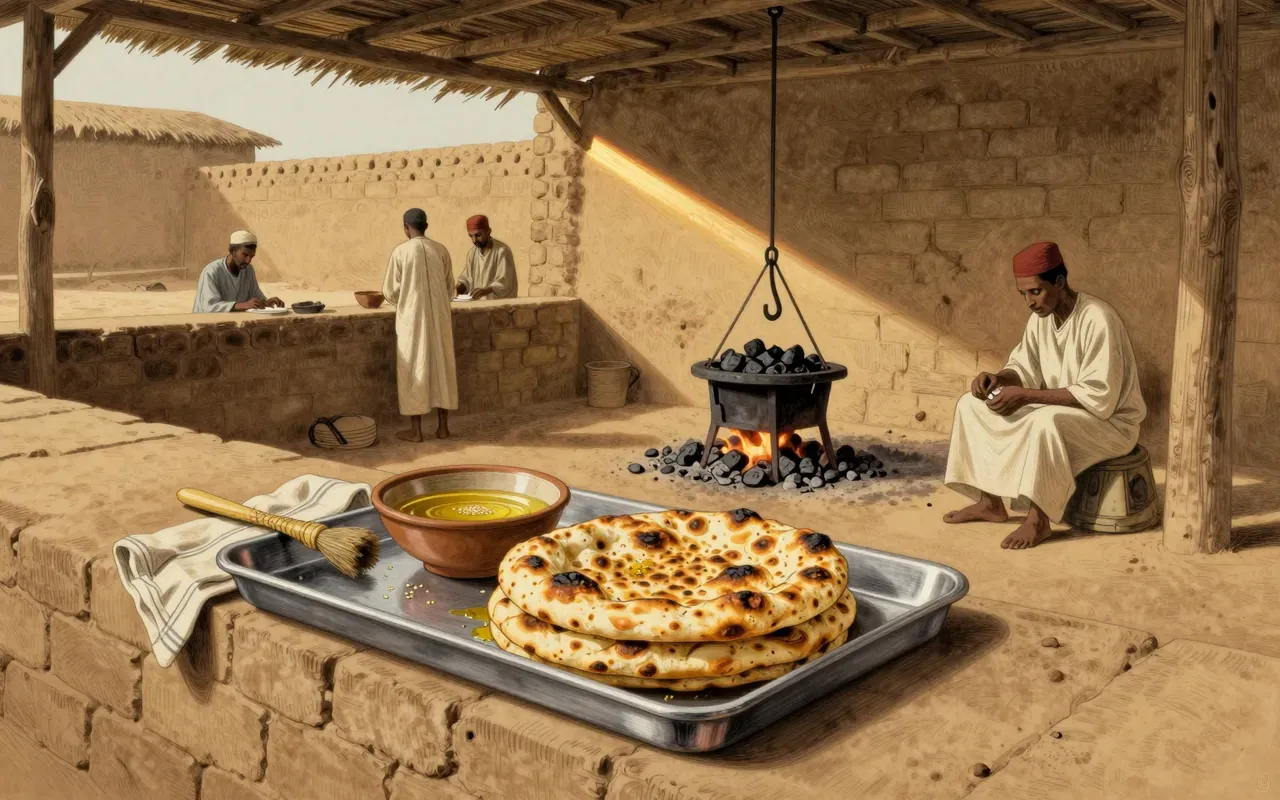
The contrast between the chewy, slightly blistered baijimo and the yielding, spiced meat. The clay-oven baking gives the bread structure and a subtle smokiness that pan-frying cannot replicate.
What it does not
It does not rely on grilling, frying or raw garnishes. It does not use lettuce, tomato, pickles or condiments beyond the stew’s own seasoning. It does not require assembly at point of service beyond stuffing.
What it changed
It fused two ancient food systems—the Zhou dynasty’s spiced meat stews and the Qin dynasty’s leavened clay-oven flatbread—into a portable format that predates the modern hamburger by over two millennia.
Who it is for, and who it is not
It is for eaters who prioritise savoury depth and textural contrast over freshness or acidity. It is not for those seeking low-fat, low-sodium or quick-service convenience without compromise.
Is it worth your time
Yes—if you want a handheld, savoury street food with layered texture and deep spice. No—if you expect crispness, freshness or lightness. It delivers intensity, not balance.