What the dish is and where it came from
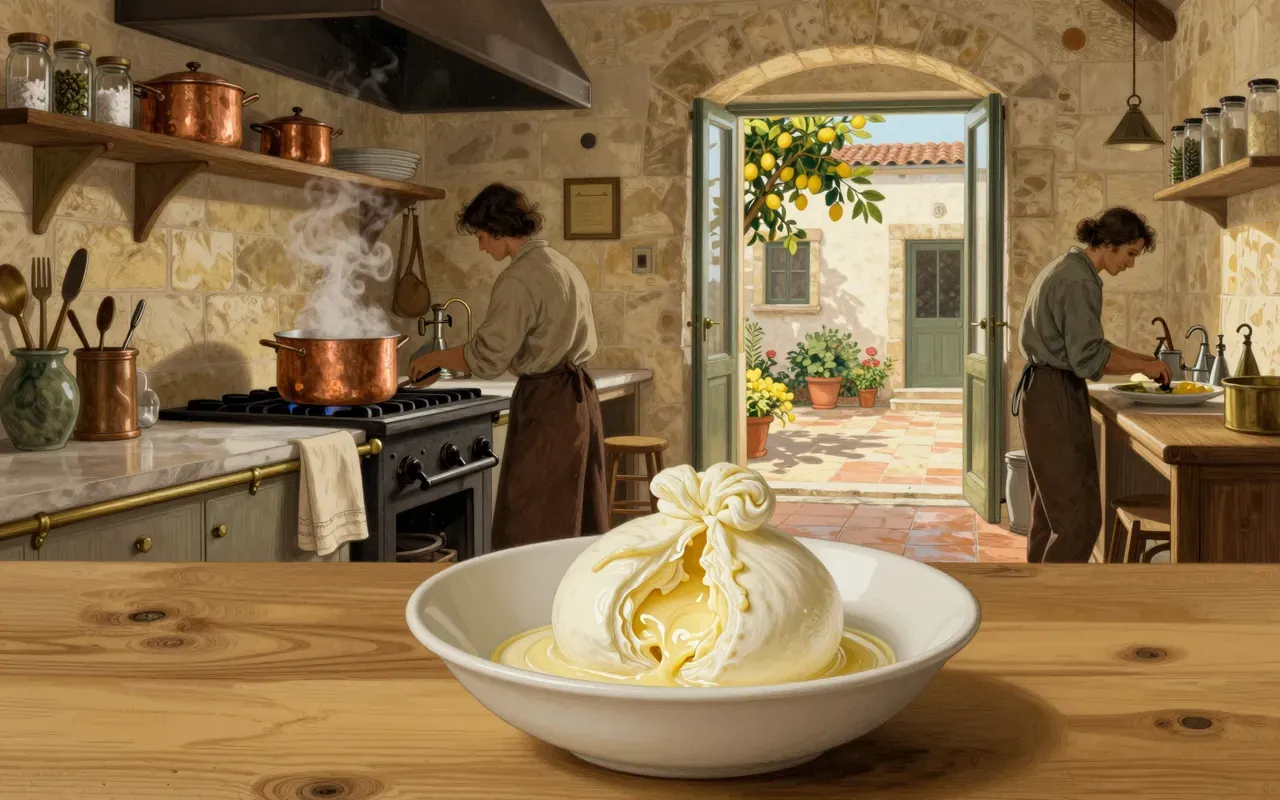
Burrata is a fresh Italian cheese from Apulia. It was developed in the 1920s to reduce food waste, with Lorenzo Bianchino of Piana Padura farm credited for its first production in 1956.
How it works, in terms someone would actually use
Burrata is made by curdling warm milk with rennet, then stretching the fresh curds in hot whey or salted water to form pasta filata. While still hot, the cheese is shaped into a pouch and filled with mozzarella scraps and fresh cream.
What it gets right
It delivers intense, clean dairy fat and stretch in one bite. The hot-pasta-filata pouch holds its shape just long enough to contain the cream-and-scraps core. It solves waste without sacrificing texture.
What it does not
It does not keep well, even refrigerated. It does not withstand heat without collapsing. It does not travel or age.
What it changed
It turned mozzarella waste into a new product category: fresh, fillable, short-lived cheese defined by contrast between outer structure and inner richness.
Who it is for, and who it is not
It is for people who eat cheese within 48 hours of purchase, who value contrast in texture over durability, and who treat dairy as a perishable ingredient—not a pantry staple. It is not for cooks needing stable, meltable, or transportable cheese.
Is it worth your time
Yes—if you want rich, immediate dairy pleasure and can use it within days. No—if you need shelf-stable cheese or plan to cook it hard.