foodbriefs
8:46in productionCh. 1 · Where it’s from/ 8:46 · ceiling 15 min
Dishes

Cannoli

Cannoli are not a dessert—they’re a timed collision of crunch and cream, invented in Arab-influenced Sicily and ruined by sitting.

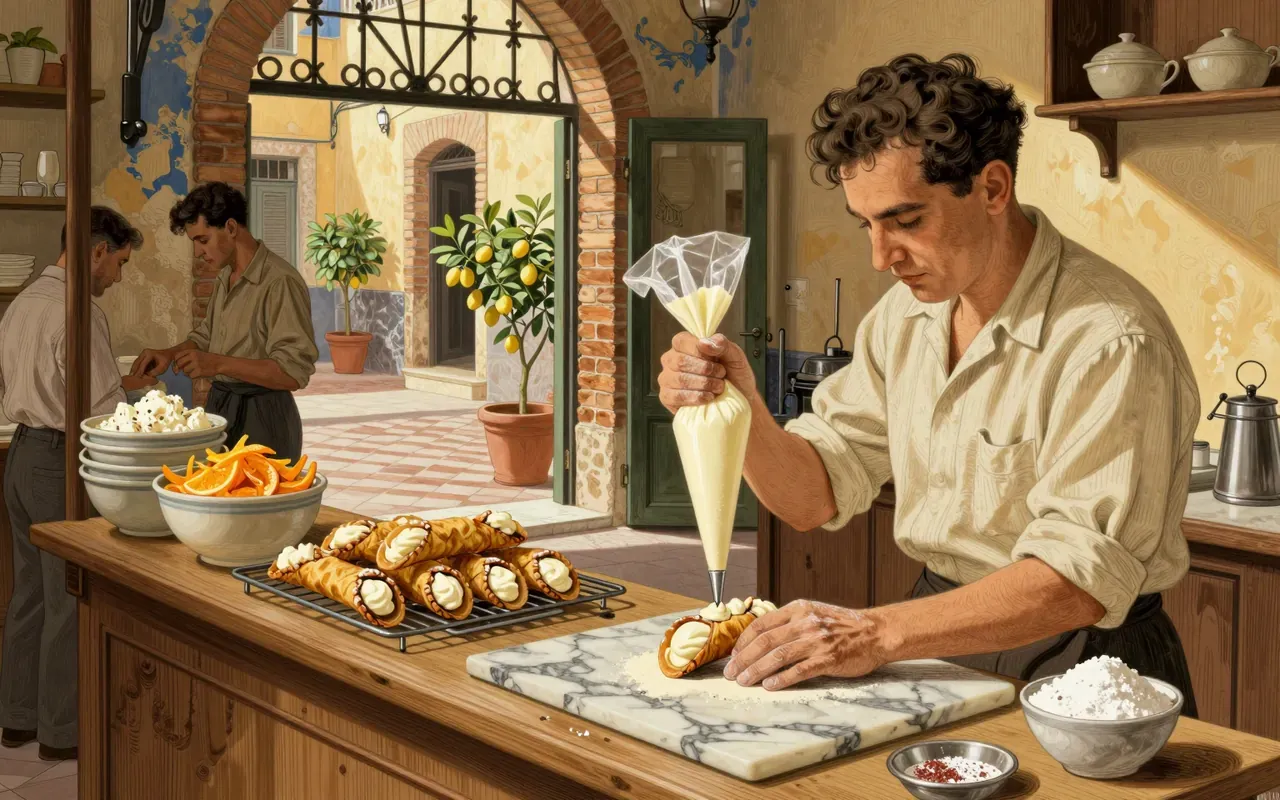
Cannoli are Sicilian tube-shaped fried pastries filled with ricotta cream. Their origins lie in Arab-influenced Sicily between 827–1091, particularly in Caltanissetta. Candied orange zest (Palermo), pistachios (Catania), and purple artichokes (Ramacca) mark regional identity. Street vendors filled them on demand during Saturnalia and Carnival—making timing central to the experience.

Chapters & takeaways4
  1. 0:54
    Where it’s from

    Cannoli are fundamentally Sicilian—no debate about region, only about town and century.

  2. 2:32
    What shaped it

    Arab rule introduced pistachios, candied fruit, and honey-sugar techniques that define cannoli’s core flavours.

  3. 4:14
    How it was served

    Street vendors filled shells on demand during Saturnalia and Carnival—timing was baked into the tradition.

  4. 5:21
    Why the fillings differ

    Every variation—orange in Palermo, pistachios in Catania, artichokes in Ramacca—is a direct line to place, not preference.

Worth your time?

Yes. Cook the whole thing.

4/ 5
What works
  • contrast of shattering shell and yielding ricotta
  • use of candied orange zest in Palermo
  • use of pistachios in Catania
  • use of purple artichokes in Ramacca
What does not
  • holds filling for more than an hour
  • relies on mascarpone or cream cheese
  • originates outside Sicily
Cook it if
  • someone who values ingredient-led regional variation
  • someone who accepts timing as part of the dish
Skip it if
  • anyone needing make-ahead desserts
  • anyone expecting uniform mass production
The written brief1 min read

What the dish is and where it came from

Cannoli are Sicilian pastries: tube-shaped shells of fried pastry dough, filled with ricotta-based cream. They originate in Sicily, with some historians locating their emergence in Caltanissetta between 827 and 1091, during Arab rule.

How it works, in terms someone would actually use

The shell is fried until crisp, then cooled and filled just before serving. Ricotta is drained, sweetened, and stiffened with sugar and sometimes vanilla or cinnamon. The filling must be thick enough to hold its shape but soft enough to pipe cleanly. Overfilling or delaying filling makes the shell soggy.

What it gets right

The contrast between shattering shell and yielding, grainy-sweet ricotta. The use of candied orange zest in Palermo, pistachios in Catania, and purple artichokes in Ramacca grounds it in specific Sicilian terroir—not generic ‘Mediterranean’ flavour.

What it does not

It does not travel well. It does not hold filling for more than an hour without softening the shell. It does not rely on mascarpone, cream cheese, or chocolate unless added in modern reinterpretations absent from the sources.

What it changed

It established a template for filled, tube-shaped pastries across southern Italy and beyond—but only as a regional Sicilian form, not a national standard.

Who it is for, and who it is not

It is for someone who values ingredient-led regional variation and accepts that authenticity lives in the street vendor’s timing—not the bakery’s shelf life. It is not for anyone needing make-ahead desserts or uniform mass production.

Is it worth your time

Yes—if you prioritise contrast of texture and regional specificity over convenience. It demands timing, fresh ricotta, and local variations matter more than uniformity.
Same course · Dishes4 of 485
Up next in Food

Caprese salad

· 9:56

Caprese salad isn’t simple—it’s mercilessly specific.

9:56