1:20in productionCh. 1 · What the dish is and where it came from/ 1:20 · ceiling 15 min
Dishes · Food history
Kare-kare
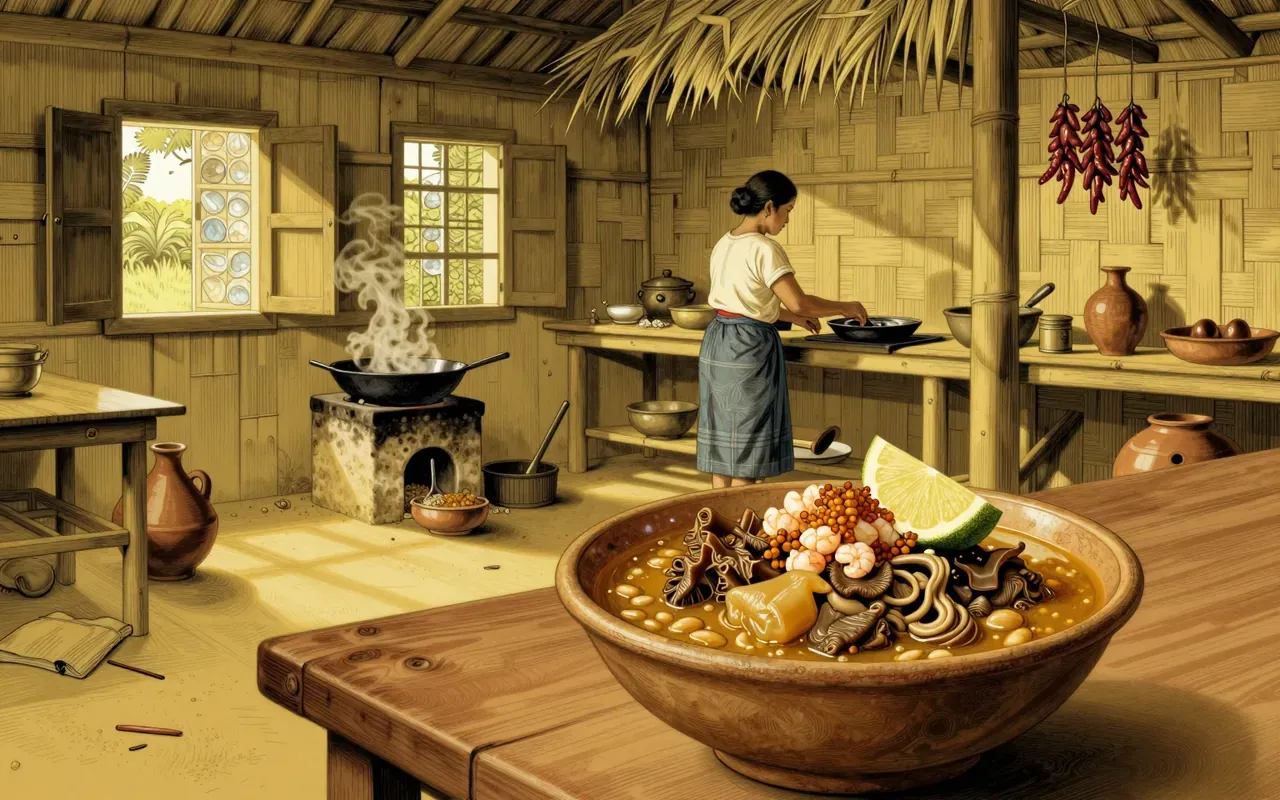
A Filipino stew with oxtail, tripe, and a thick, annatto-colored peanut sauce, traditionally served with bagoong.
Kare-kare is a Filipino stew featuring a thick savory peanut sauce. Its most likely origin is Pampanga in Central Luzon. It may derive from Moro dishes adapted with local ingredients like peanuts and pork.
Kare-kare is a Filipino stew featuring a thick savory peanut sauce.
0:14
How it works, in terms someone would actually use
Oxtail (skin on) is cut into 2-inch lengths; ox tripe is boiled until tender.
0:30
What it gets right
It gets right a rich, savory-sweet peanut sauce balanced by salty, pungent bagoong and bright calamansi juice.
0:42
What it does not
It does not suit preferences for lean, vegetable-forward, or seafood-based meals.
0:54
What it changed
Peanuts were introduced from Mexico in the 16th century via Spanish galleon trade, enabling the dish’s defining sauce component.
1:02
Who it is for, and who it is not
It is for people who enjoy hearty, slow-cooked stews with complex savory-salty-acidic contrasts.
1:12
Is it worth your time
It is worth your time if you seek a culturally significant Filipino stew with layered textures and bold, balanced condiments.
Worth your time?
Selectively. Start with the brief, then cook the parts we point at.
What works
It gets right a rich, savory-sweet peanut sauce balanced by salty, pungent bagoong and bright calamansi juice. The gelatinous texture from slow-cooked oxtail and tripe adds body and depth.
What does not
It does not suit preferences for lean, vegetable-forward, or seafood-based meals. The inclusion of oxtail, tripe, and bagoong makes it less accessible to those avoiding offal, strong fermented flavors, or shellfish.
Cook it if
Skip it if
The written brief1 min read
What the dish is and where it came from
Kare-kare is a Filipino stew featuring a thick savory peanut sauce. Its most likely origin is Pampanga in Central Luzon. It may derive from Moro dishes adapted with local ingredients like peanuts and pork.
How it works, in terms someone would actually use
Oxtail (skin on) is cut into 2-inch lengths; ox tripe is boiled until tender. Ox feet or shins may be added. When meat is tender, ground roasted peanuts—or peanut butter—and ground roasted glutinous rice thicken the broth. Annatto gives it color.
What it gets right
It gets right a rich, savory-sweet peanut sauce balanced by salty, pungent bagoong and bright calamansi juice. The gelatinous texture from slow-cooked oxtail and tripe adds body and depth.
What it does not
It does not suit preferences for lean, vegetable-forward, or seafood-based meals. The inclusion of oxtail, tripe, and bagoong makes it less accessible to those avoiding offal, strong fermented flavors, or shellfish.
What it changed
Peanuts were introduced from Mexico in the 16th century via Spanish galleon trade, enabling the dish’s defining sauce component.
Who it is for, and who it is not
It is for people who enjoy hearty, slow-cooked stews with complex savory-salty-acidic contrasts. It is not for those avoiding offal, peanuts, shellfish-derived bagoong, or annatto.
Is it worth your time
It is worth your time if you seek a culturally significant Filipino stew with layered textures and bold, balanced condiments.