1:17in productionCh. 1 · What the dish is and where it came from/ 1:17 · ceiling 15 min
Dishes · Food history
Cendol
A Southeast Asian dessert of pandan-flavoured rice flour jelly strands served in coconut milk and palm sugar syrup.
Cendol is a Southeast Asian dessert with documented references from the mid-nineteenth century in the Dutch East Indies and British Malaya. The earliest known spelling is 'tjendol' in an 1859 Makassarese–Dutch dictionary. By 1866, it appeared as 'Tjendol of Dawet' in a Dutch East Indies cookbook, indicating early interchangeability with dawet. In Malaya, 'chendul' was recorded in an 1894 Malay-English dictionary.
Cendol is a Southeast Asian dessert with documented references from the mid-nineteenth century in the Dutch East Indies and British Malaya.
0:24
How it works, in terms someone would actually use
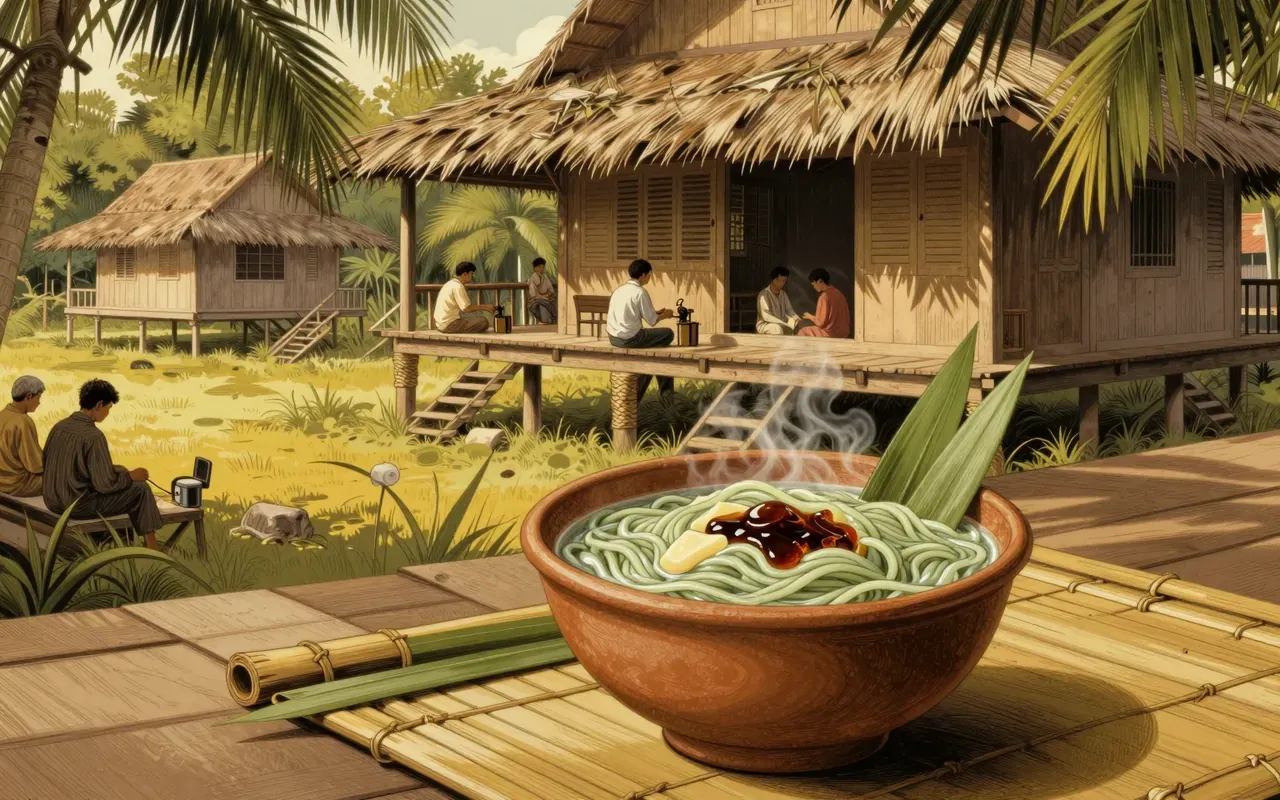
The jelly is made by pressing warm rice flour dough through a sieve into cold water — a method referenced in the Thai name lot chong, meaning 'gone through a hole'.
0:36
What it gets right
It combines pandan for aroma and colour, coconut milk for creaminess, and palm sugar for caramel-like sweetness — ingredients long established across the region.
0:46
What it does not
It does not include dairy, fruit, or modern sweeteners; its base components are plant-derived and traditional.
0:52
What it changed
By 1866, cendol and dawet were already treated as interchangeable terms, suggesting early semantic consolidation of related preparations.
0:59
Who it is for, and who it is not
It is for people who enjoy plant-based, aromatic, chilled desserts with textured jelly.
1:10
Is it worth your time
Yes — it is a historically rooted, regionally widespread dessert built on simple, longstanding ingredients and techniques.
Worth your time?
Selectively. Start with the brief, then cook the parts we point at.
What works
It combines pandan for aroma and colour, coconut milk for creaminess, and palm sugar for caramel-like sweetness — ingredients long established across the region.
What does not
It does not include dairy, fruit, or modern sweeteners; its base components are plant-derived and traditional.
Cook it if
Skip it if
The written brief1 min read
What the dish is and where it came from
Cendol is a Southeast Asian dessert with documented references from the mid-nineteenth century in the Dutch East Indies and British Malaya. The earliest known spelling is ‘tjendol’ in an 1859 Makassarese–Dutch dictionary. By 1866, it appeared as ‘Tjendol of Dawet’ in a Dutch East Indies cookbook, indicating early interchangeability with dawet. In Malaya, ‘chendul’ was recorded in an 1894 Malay-English dictionary.
How it works, in terms someone would actually use
The jelly is made by pressing warm rice flour dough through a sieve into cold water — a method referenced in the Thai name lot chong, meaning ‘gone through a hole’.
What it gets right
It combines pandan for aroma and colour, coconut milk for creaminess, and palm sugar for caramel-like sweetness — ingredients long established across the region.
What it does not
It does not include dairy, fruit, or modern sweeteners; its base components are plant-derived and traditional.
What it changed
By 1866, cendol and dawet were already treated as interchangeable terms, suggesting early semantic consolidation of related preparations.
Who it is for, and who it is not
It is for people who enjoy plant-based, aromatic, chilled desserts with textured jelly. It is not for those avoiding coconut, palm sugar, or gluten-free rice flour preparations.
Is it worth your time
Yes — it is a historically rooted, regionally widespread dessert built on simple, longstanding ingredients and techniques.