1:20in productionCh. 1 · What the dish is and where it came from/ 1:20 · ceiling 15 min
Dishes · Food history
Chicken paprikash
A Hungarian stew of chicken simmered in a paprika-infused roux-based sauce, finished with sour cream and served with egg noodles.
Chicken paprikash (paprikás csirke) is a traditional Hungarian dish centered on chicken stewed in a paprika-rich sauce. The first known recipe appeared in István Czifray’s 1830 Hungarian National Cookbook, written for Hungarian housewives.
Chicken paprikash (paprikás csirke) is a traditional Hungarian dish centered on chicken stewed in a paprika-rich sauce.
0:13
How it works, in terms someone would actually use
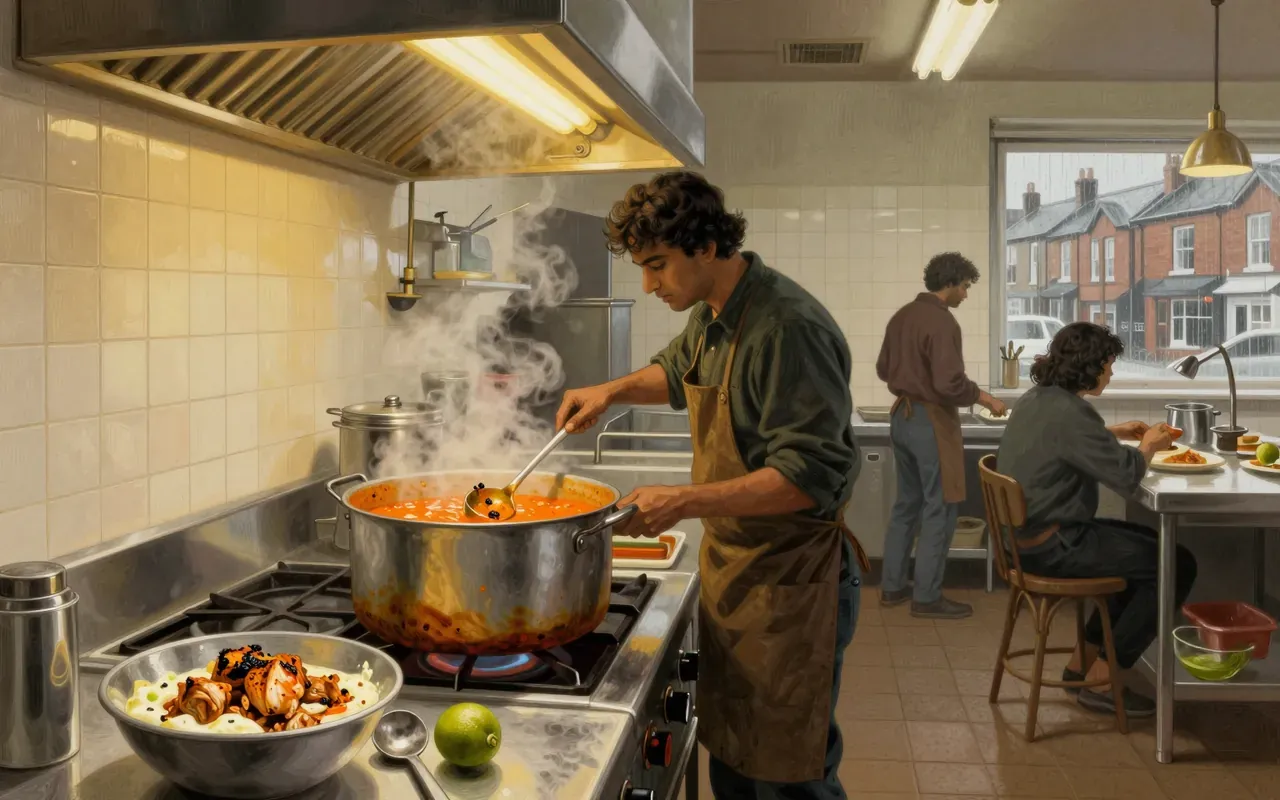
Chicken pieces are simmered until tender in a sauce built from a roux infused with paprika, then enriched with sour cream to desired thickness.
0:28
What it gets right
It balances savory depth from paprika and richness from sour cream.
0:40
What it does not
Unlike gulyás or pörkölt, it includes sour cream, making it less suitable if you prefer dishes without dairy enrichment or want a purely meat-and-vegetable stew.
0:50
What it changed
It evolved alongside paprika’s social rise in Hungary, becoming tied to bourgeois cuisine through the addition of sour cream—a documented shift from earlier paprika-based stews.
1:00
Who it is for, and who it is not
It is for people who enjoy hearty, paprika-forward stews with creamy richness and soft noodles.
1:11
Is it worth your time
Yes.
Worth your time?
Selectively. Start with the brief, then cook the parts we point at.
What works
It balances savory depth from paprika and richness from sour cream. Served with nokedli—dumpling-like boiled egg noodles—it delivers cohesive texture and comfort. Its bourgeois origins reflect intentional refinement over rustic predecessors.
What does not
Unlike gulyás or pörkölt, it includes sour cream, making it less suitable if you prefer dishes without dairy enrichment or want a purely meat-and-vegetable stew.
Cook it if
Skip it if
The written brief1 min read
What the dish is and where it came from
Chicken paprikash (paprikás csirke) is a traditional Hungarian dish centered on chicken stewed in a paprika-rich sauce. The first known recipe appeared in István Czifray’s 1830 Hungarian National Cookbook, written for Hungarian housewives.
How it works, in terms someone would actually use
Chicken pieces are simmered until tender in a sauce built from a roux infused with paprika, then enriched with sour cream to desired thickness. The method relies on slow cooking and paprika infusion, not browning or reduction alone.
What it gets right
It balances savory depth from paprika and richness from sour cream. Served with nokedli—dumpling-like boiled egg noodles—it delivers cohesive texture and comfort. Its bourgeois origins reflect intentional refinement over rustic predecessors.
What it does not
Unlike gulyás or pörkölt, it includes sour cream, making it less suitable if you prefer dishes without dairy enrichment or want a purely meat-and-vegetable stew.
What it changed
It evolved alongside paprika’s social rise in Hungary, becoming tied to bourgeois cuisine through the addition of sour cream—a documented shift from earlier paprika-based stews.
Who it is for, and who it is not
It is for people who enjoy hearty, paprika-forward stews with creamy richness and soft noodles. It is not for those avoiding dairy or seeking minimalist, vegetable-led meals.
Is it worth your time
Yes. As one of the most famous paprikás preparations in Hungarian cuisine, it represents a well-established, widely recognized format with clear cultural anchoring.