What the thing is
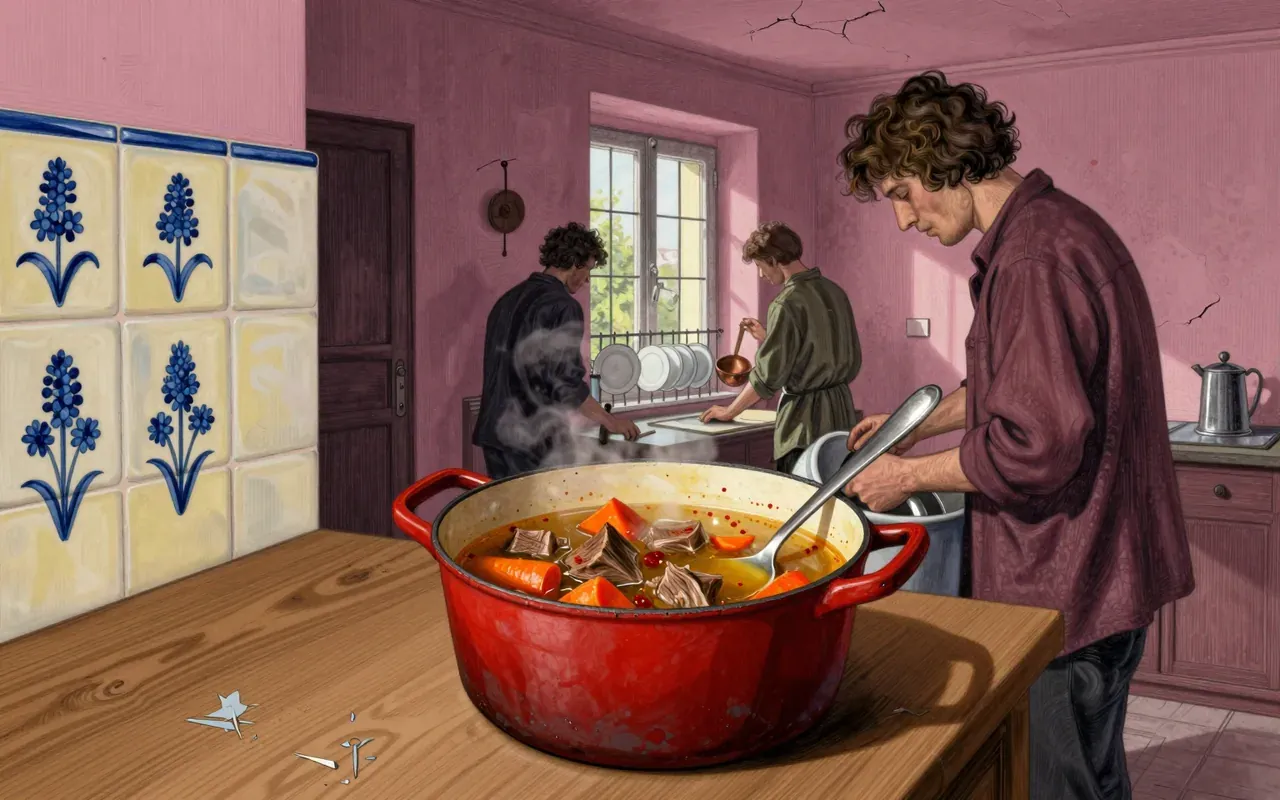
Goulash is a paprika-seasoned meat-and-vegetable soup, known in Hungary as gulyásleves.
The name comes from the Hungarian gulyás, meaning ‘cattle herder’ (gulya is a herd of cattle); the dish was once gulyáshús, ‘goulash meat’, prepared by herdsmen. Its basic ingredients are beef, onions, paprika, caraway seeds, potatoes, carrots and fresh noodles called csipetke, made by pinching fingernail-sized bits of dough into the boiling soup. The Hungarian language makes a strict distinction between stews and gulyás.
Where it came from
It originated among Hungarian shepherds in the 10th century. Paprika arrived only in the 16th century, so early versions contained none.
From the Middle Ages until well into the 19th century, the Puszta was home to enormous herds of cattle, driven in their tens of thousands to the cattle markets of Moravia, Vienna, Nuremberg and Venice. The herdsmen made sure some cattle were slaughtered along the way, and that meat became gulyáshús. The original herdsmen had more access to mutton than beef, which gave birkagulyás.
What it gets right
It preserves a direct line from medieval pastoral life: portable, durable, resourceful. The Hungarian gulyásleves remains strictly soup, highly conservative, and regionally uniform.
Meat, typically shank, shin or shoulder, is cut into chunks, salted, and browned with sliced onion in oil or lard. Paprika and water are added and the pot is left to simmer, and after a while caraway seed and soup vegetables such as potato, carrot or parsley root go in. Bográcsgulyás is cooked outdoors over open fire in a kettle called a bogrács, which needs only an iron tripod, a chain and a campfire.
What it gets wrong
It misrepresents its own origins every time it’s served as a thick stew outside Hungary—erasing the 10th-century shepherd’s sun-dried meat-in-stomach-bag method and the 400-year paprika-free period.
Stew-like versions of gulyás are made the same way, with the broth left to simmer down. The goulash served abroad is usually closer to pörkölt, a stew that evolved from the original gulyás, or to paprikás, the version of pörkölt with sour cream; gulyás is always beef or mutton, while pörkölt and paprikás can use chicken or pork. North American goulash, mentioned in cookbooks since at least 1914, now usually has elbow macaroni, beef and tomatoes in some form.
Why it matters now
It shows how national cuisine hardens into orthodoxy—freezing one version (soup) while exporting a distorted one (stew)—and how food identity displaces memory of method.
Is it worth your time
Yes—if you want to understand how a dish becomes a national symbol by shedding its own history.