foodbriefs
8:30in productionCh. 1 · Where it comes from/ 8:30 · ceiling 15 min
Dishes · Technique

Polbo á feira

Octopus boiled in copper, dipped three times, rested, then dressed: Galicia’s most honest seafood test.

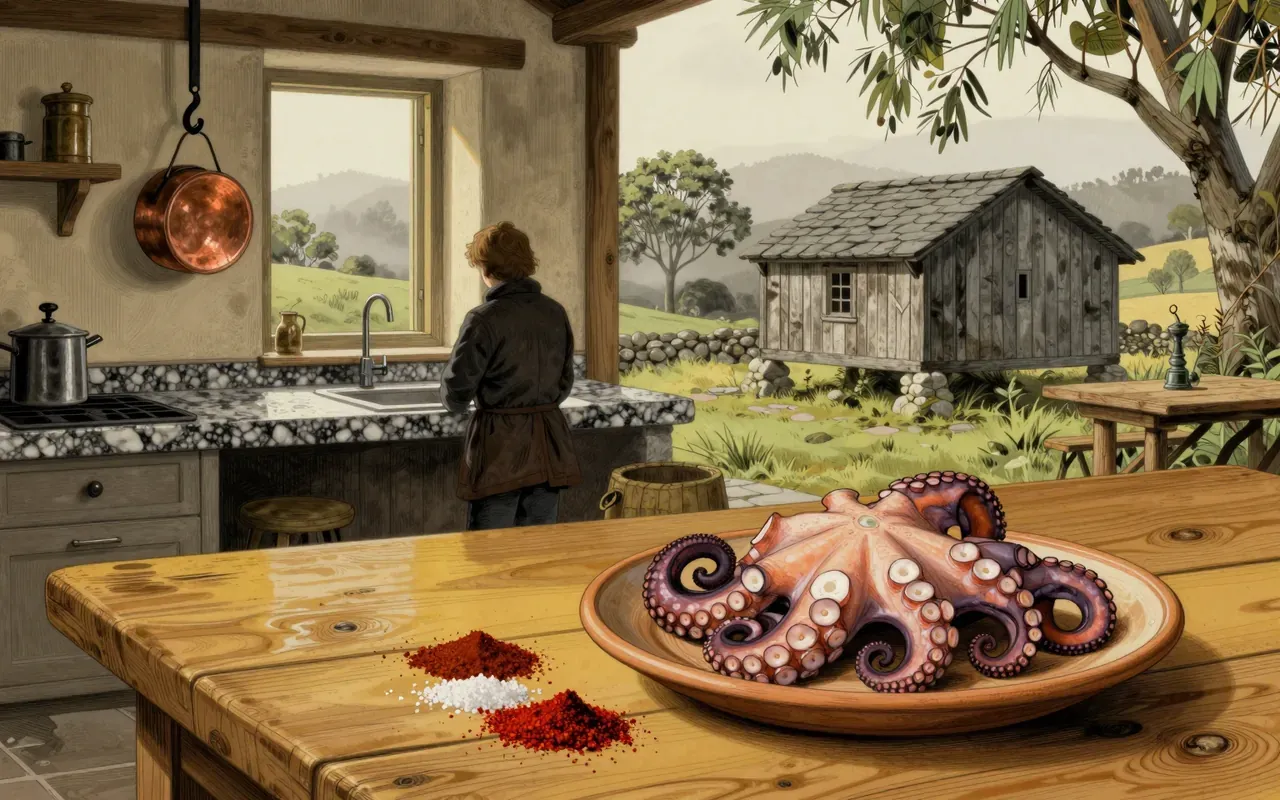
Polbo á feira is a traditional Galician dish. It was historically prepared and eaten at rural fairs and romerías. The octopus is boiled inside a copper cauldron. Before boiling, the tentacles are dipped in and out of the boiling water three times to curl the tips. After boiling, it is trimmed, sprinkled with coarse salt and both sweet and spicy paprika, and drizzled with olive oil. The optimal cooking point is when the octopus is neither rubbery nor overcooked. Cooking time is 20–45 minutes (approx. 15 min/kg), followed by a 20-minute rest in the hot water. In recent decades, frozen octopus has replaced dried octopus.

Chapters & takeaways5
  1. 0:40
    Where it comes from

    It is Galician. And it belongs to fairs—not restaurants, not homes, but communal outdoor gatherings.

  2. 1:51
    How it holds texture

    Copper cauldron, three dips, timed boil plus 20-minute rest: every step locks in tenderness.

  3. 3:02
    What finishes it

    Coarse salt, sweet paprika, spicy paprika, olive oil—no herbs, no garlic, no vinegar.

  4. 4:12
    What 'done' really means

    Optimal means al dente: yielding but resistant, never mushy or springy.

  5. 5:09
    What changed—and what didn’t

    Frozen octopus replaced dried octopus—but the method stayed intact.

Worth your time?

Yes. Cook the whole thing.

4.5/ 5
What works
  • Copper cauldron ensures even heat and subtle mineral interaction.
  • Three-dip technique curls tentacle tips for consistent bite and visual identity.
  • Dual paprika—sweet and spicy—creates layered warmth without heat dominance.
  • 20-minute rest off heat completes tenderisation without overcooking.
What does not
  • It does not mask poor octopus.
  • It does not offer complexity or convenience.
Cook it if
  • People who value clarity of ingredient and control of texture.
  • People who understand texture as a primary taste event.
Skip it if
  • Those who expect richness, variation, or ease.
The written brief1 min read

What the dish is and where it came from

Polbo á feira is a traditional Galician dish. It was historically prepared and eaten at rural fairs and romerías.

How it works, in terms someone would actually use

Boil octopus in a copper cauldron. Dip tentacles three times into boiling water before full submersion to curl tips. Cook 20–45 minutes (≈15 min/kg), then rest 20 minutes in hot water off the heat. Trim with scissors. Finish with coarse salt, sweet paprika, spicy paprika, and olive oil.

What it gets right

It establishes texture as the central event: neither rubbery nor overcooked, like pasta al dente. The three-dip curl gives visual identity and functional bite control. Copper cauldron, coarse salt, and dual paprika create a regional signature that is specific, repeatable, and unadorned.

What it does not

It does not mask poor octopus. Overcooking makes it rubbery. Undercooking leaves it tough. It offers no sauce, no garnish, no variation—only boiled octopus, salt, paprika, oil.

What it changed

Frozen octopus replaced dried octopus in recent decades. The method adapted without altering core steps or seasoning.

Who it is for, and who it is not

It is for people who value clarity of ingredient and control of texture. It is not for those who expect complexity, richness, or convenience.

Is it worth your time

Yes—if you want tender octopus with clean ocean flavour, sharp salt, smoky-sweet heat, and slippery-chewy texture. It demands attention to timing and rests, but rewards precision.

Same course · Dishes4 of 485
Up next in Food

Rakfisk

· 8:32

Rakfisk isn’t fermented — it’s autolysed. And that makes all the difference between tradition and toxicity.

8:32