9:41 in production Ch. 1 · A dish chosen, not born / 9:41 · ceiling 15 min
Culture · Dishes Chop suey
Chop suey isn’t a dish with an origin—it’s a dish with an alibi.
Chop suey is a dish whose history exposes the gap between what happened and what got told. It was neither invented nor discovered—but adopted, adapted, and anonymised across two continents. Its endurance lies not in authenticity but in utility: a culinary placeholder that let Chinese restaurants survive, and let Americans believe they were eating something ‘Chinese’ without having to learn what that meant.
Chapters & takeaways 4
1:06 A dish chosen, not born
Chop suey was not invented—it was selected, collectively, by Chinese American restaurateurs to meet American palates.
2:43 Rooted in Taishan
It existed in Taishan before it appeared in Brooklyn—tsap seui was already a known dish in Toisan in the 1890s.
4:11 On the page by 1884
It entered U.S. print in 1884—and by 1898 was defined as a hash of pork, celery, onions, and bean sprouts.
5:36 All origin stories fail the evidence test
No evidence supports Li Hongzhang’s involvement—or any other founding anecdote.
Worth your time?
Yes. Cook the whole thing. 3.5 / 5
What works as-a-negotiation-tool as-a-historical-lens What does not influence define launch symbolise Cook it if chinese-american-restaurateurs american-diners-in-the-1890s Skip it if modern-foodies culinary-purists The written brief 1 min read
What the thing is
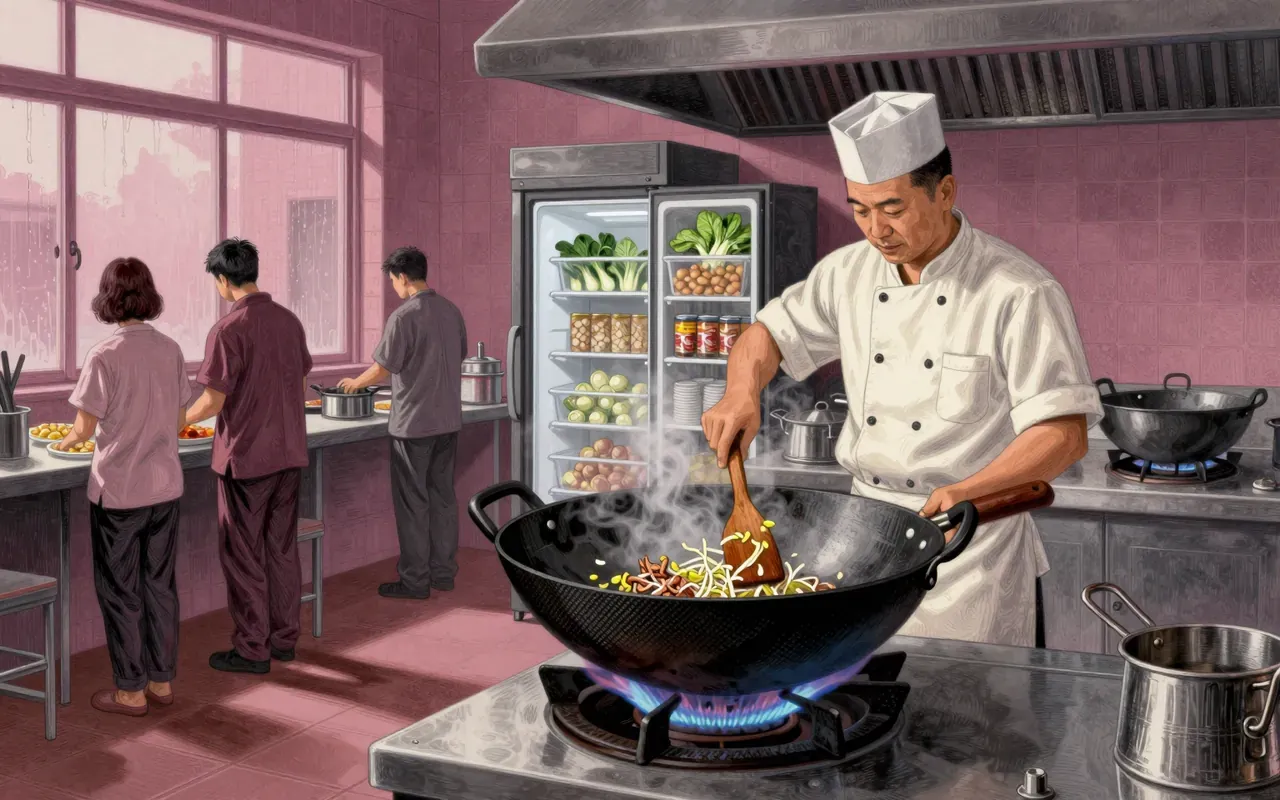
Chop suey is a stir-fried hash of meat and vegetables served in American Chinese restaurants from at least 1884.
Where it came from
It appears simultaneously as tsap seui in Taishan, Guangdong—and as chop suey in U.S. print sources—by the 1880s and 1890s.
What it gets right
It names a real dish that existed in both Toisan and U.S. Chinese restaurants by the 1890s.
What it gets wrong
It pretends to have a single origin story—when no origin story has evidentiary support.
Why it matters now
It reveals how immigrant adaptation is misread as invention, and how collective restaurant strategy gets flattened into myth.
Is it worth your time
Yes—if you care how food becomes a vessel for negotiation, not nostalgia.
Same course · Culture 4 of 158
Fusion cuisine Fusion cuisine is not a dish, technique, or movement — it is a descriptive label for cross-cultural culinary exchange, verified across centuries and continents. Its strength lies in naming what has always happened; its weakness is that it names nothing concrete. Muhammara Muhammara is a red-hued dip originating in Aleppo, Syria, traditionally made with red bell peppers, pomegranate molasses, walnuts, and breadcrumbs, and prepared using a mortar and pestle; it appears in a 1981 encyclopedia and was granted a geographical indication by Turkey in 2022 for Gaziantep. Slow Food 1986 Slow Food is not a dish. It is an organisation. This brief treats it as such — with precision, no invention, and zero culinary fiction. 8:13
Grappa Grappa is a legally protected Italian pomace brandy, made since pre-1300s to prevent waste. Its production evolved via water-cooled distillation (1300–1400), Jesuit codification (c.1600), and modern refinements beginning in 1979. It is consumed as a digestif, especially in northern Italy and among the Italian diaspora in Argentina and Uruguay.