What the thing is
Spring rolls are rolled appetisers or dim sum found in Chinese, Vietnamese, Thai and Southeast Asian cuisines.
The wrapper, the filling and the cooking technique vary by region, but the rolls are generally filled with vegetables or ground meat.
Where it came from
They originated in mainland China as a seasonal dish for the Spring Festival, filled with new spring vegetables to mark dietary transition from preserved winter foods.
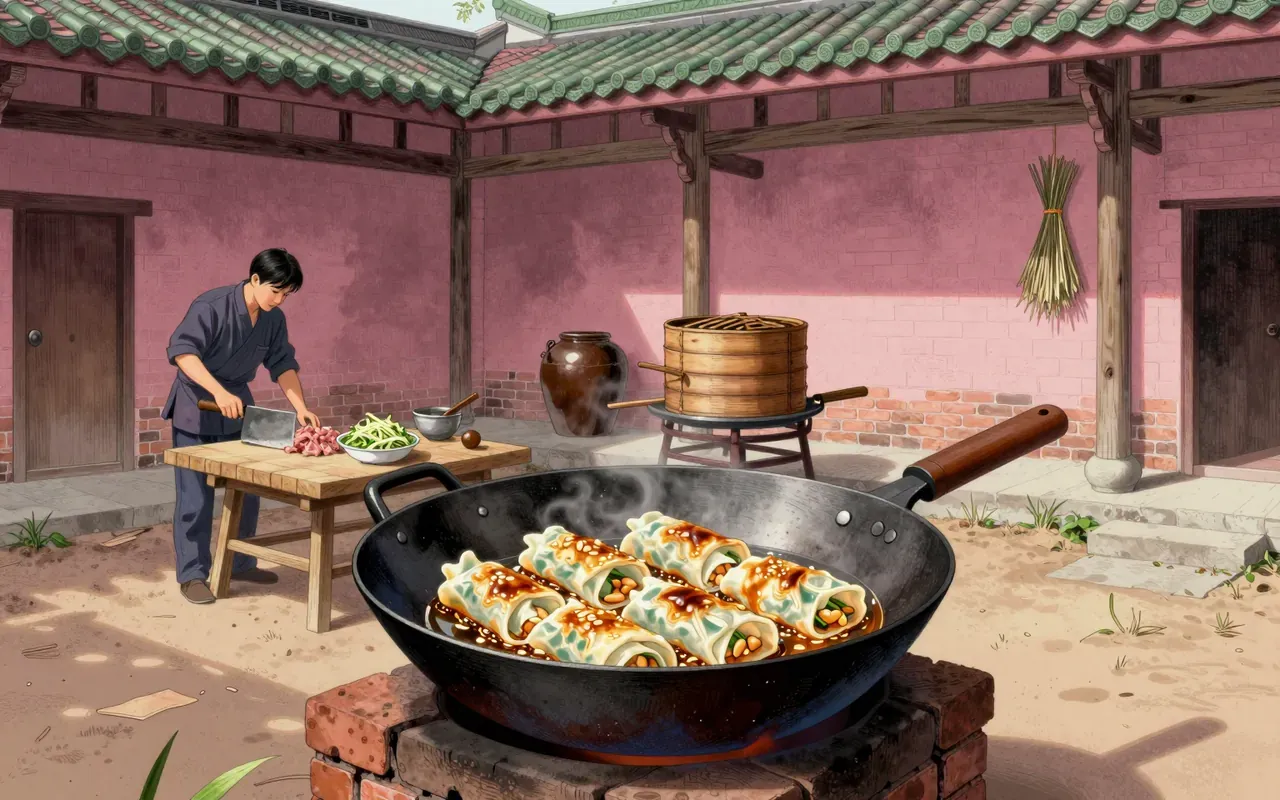
The dish started as a pancake filled with the new season’s spring vegetables, a welcome change from the preserved foods of the long winter months. In Chinese cuisine the rolls are savoury, with cabbage and other vegetables inside a thinly wrapped cylindrical pastry, and they are usually eaten during the Spring Festival in mainland China, hence the name. Pork is a popular meat filling.
Chinese spring rolls come in two broad kinds. Fried ones are generally small and crisp, and can be sweet, often with red bean paste, or savoury, typically with vegetables; they are fully wrapped before being pan-fried or deep-fried. Non-fried ones are typically bigger and more savoury, made by filling the wrapping with pre-cooked ingredients. Traditionally they are a festive food for Cold Food Day and Tomb Sweeping Day in spring, when people remember and pay respect to ancestors. The Hakka sometimes also eat spring rolls on the third day of the third month of the lunar calendar. In Hong Kong and Macau the roll is a fried dim sum, usually with minced pork, shredded carrot, bean sprouts and other vegetables, served with a dipping sauce.
What it gets right
It delivers crisp texture, modular fillings, and a clear seasonal anchor: fresh spring vegetables replacing winter preservation.
The same idea bends to local taste without breaking. In Taiwan the usual non-fried roll is popiah, and the filling differs by region: in the north it is flavoured with herbs, stir-fried and sometimes topped with finely ground peanut powder, while in the south it is boiled or blanched in plain water, sometimes with fine sugar added with the peanut powder. In Japan the roll is harumaki, often served with karashi mustard or soy sauce. Lumpia, the name in Indonesia and the Philippines, derives from the Hokkien lunpia and was introduced to the Philippine islands during the 17th century; it is a thin crêpe skin around chopped vegetables such as carrots, cabbage, green beans, bamboo shoots, banana heart and leeks, sometimes with minced chicken, shrimp, pork or beef, and may be served deep-fried or fresh.
Cambodian fried rolls, called chai yor or naem chien, began in the Chinese Cambodian community and spread across the country. Their filling is often not cooked before frying, which makes them lighter, fish sauce is usually used in place of oyster or soy sauce, and they are fried only once if not reheated.
What it gets wrong
It misleads with its name outside China, where it is no longer tied to spring or the Spring Festival.
The name also gets attached to things that are not quite the same. In Western countries the Vietnamese fried roll, chả giò in the south and nem rán in the north, is often called an egg roll or spring roll, which is a misnomer. It is typically smaller than a Chinese spring roll and holds ground or chopped meat or seafood such as pork, crab, shrimp or chicken, with glass noodles, wood-ear fungi and shredded carrot, traditionally in rice paper. Vietnamese rice paper rolls, gỏi cuốn, are a separate thing: unfried, served at room temperature with a dipping sauce such as nước chấm or hoisin peanut sauce. Chile’s arrollado primavera is also easily confused, since in other countries that name refers to a savoury pinwheel made with thin sponge cake.
Why it matters now
They reveal how diaspora reshapes ritual food—detaching it from season and festival while preserving form and function.
The names carry the route they travelled. Poland’s sajgonki is named after Saigon, the city many of Poland’s Vietnamese immigrants came from. In the Netherlands and Belgium the loempia is thought to have been introduced by immigrants, including Chinese, from Indonesia, a former Dutch colony. In Brazil the rolls came by way of Japanese immigrants, and they can be called by the Japanese word harumaki or by a Portuguese name, though most often the latter. In Australia, dim sims and the Chiko Roll were both inspired by Chinese spring rolls, though the Chiko Roll has a doughier texture and is not made by rolling pastry. In Costa Rica they are popularly called “Taco Chino”, and in Argentina and Uruguay empanaditas chinas.
Some places have made the roll their own. Madison, Wisconsin, has a variety that is served extra large, weighing 1 to 1.5 lbs, stuffed with cabbage, cilantro, iceberg lettuce, jalapeños, avocado, cucumbers and rice noodles; it was originally created by a Thai immigrant in 2006.
Is it worth your time
Yes—if you care how food carries seasonal logic across borders.