What the dish is and where it came from
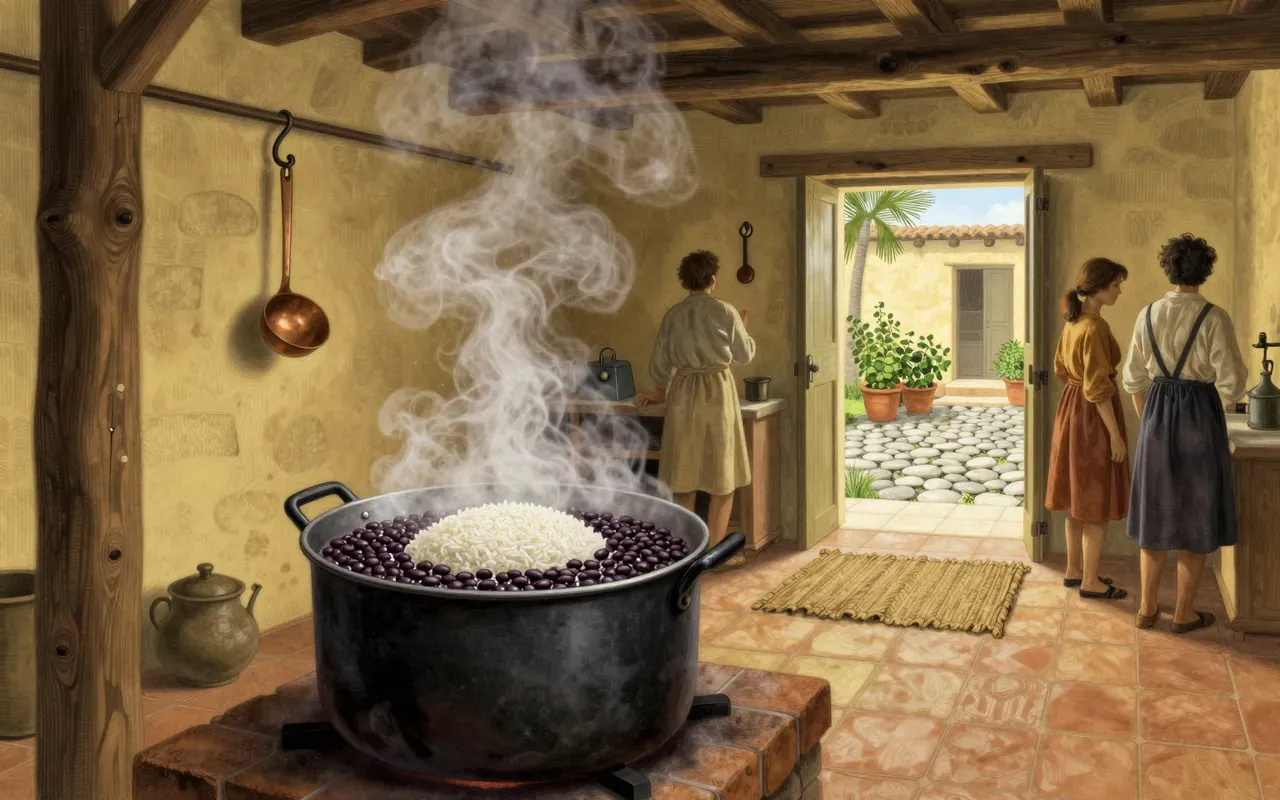
Moros y Cristianos is a Cuban dish. It combines black beans and white rice cooked together in one pot. Its name references the historical Moorish presence in Iberia through colour-coded ingredients.
How it works, in terms someone would actually use
Black beans and white rice cook together in one pot. Sofrito, cumin, and oregano season the mixture. The unified cooking melds starch and legume, thickening the liquid into a cohesive, spoonable dish.
What it gets right
The name maps precisely to its core ingredients: black beans = Moros, white rice = Cristianos. The one-pot method delivers even absorption, distinct from layered or side-by-side serving.
What it does not
It does not use red beans by default. Red beans define the eastern Cuban variant, congri—not the standard Moros y Cristianos.
What it changed
It reframed arroz con frijoles as two separate components—and made unity the point. Cooking them together created a new category: not rice with beans, but rice-and-beans as one entity.
Who it is for, and who it is not
It is for cooks who value symbolic clarity, regional specificity, and efficient one-pot meals. It is not for those seeking novelty, fusion, or ingredient improvisation—its logic is fixed by colour, origin, and method.
Is it worth your time
Yes—if you want a single-pot Cuban staple with clear regional logic and symbolic naming. It demands no special equipment or rare ingredients, but rewards attention to sofrito depth and bean texture.