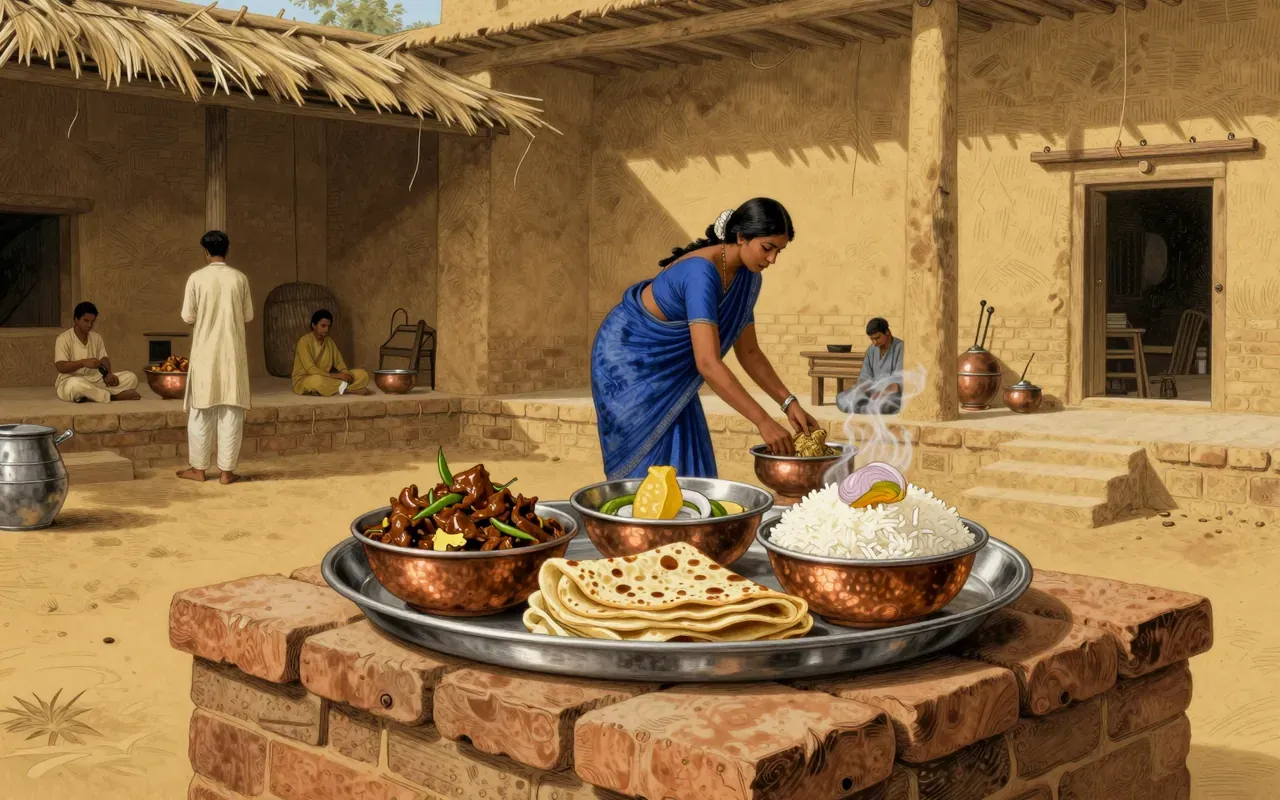
What the dish is and where it came from
Goat curry is a spiced stew of goat meat. It originates from the Indian subcontinent. It spread to the Caribbean and Southeast Asia through the Indian diaspora.
How it works, in terms someone would actually use
Goat meat is slow-cooked in a spiced gravy until tender. The method relies on prolonged heat to break down tough connective tissue. Regional variations adjust spice profiles and accompaniments, but the core technique remains braising or stewing.
What it gets right
It anchors meat preparation to communal and religious life—Eid al-Adha for Muslim Indo-Caribbeans, festivals in India, Bangladesh, Pakistan, and Nepal. It carries meaning through repetition across geography, not through fixed technique.
What it does not
It does not claim a single origin point beyond the Indian subcontinent. It does not standardise across regions: no shared spice blend, cooking time, or cut of meat is specified in the sources. It does not function as everyday food—it is reserved for special occasions.
What it changed
The dish changed local cuisines in the Caribbean and Southeast Asia after arrival via the Indian diaspora. It did not replace existing goat preparations but added a distinct curried form with recognisable spice logic and ritual framing.
Who it is for, and who it is not
It is for people observing Eid al-Adha, Hindu or Muslim families marking festivals in South Asia, and celebrants at parties in Jamaica. It is not for those seeking a quick weeknight meal or a neutral, universally adapted dish.
Is it worth your time
Yes—if you seek a dish tied to specific religious and festive practices across the Indian subcontinent and its diaspora. It demands time and attention, but delivers cultural weight and regional variation without abstraction.