The Cuban sandwich was born in Florida cafés—not Havana kitchens.
2:44
Tampa’s Claim
Tampa claimed it first—and still does.
4:39
Miami’s Arrival
Miami adopted it only after 1959, turning exile into menu item.
5:55
Born in Cuba, Educated in Key West
Even historians can’t agree whether it was born in Cuba or Key West.
Worth your time?
Yes. Cook the whole thing.
4/ 5
What works
as a case study in contested cultural ownership
What does not
praise without reason
invent facts
claim influence without evidence
Cook it if
readers who track how food maps power, not just flavour
Skip it if
those seeking culinary nostalgia or nationalist origin stories
The written brief1 min read
What the thing is
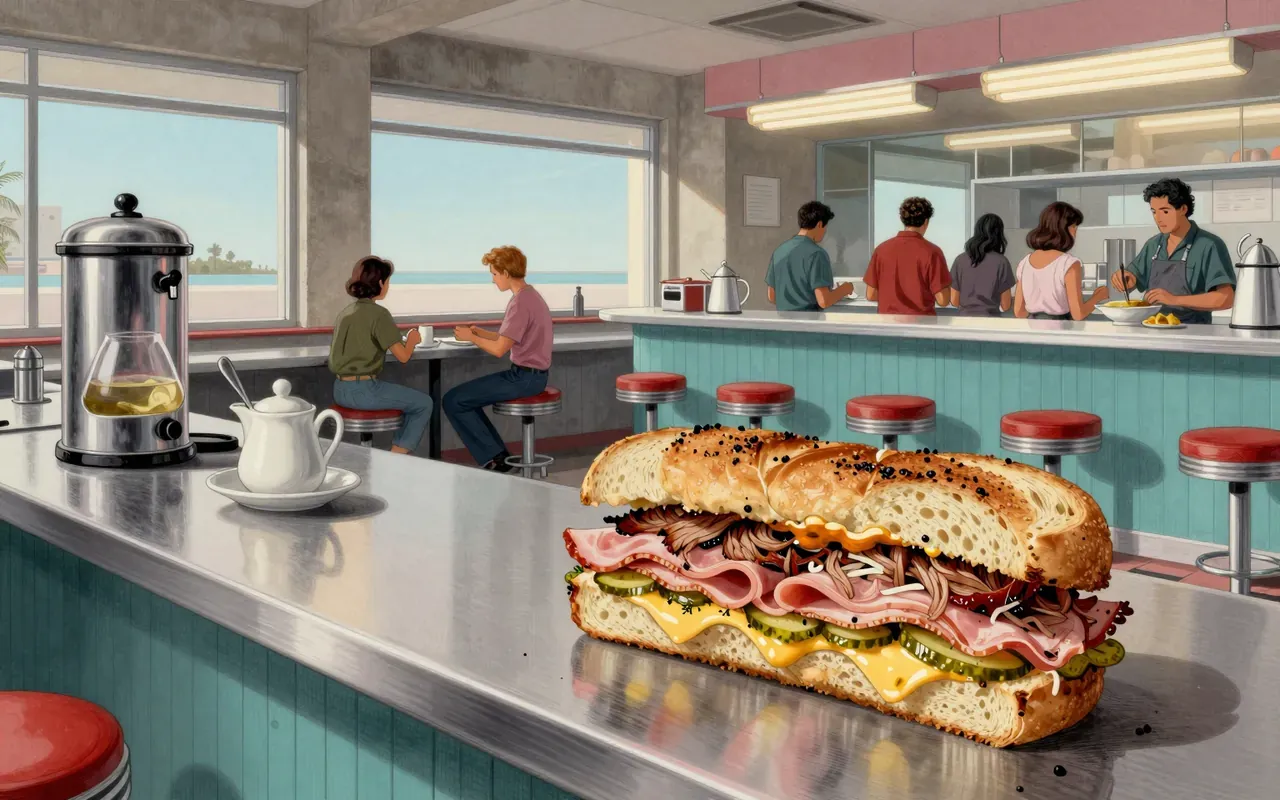
A pressed sandwich of roasted pork, ham, Swiss cheese, pickles and mustard on Cuban bread.
Where it came from
It emerged before 1900 in cafés serving Cuban cigar workers in Tampa or Key West. Earliest documented references appear around 1900 in Ybor City. A 1934 travel article named it a Tampa signature food.
What it gets right
It captures the mobility of Cuban workers across the Caribbean and Florida. It reflects the rhythms of cigar-factory life. It anchors identity in a specific, contested place: Ybor City.
What it gets wrong
It pretends to be authentically Cuban while being forged in Florida cafés. The salami in Tampa’s version is not Cuban—it’s Italian immigrant influence disguised as tradition.
Why it matters now
It reveals how municipal pride (Tampa’s 2012 official designation) and diaspora memory (Miami’s post-1959 adoption) compete to own the same food—without resolving its murky origin.
Is it worth your time
Yes—if you care about how food encodes migration, labour and rivalry, not just taste.