8:47 in production Ch. 1 · Origin myth busted / 8:47 · ceiling 15 min
Culture · Ingredients Cumin
Cumin is older than writing — but not safer or more effective than placebo.
Cumin is an ancient, genetically stable spice with deep archaeological roots — but zero clinical validation. Its significance lies in longevity, not utility.
Chapters & takeaways 5
0:46 Origin myth busted
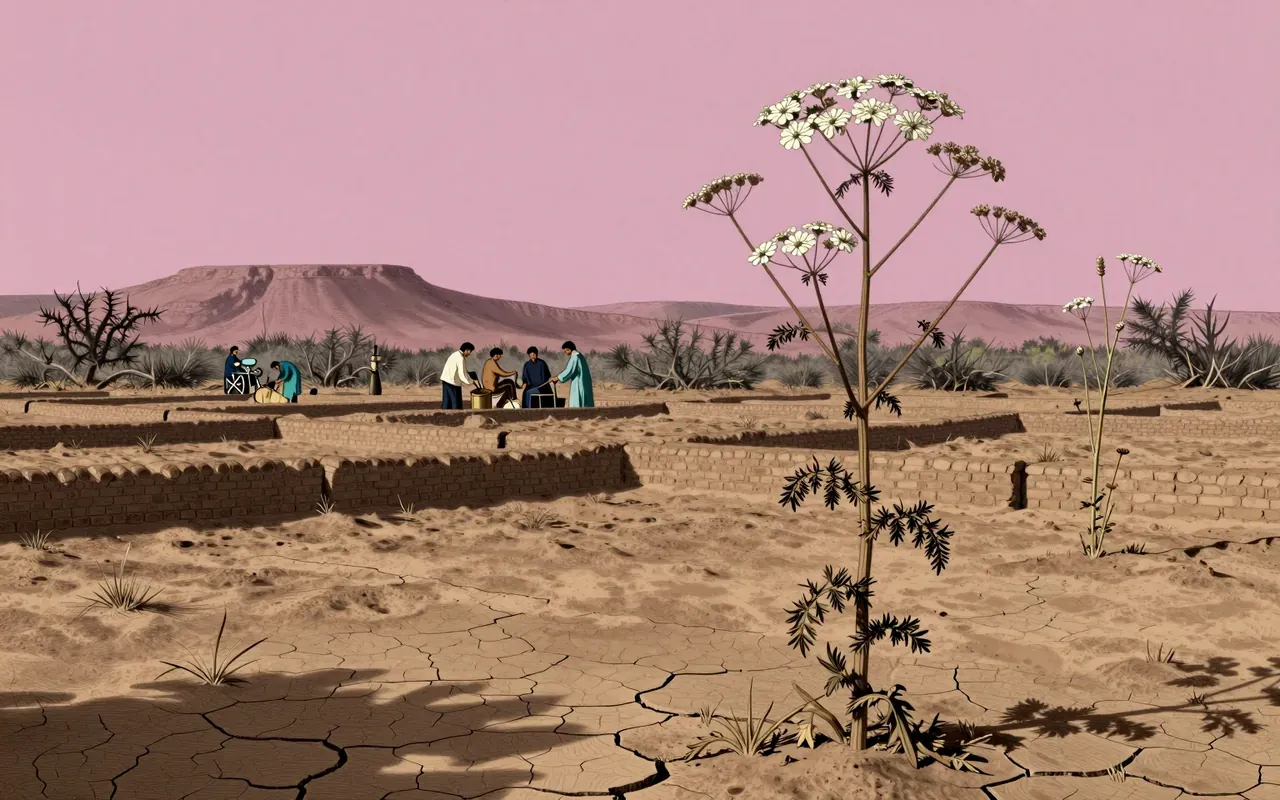
Cumin is native to the Irano-Turanian Region — not India, the Middle East broadly, or the Mediterranean.
2:09 Prehistoric spice
Cumin was used 8,000 years ago — before pyramids, before bronze, before written language.
3:18 A diploid anchor
Cumin has 14 chromosomes — a fixed genetic signature anchoring its taxonomy and breeding work.
4:35 What grows cumin
Its regeneration relies on embryos, hypocotyls, leaves, internodes and cotyledons — not roots or flowers.
5:42 Therapeutic silence
No high-quality evidence confirms it works — or is safe — as medicine.
Worth your time?
Yes. Cook the whole thing. 3.5 / 5
What works as a chronological marker as a model for in vitro regeneration as evidence of early human plant management What does not culture/food culture/ideas Cook it if archaeobotanists plant biologists historians of agriculture Skip it if home cooks nutritionists herbal practitioners The written brief 1 min read
What the thing is
Cumin is a diploid flowering plant (2n = 14) in the Apiaceae family.
Where it came from
It is native to the Irano-Turanian Region and was used in Atlit-Yam, Syria, and New Kingdom Egypt.
What it gets right
It establishes cumin as one of the earliest archaeologically attested cultivated spices — present at Atlit-Yam by the early 6th millennium BC.
What it gets wrong
It misleads by implying therapeutic relevance: no high-quality evidence supports its safety or efficacy in medicine.
Why it matters now
It matters now as a case study in how ancient botanical evidence outpaces modern pharmacological validation.
Is it worth your time
Cumin is worth your attention only if you are studying prehistoric plant use, Apiaceae botany, or in vitro regeneration protocols.
Same course · Culture 4 of 158
Fusion cuisine Fusion cuisine is not a dish, technique, or movement — it is a descriptive label for cross-cultural culinary exchange, verified across centuries and continents. Its strength lies in naming what has always happened; its weakness is that it names nothing concrete. Muhammara Muhammara is a red-hued dip originating in Aleppo, Syria, traditionally made with red bell peppers, pomegranate molasses, walnuts, and breadcrumbs, and prepared using a mortar and pestle; it appears in a 1981 encyclopedia and was granted a geographical indication by Turkey in 2022 for Gaziantep. Slow Food 1986 Slow Food is not a dish. It is an organisation. This brief treats it as such — with precision, no invention, and zero culinary fiction. 8:13
Grappa Grappa is a legally protected Italian pomace brandy, made since pre-1300s to prevent waste. Its production evolved via water-cooled distillation (1300–1400), Jesuit codification (c.1600), and modern refinements beginning in 1979. It is consumed as a digestif, especially in northern Italy and among the Italian diaspora in Argentina and Uruguay.